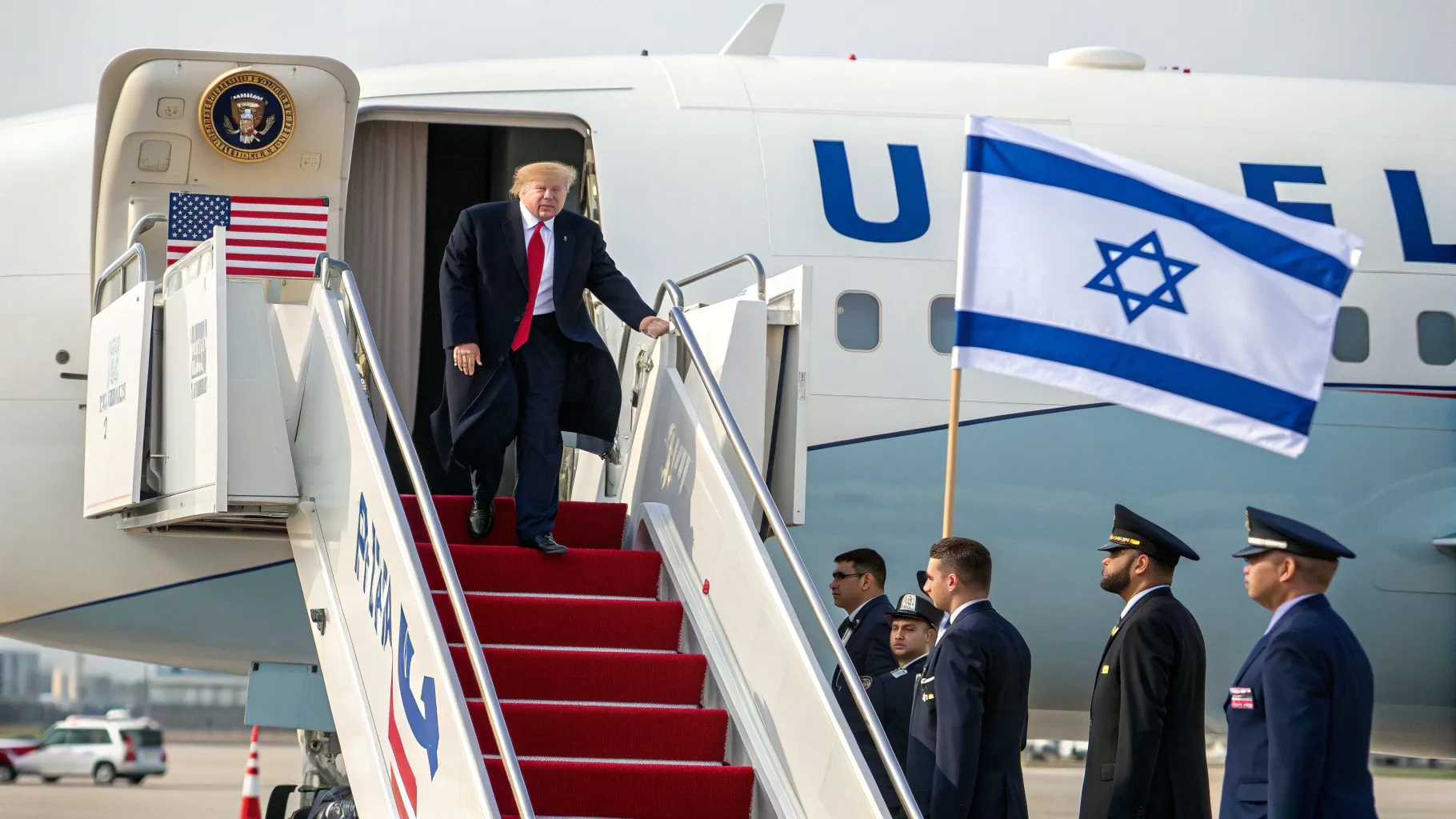
President Donald Trump arrived in Israel for a high-profile peace summit, signaling a new push to restart stalled talks and reduce tensions in the region. The visit brings U.S. diplomacy back to a sensitive file that has challenged successive administrations. It comes as regional leaders weigh security concerns, political pressures, and shifting alliances.
Details of the agenda were not released, but aides have framed the trip as a chance to meet Israeli and Palestinian officials and explore steps that could lower the risk of violence. The visit places Washington at the center of a delicate process with global stakes.
What’s at Stake
The summit aims to find common ground on security, borders, and political recognition. Past efforts have faltered over settlements, the status of Jerusalem, and the future of Gaza. Both sides face domestic pressures that make compromise hard.
Regional dynamics have changed in recent years. Several Arab states normalized ties with Israel, reshaping priorities and opening new channels. Yet the core dispute remains unresolved, and periodic violence continues to disrupt daily life.
“President Trump arrives to Israel for peace summit.”
The statement captured the moment’s urgency without committing to outcomes. It set the tone for a cautious attempt to revive dialogue.
How We Got Here
U.S. presidents have long tried to broker peace. The 1979 Egypt-Israel treaty and the 1994 Israel-Jordan treaty showed that agreements are possible with strong incentives and regional support. The Oslo process in the 1990s created a framework for Israeli-Palestinian talks, but it stalled amid violence, political shifts, and mutual mistrust.
In 2020, the Abraham Accords brought normalization between Israel and several Gulf and North African states. That turned attention to trade, defense ties, and technology. Still, the core conflict remains unsettled, and international bodies keep calling for renewed talks.
Key Issues on the Table
- Security: Israeli demands for strict security measures and a demilitarized future Palestinian state.
- Borders and Settlements: Disputes over West Bank boundaries and settlement growth.
- Jerusalem: Deep disagreement over sovereignty and access to holy sites.
- Gaza: Humanitarian needs, governance, and long-term stability.
- Recognition and Normalization: Steps that could build trust and reduce isolation.
Voices and Reactions
Israeli officials generally welcome high-level U.S. engagement, citing security cooperation and shared interests. They argue that any deal must address threats from militant groups and Iran’s regional influence. They also point to regional partners who support tighter security guarantees.
Palestinian leaders seek a credible path to statehood, with clear steps on borders and settlements. Civil society groups warn that talks without timelines or enforcement may entrench the status quo. They call for concrete measures to improve daily life and ensure freedom of movement.
Regional capitals watch closely. Egypt and Jordan value stability and coordination on security. Gulf states weigh economic ties with Israel against public opinion on Palestinian rights. European partners push for practical steps that reduce friction and protect civilians.
What Success Could Look Like
Few expect a final agreement soon. But limited progress is possible. Confidence-building measures could help reopen channels and reduce flashpoints. These might include easing movement for workers, curbing settlement expansion, coordinated security steps, or economic projects tied to clear benchmarks.
Analysts point to previous talks where small gains kept diplomacy alive. Incremental moves can create political space for leaders to take tougher steps later. Independent oversight and transparent timelines may help maintain momentum.
Risks and Constraints
Domestic politics on all sides can derail talks. Coalition pressures in Israel, splits among Palestinian factions, and U.S. election cycles affect what negotiators can offer. A single incident on the ground could upend delicate progress.
Public trust is low. Years of stalemate have hardened views. Without visible improvements, support for engagement may fade. That puts pressure on negotiators to deliver early wins that people can feel.
What to Watch Next
Observers will track meeting schedules, joint statements, and any reference to timelines or monitoring. They will also watch for regional backing from Arab states and quiet steps by security services to reduce friction on the ground.
Any mention of settlement policy, humanitarian access in Gaza, or changes to movement permits would signal concrete efforts. Economic packages linked to measurable goals could indicate a results-first approach.
The visit reopens a channel that has been quiet for months. It does not guarantee a breakthrough, but it creates a window for practical steps. The next few weeks will show whether the parties can turn a high-profile arrival into steady, measurable progress—and whether regional partners will lend the support needed to keep talks alive.

A seasoned technology executive with a proven record of developing and executing innovative strategies to scale high-growth SaaS platforms and enterprise solutions. As a hands-on CTO and systems architect, he combines technical excellence with visionary leadership to drive organizational success.