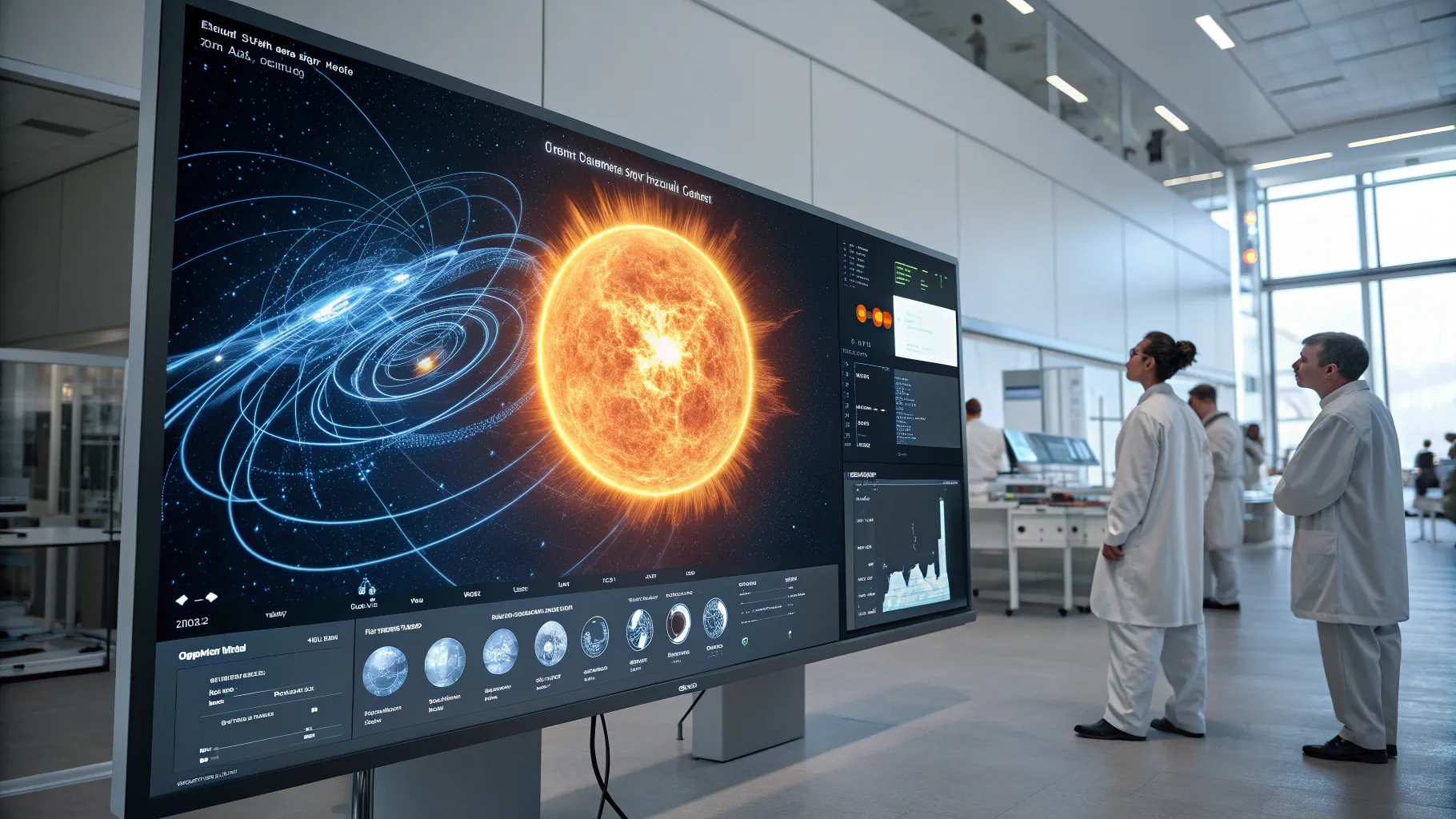
An artificial intelligence system trained on years of images from NASA’s Solar Dynamics Observatory can now anticipate how the sun will look hours ahead and may warn of dangerous solar flares. The development, described by researchers this week, points to a new tool for space-weather forecasting that could help protect satellites, power grids, and communications on Earth.
The model was built using a long record of solar observations and aims to predict the sun’s near-term changes. It could also identify early signs of flares that endanger technology and astronauts. While testing continues, the approach marks a shift in how scientists watch the sun and react to sudden bursts of energy.
An AI model trained on years of data from NASA’s Solar Dynamics Observatory can predict the sun’s future appearance and potentially flag dangerous solar flares
Why Solar Forecasts Matter
Solar flares and linked eruptions can disrupt radio, GPS, and satellite operations. Strong events can trigger geomagnetic storms that strain power systems. Airlines may reroute flights at high latitudes during severe space weather. Better forecasts provide time to protect assets and adjust operations.
Traditional forecasting relies on human experts and physics-based models. They are powerful but can struggle with the sun’s chaotic behavior. AI offers a data-driven complement, learning patterns that repeat across solar cycles.
What the Observatory Sees
NASA’s Solar Dynamics Observatory (SDO) has monitored the sun for over a decade. It captures multi-wavelength images that show the solar surface and corona in detail. These images reveal sunspots, magnetic loops, and hot regions where flares often ignite.
By training on this deep archive, the AI can learn how features evolve over time. The goal is to predict the sun’s appearance in upcoming frames and highlight areas where energy is building.
How the AI Could Help
The system produces a forecast of the sun’s near-future state. If it sees patterns tied to flares, it can flag regions for closer watch. That could reduce missed events and cut false alarms when used with existing methods.
- Early alerts allow satellite operators to switch to safe modes.
- Grid managers can prepare for potential geomagnetic activity.
- Mission planners can assess risk for crewed and robotic spacecraft.
Short-term predictions are especially valuable during periods of high activity. The current solar cycle is building toward its peak, raising the chances of strong flares and coronal mass ejections.
Checks, Limits, and Next Steps
AI models can overfit or misread rare events. Researchers will need to test the system across quiet and active periods, including storms not seen in training data. Clear metrics, like hit rates and false-alarm rates, will guide improvements.
Operational use also requires reliability and transparency. Forecasters need to know why the model raises an alert. Blending AI output with expert judgment and physics models could provide a safer path to adoption.
Integration with real-time observatory feeds is another step. Continuous updates would let the model refine alerts as new images arrive. Partnerships with agencies that manage space weather warnings would help move the tool into daily practice.
Broader Impact and Outlook
If successful, the approach could extend to other solar data sets and missions. It might help forecast coronal mass ejections, which drive the most damaging geomagnetic storms. It could also support studies of how magnetic fields store and release energy on the sun.
For industry, better notice means fewer service disruptions and safer operations. For science, it opens a window into patterns that are hard to capture by hand. For the public, it reduces surprise when solar storms hit.
The early findings suggest that data-driven forecasts can sharpen the world’s view of an active star. The key test will be performance during major events. If the alerts hold up, expect AI to become a standard part of space-weather monitoring, with closer coordination between observatories, forecasters, and operators who depend on accurate warnings.

A seasoned technology executive with a proven record of developing and executing innovative strategies to scale high-growth SaaS platforms and enterprise solutions. As a hands-on CTO and systems architect, he combines technical excellence with visionary leadership to drive organizational success.