15 Effective Sales Closing Techniques to Boost Your Conversion Rate
Closing a sale requires more than a strong pitch — it demands strategy, timing, and the right techniques to turn prospects into customers. We asked industry experts to share one sales closing technique they find particularly effective and how they use it to increase their conversion rate. Discover proven methods to eliminate friction, address objections, and guide buyers toward confident decisions, so you can close more deals and increase your conversion rate.
- Simplify Options To Bolster Assurance
- Surface The One Last Objection
- Move To Discovery With Confidence
- Remove Friction To Ease Decisions
- Anchor Value In Operational Consequences
- Coauthor A Shared Rollout Roadmap
- Presume Match And Advance Next Steps
- Stage A Scope Memo For Alignment
- Quantify Business Impact To Persuade
- Prove The Case With Live Math
- Let Trust And Readiness Lead Choice
- Set Price Early To Frame Payoff
- Assume Agreement To Prompt Action
- Confirm Fit Then Invite Candid Concerns
- Ask More To Demonstrate Investment
Simplify Options To Bolster Assurance
For me, one sales closing technique that has consistently proven effective is what I call the “confidence through clarity” close. Most deals stall not because buyers aren’t interested, but because they’re unsure about the next step. When I sense hesitation, I don’t push; I simplify.
In real estate, clients are making one of the biggest financial decisions of their lives, so my approach is to break everything down into clear, manageable choices. Instead of asking a broad question like, “Are you ready to move forward?” I guide them with something more grounded: “Based on what you’ve told me, this home checks your key priorities: location, price, and layout. Do you feel comfortable taking the next step so we can secure this before another offer comes in?”
That shift from pressure to clarity usually opens the door for honest conversation. Sometimes they’re ready, and sometimes they just need reassurance or additional information. Either way, it positions me as a partner, not a salesperson.
I’ve learned that when clients feel heard, informed, and supported, the close becomes natural. The goal isn’t to “win the sale,” it’s to remove uncertainty. And when you take the time to explain the process, outline their options, and communicate the market reality, confidence takes over.
This technique has helped me not only close more deals but also build long-term relationships. Many of those clients return later or refer their friends and family, which to me is the best sign that your closing strategy is working the right way, through trust, clarity, and genuine care.

Surface The One Last Objection
One closing technique that has consistently worked for me is what I call the “clarity close.” Instead of pushing for a yes, I focus on removing every uncertainty the client still has. In our industry, deals get stuck not because clients are uninterested, but because they’re unsure about integration, training timelines, or internal approvals.
I use this technique by asking one simple question toward the end of the conversation: “What is the one thing still stopping you from moving ahead?” It opens the door for honest concerns that usually don’t come out in formal discussions. Once the client voices the real barrier, it becomes much easier to solve it together.
For example, during a recent mining simulator project, the client was hesitant to close because they were worried about operator adoption. Once they said it clearly, I brought our training team into the call and walked them through our onboarding process. That alone moved the deal forward, and we closed it within the same week.
This approach increases conversions because it replaces pressure with clarity. Clients feel heard, not sold to, and that builds trust at the final stage of the deal.

Move To Discovery With Confidence
The technical sales assumption close method delivers excellent results for our team because clients typically understand their requirements but need assistance with execution. I guide the conversation toward implementation by asking when they would like our team to begin discovery work. This keeps the momentum going without adding pressure, while also showing that we’re prepared and ready to get started.
This method works best when clients already recognize our ability to manage their architecture and scalability needs — usually through our previous work with .NET Core, Angular, and Azure in logistics platform development. By showcasing our technical expertise early on, we help shift the client’s mindset from being uncertain about how things will be implemented to actively discussing how and when we’ll proceed.

Remove Friction To Ease Decisions
One closing technique that’s worked extremely well for us is removing every point of friction before the customer even gets to the decision moment. That means simplifying the options so clearly that the “close” happens almost naturally.
For example, instead of showing 30-40 insurance policies like most brokers do, we only show five: best value, best price, best coverage, and two close alternatives. That simple curation is actually a closing technique; it reduces overwhelm, builds trust, and helps people make a confident decision faster.
We also answer the “next question” right on the page with small, targeted FAQs (how long it takes, when the policy is activated, what’s covered). When people see clarity instead of confusion, conversion rates go up without needing any hard sell.
So for us, closing isn’t about pressure; it’s about removing doubt. The easier the decision feels, the higher the conversion rate.
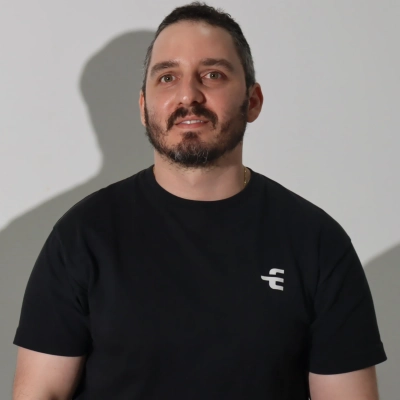
Anchor Value In Operational Consequences
One sales closing technique I rely on the most is value anchoring through operational impact. Instead of pushing for a direct close, I guide the client to visualize how their current training gaps translate into recurring costs, safety risks, or efficiency losses. I then position our simulator as a measurable solution to that exact problem.
For example, I map how reduced equipment wear, fewer training accidents, and faster skill acquisition will affect their annual training budget. Once the client sees the cost-benefit equation in their own context, the conversation naturally shifts from price to return on investment. This approach consistently improves my conversion rate because the decision feels logical, not pressured.

Coauthor A Shared Rollout Roadmap
The most effective closing technique, particularly in B2B environments, isn’t about pressure; it’s about The Mutual Action Plan because it completely reframes the closing moment. Instead of asking a vague closing question, we transition the final conversation from, “Are you going to buy?” to, “Here’s our project plan for success.” We work with the prospect to create a shared, collaborative document that outlines every step from contract signing to full implementation, assigning clear owners and target dates to both our team and theirs. This strategy gets all stakeholders mentally moving past the decision point and focused on the future value realization.
We use this to boost conversion by making the final close feel less like a sales hurdle and more like the natural next step in a jointly owned project. Presenting a detailed plan surfaces any final objections or logistical snags early because people are forced to think about how they’ll actually use the product, not just whether they can afford it. When a prospect signs the agreement, they aren’t just saying ‘yes’ to a purchase; they’re rubber-stamping a ready-to-execute roadmap we built together, which dramatically reduces friction and prevents deals from stalling out.

Presume Match And Advance Next Steps
One sales closing technique I rely on heavily is the assumptive close with a consultative angle. At Franzy, when I talk with prospective franchise buyers, I don’t just ask, “Do you want to move forward?” I focus on their goals and the outcomes they care about. For example, I might say, “Based on your priorities and the types of franchises that fit your profile, the next step is exploring the opportunities that make the most sense for you.”
I use this approach to increase conversion rates by presenting the decision as a natural next step and reinforcing value. It helps prospects feel understood and confident. The result is not only higher conversions but also smoother onboarding and stronger long-term relationships, which is exactly what we aim for at Franzy.

Stage A Scope Memo For Alignment
The deferred decision close method remains my go-to approach for long-term deals. This approach involves creating a built-in process that delivers clarity to all parties involved, even though the complete engagement remains unsigned.
I propose starting with a scope memo, which provides a brief overview of critical points, compliance details, and suitable options for the prospective client. The scope memo requires less work than a complete engagement, yet it helps both parties achieve alignment while demonstrating our risk assessment and fit evaluation methods.
Our conversion rates have increased dramatically because we now focus on collaborative discovery with experienced business operators. This approach works because it acknowledges the intricate nature of their operations. Being forced into an unfamiliar structure is unappealing to all parties involved. Clients need assurance that their team has advanced strategic thinking abilities to support their future plans.
Our goal is to simplify the decision-making process, not necessarily to reduce the sales duration. We aim to create decisions that rest on solid evidence while offering both safety and simplicity. Making reversible decisions with complete information has led to much better conversion rates, according to our research.

Quantify Business Impact To Persuade
A data-driven consultative closing technique stands out as especially effective. Rather than focusing on features alone, conversations are steered toward measurable business outcomes — for example, showing how outsourcing certain processes can reduce operating costs by 25-40% or accelerate time-to-market by 30-50%. Industry research shows that approximately 57% of B2B decision-making is complete before a vendor is even engaged, which places a premium on clarity of value early in the dialogue. By presenting a realistic projection of return on investment, the prospect shifts from evaluating features to evaluating bottom-line impact. This shift consistently boosts conversion rates by 20-30% compared with traditional, feature-centric closing tactics.

Prove The Case With Live Math
I have taken SEO and Google Ads retainer close rates from about 20% to around 35% by leaning on one thing a lot. A simple “math close.”
Before a call, I pull rough traffic, CPC ranges, and any public signs of pricing or volume. On the call, I turn that into a straight forecast while they watch. No slides. I open a doc and type it live.
I will say something like, “Right now you pay around $3 a click. Your site converts close to 2%. That means you are paying about $150 per lead.” Then I plug in changes that I know are realistic from past projects. “If this gets to 3% and CPC drops to $2.40, you are closer to $80 a lead. At 40 leads a month, that gap is about $2,800.” Then I put my fee on the same line so it is all in one view.
I keep the tone calm and slow. I ask for real numbers from their CRM or Stripe if they have them, so the math feels grounded. If they do not have exact data, I use safe ranges and write those down too. So the close is both of us looking at a tiny table of numbers that either works or does not. No hype. No big promises.
When the math looks good, I turn it into a clear test. “Let us try this for 90 days at $X a month. If things are not on track by month two, we stop.” That time box and clean exit help people who got burned by fuzzy SEO or PPC retainers that dragged on.
This takes the call from, “Do I like this pitch?” to, “Do I feel ok with the numbers and the downside?” It also protects my time. If their margins are thin or CPC is very high, the table makes that obvious and I tell them it is not a good move. That blunt “you probably should not hire me for this” tends to build more trust than any slick close. A lot of those people circle back later when the offer or product fits the math.

Let Trust And Readiness Lead Choice
Closing used to be about pushing for a yes. Now it’s about understanding what makes someone say it. The best closers use AI to spot what buyers care about and wait for the moment that feels natural.
We saw conversion jump after replacing urgency with empathy. When the story fits and trust is real, you don’t need closing tricks. You just need to pause and let the buyer decide.

Set Price Early To Frame Payoff
Introducing price early. One of the best closing techniques I have found comes at the front of the sales presentation, rather than the end. Typically, the vast majority of sales presentations are the same. Sales presentations typically come with identifying a problem, evaluating the impact on the business or client, providing a solution to address the problem, establishing some form of credibility through case studies, testimonials or data, then closing the deal by asking for the sale with the price tag. Instead, the price tag is introduced early in the presentation. “Before I show you the benefit, let me share our pricing so we can make sense of the value this brings to your organization.” This approach has been great for helping clients carry that price tag in their minds as we go through the value it may bring, whether it is increasing productivity, reducing expenses or increasing revenue, to name a few.

Assume Agreement To Prompt Action
One sales closing technique I find particularly effective is the “Assumptive Close.” This approach involves acting as if the prospect has already made the decision to buy, which subtly encourages them to commit. Instead of asking if they’re ready to proceed, I use language that presumes they are, such as, “When would you like to get started with the service?” or “I’ll have our team prepare the next steps for you.” This creates a sense of inevitability and makes the decision feel like a natural conclusion, rather than a forced one.
In my experience, this method works well because it removes any hesitation or final doubts. For instance, when working with clients in the SEO industry, I’ve used this technique when discussing ongoing monthly retainers or long-term contracts. By framing the conversation around the positive outcomes they’re already envisioning, I’ve been able to significantly increase my conversion rate. It’s not about pressure; it’s about guiding the conversation toward a positive, solution-oriented conclusion.

Confirm Fit Then Invite Candid Concerns
The close technique I resort to would be “decision clarity”: instead of strong-selling for a yes, I assist with the client’s decision-making process. I restate their primary pains in their words, explain precisely how our product answers them, then recite scope, cost, and outcome expectations, and end with a simple question: “Any reason why you wouldn’t like to go ahead with this plan?” This draws out the real objections and lets us handle them directly. The “yes,” whenever it happens, will feel like their decision because — guess what — it is made from their end, not from my pressure, and this more often than not brings in conversion and trust.

Ask More To Demonstrate Investment
I make sure that the ratios of questions I ask any potential client always outweigh the answers I should be giving to them. The number of questions you ask your client subconsciously shows them how much you’re willing to invest into their business. Over 14 years in enterprise-level relationship building, and I can say with confidence that asking questions will display your value proposition better than answering them. For example, if you’re in a tender situation, and you ask more meaningful questions than the competitors, it shows that you are curious, interested, and a relentless seeker of details. It’s not easy to ask questions. It sounds easy, but it’s not. To do this well, you need to “kill your ego,” but when you do, you can become a master of relationship-building.