Fauna is staking its future on a simple idea: humanoid robots can do useful jobs in hospitality, research, and entertainment. The young company is entering a field where tech ambitions meet real-world labor gaps and rising customer expectations. Its bet speaks to a growing push to put life-size robots to work, not in far-off factories, but in hotels, labs, and venues where people gather.
The company has outlined three initial markets. Hotels and venues face staffing shortages and high turnover. Research teams need consistent help with routine tasks. Entertainment producers want new ways to engage audiences. Fauna says its machines can help on each front and do so at a cost businesses can accept.
What Fauna Says It Will Do
“Fauna, a new startup, is betting that humanoid robots will find success as hospitality workers, research assistants, and entertainers.”
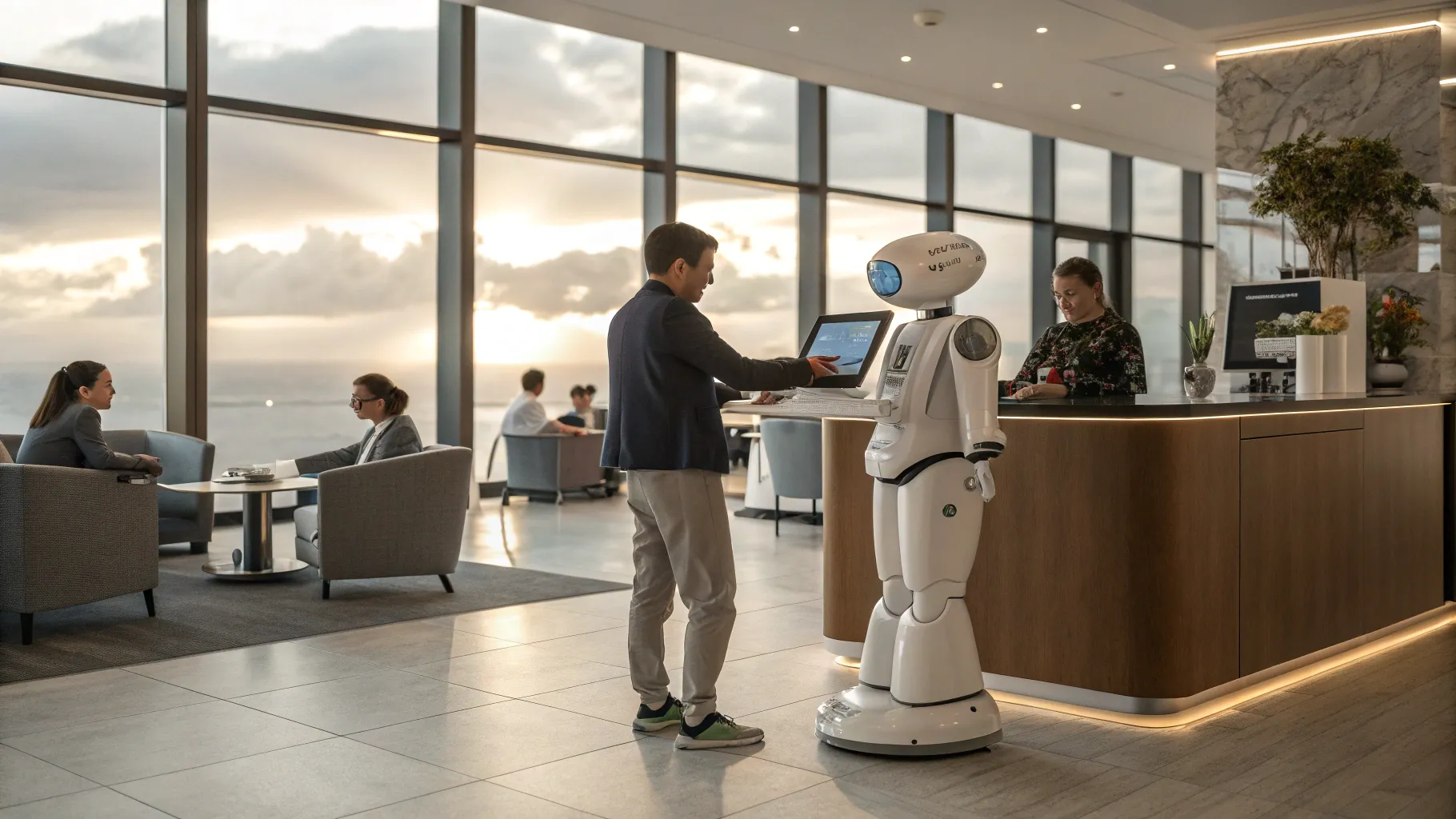
The company’s statement sets a clear scope. It suggests front-of-house roles like greeting guests, moving items, and providing directions. In labs, robots could handle sample transport, inventory, or basic prep under supervision. On stages or at events, performance routines could mix choreography with audience interaction.
Why These Markets Are In Play
Hospitality employers have struggled to fill roles since the pandemic recovery began. Many jobs require night and weekend shifts, and turnover is high. A machine that can handle repetitive service tasks may help teams focus on higher-touch work. In research settings, accuracy and repeatability matter. A robot that follows the same steps every time can support lab standards. Entertainment buyers often seek novelty and reliability. A robot that can perform safely, on cue, holds appeal for shows and brand activations.
- Hospitality: reception, deliveries, line management
- Research: sample runs, inventory checks, equipment fetch-and-carry
- Entertainment: scripted performances, meet-and-greets, interactive demos
Lessons From Earlier Efforts
Service robots are not new. Past deployments in hotels and malls showed that simple wheeled couriers can succeed with narrow tasks, such as room deliveries. Humanoid projects have aimed higher, promising human-like movement and interaction. Some pilots worked well in controlled settings, but many struggled with open-ended requests from guests or visitors.
Warehouses and factories have tested bipedal and legged robots for fetching bins and moving parts. Those trials highlight a key reality. Tasks must be clear, routes must be mapped, and edge cases must be rare. Fauna’s focus on scripted entertainment and supervised lab work may reflect those lessons.
Technical And Safety Hurdles
For hotels and labs, the robot must navigate crowded spaces, open doors, use elevators, and handle trays or tools. Hands need fine control to grip objects without slips. Vision systems must handle poor lighting and clutter. Speech and gesture recognition must work through noise and accents.
Safety is non-negotiable. A machine moving among guests or students must comply with standards, stop when blocked, and avoid contact. Clear operating zones, automatic shutoffs, and remote monitoring are common requirements. Insurance and liability rules may shape where and how the robots can run.
Economics Will Decide Adoption
Cost of hardware, maintenance, and support will drive buying decisions. If a robot can cover multiple shifts with minimal downtime, it becomes easier to justify. But hidden costs can erode value. These include site mapping, elevator integrations, staff training, and updates when floor plans change.
Early pilots often start small, with one or two roles in one location. Success looks like steady uptime, low incident rates, and clear time savings for staff. If those metrics hold, companies expand to more sites and tasks.
What Success Could Look Like
In hotels, a practical win might be a robot that manages late-night deliveries and guides guests after events. In labs, carrying samples between rooms on a fixed route could free researchers for analysis. In entertainment, repeatable shows with safe, expressive motions could draw crowds without extra staffing.
Human workers will still set priorities, handle exceptions, and manage the guest experience. The best outcomes pair people with machines. Staff can focus on care, judgment, and creativity, while robots take on routine, heavy, or late-hour tasks.
Fauna’s bold message signals where the market may be heading. Real progress will depend on safe operation, clear tasks, and favorable unit economics. Watch for pilot announcements in hotels, campuses, and venues; third-party safety audits; and evidence of week-over-week uptime. If those boxes get checked, humanoid workers could move from demos to dependable roles.

Senior Software Engineer with a passion for building practical, user-centric applications. He specializes in full-stack development with a strong focus on crafting elegant, performant interfaces and scalable backend solutions. With experience leading teams and delivering robust, end-to-end products, he thrives on solving complex problems through clean and efficient code.