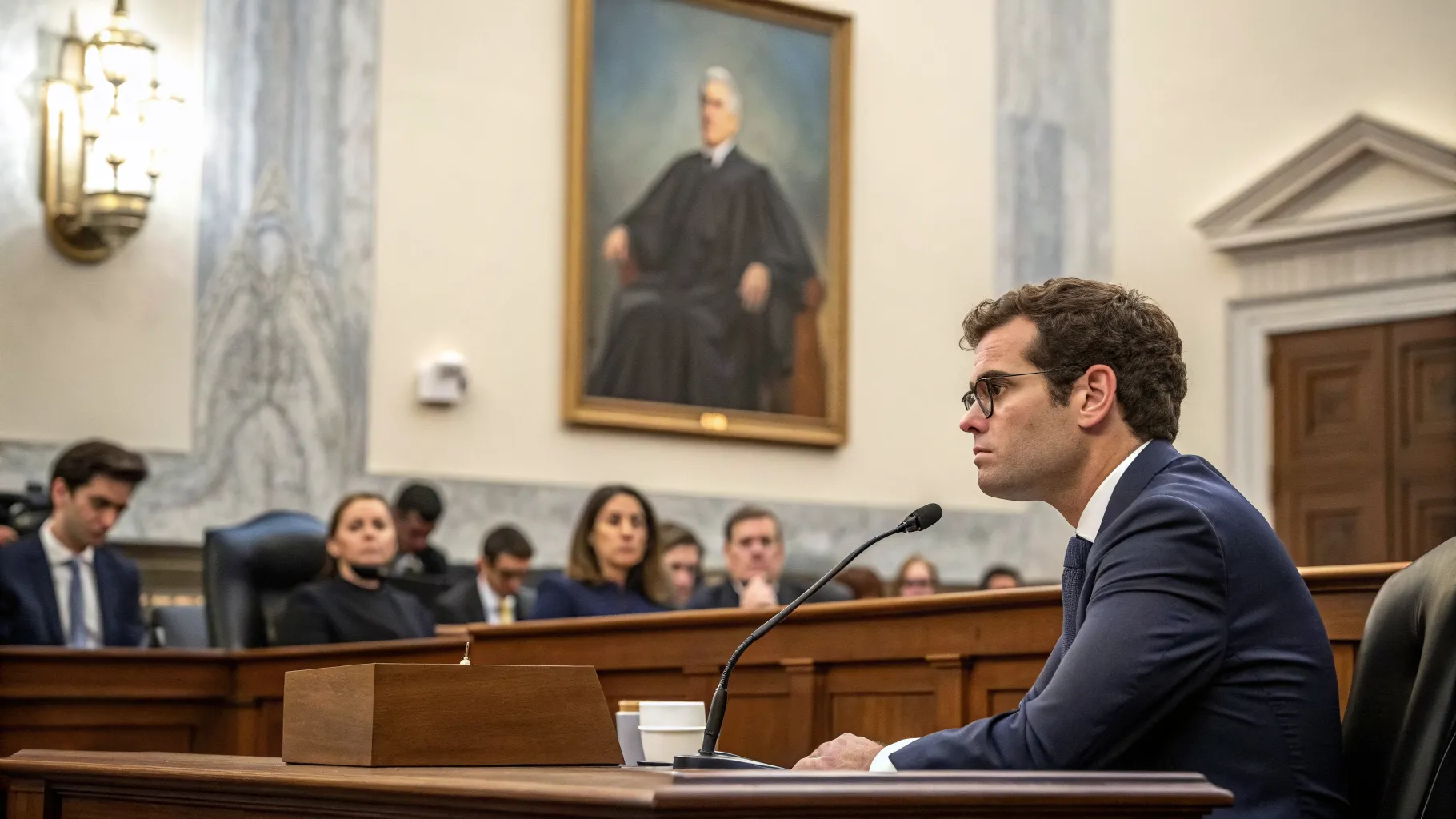
Adam Mosseri, the head of Instagram, appeared Thursday in a federal courtroom in Washington, D.C., adding a high-profile voice to the antitrust case targeting Meta’s power in social networking.
His testimony came as the government challenges Meta’s business practices, while the company defends how it competes for users, creators, and advertisers. The hearing, in U.S. District Court for the District of Columbia, marks a fresh stage in a long-running dispute over how social platforms grow, merge, and set rules that shape the online economy.
Head of Instagram Adam Mosseri testified Thursday in the Meta antitrust trial in DC federal court.
Background on the Case
The Federal Trade Commission first sued Facebook, now Meta, in 2020, arguing the company maintained a monopoly in personal social networking. The complaint pointed to past acquisitions, including Instagram in 2012 and WhatsApp in 2014, and to business decisions that the agency says harmed competition.
Meta has denied the claims. The company says users can switch easily among apps and that rivals compete for time and attention. It cites fast-growing services such as TikTok, YouTube, and Snapchat as evidence that the market is wide and dynamic.
The court allowed a revised FTC complaint to move forward after initial setbacks, setting the stage for extended pretrial discovery and witness testimony. Mosseri’s appearance signals the court’s interest in how Instagram operates today and how decisions inside the app affect the wider market.
What Mosseri’s Testimony Could Address
Executives in similar cases often face questions on product decisions, creator incentives, and data that track engagement trends. For Instagram, that could include how Reels competes with short-form video, how recommendation algorithms affect reach, and how the company supports or limits third-party tools.
- How Instagram measures competition for users and creators.
- Policies on interoperability and data portability.
- Internal assessments of competitors and market share.
Any testimony on internal strategy could influence the court’s view of whether the company’s conduct limited rivals or reflected standard competition on features and content.
Competing Views on Market Power
The government has argued that Meta’s past purchases removed meaningful threats and allowed it to set rules that shape traffic and monetization across the social web. It says those decisions reduced choices for users and advertisers.
Meta counters that its products are free and that users can leave at any time. The company says new features and frequent redesigns show steady competition. It also points to creator payouts, safety tools, and parental controls as investments that increase quality rather than restrict it.
Industry analysts note that antitrust law often turns on how a market is defined. If “personal social networking” is the market, the government’s case strengthens. If the market is “attention” or “short-form video,” Meta’s share looks smaller in the presence of TikTok and YouTube.
Implications for the Tech Industry
A ruling against Meta could set stricter rules for future acquisitions by large platforms. It could also push companies to open their systems to rivals through data portability, APIs, or changes to default settings.
Advertisers and small businesses are watching for signs of change in pricing power and targeting tools. Creators are looking for clarity on how distribution and revenue sharing are set across competing apps.
If the court sides with Meta, it could validate arguments that consumer choice and the rise of video-first competitors limit any single firm’s control, even when user counts are large.
What to Watch Next
Key signals will include how the court treats market definition, any evidence of exclusionary conduct, and testimony from creators, advertisers, or rivals about barriers to entry. Written findings on internal documents could be important, especially if they show plans to neutralize a competitor or, by contrast, a focus on feature parity and user safety.
The case also intersects with global scrutiny. Regulators in Europe and the United Kingdom have pressed platforms on data use, interoperability, and ad targeting. While rules differ, shared themes could shape how large social apps operate worldwide.
Mosseri’s appearance underscores the stakes for Instagram’s role inside Meta and in the broader social market. The court’s next steps will indicate whether the case moves the industry toward new limits on mergers and platform control, or reaffirms the current model built on rapid product cycles and free services funded by ads.
For users and businesses, the outcome could affect how content is discovered, how audiences are built, and how ads are priced. The immediate question is narrow and legal, but the ripple effects could reach every feed and every campaign.

Deanna Ritchie is a managing editor at DevX. She has a degree in English Literature. She has written 2000+ articles on getting out of debt and mastering your finances. She has edited over 60,000 articles in her life. She has a passion for helping writers inspire others through their words. Deanna has also been an editor at Entrepreneur Magazine and ReadWrite.