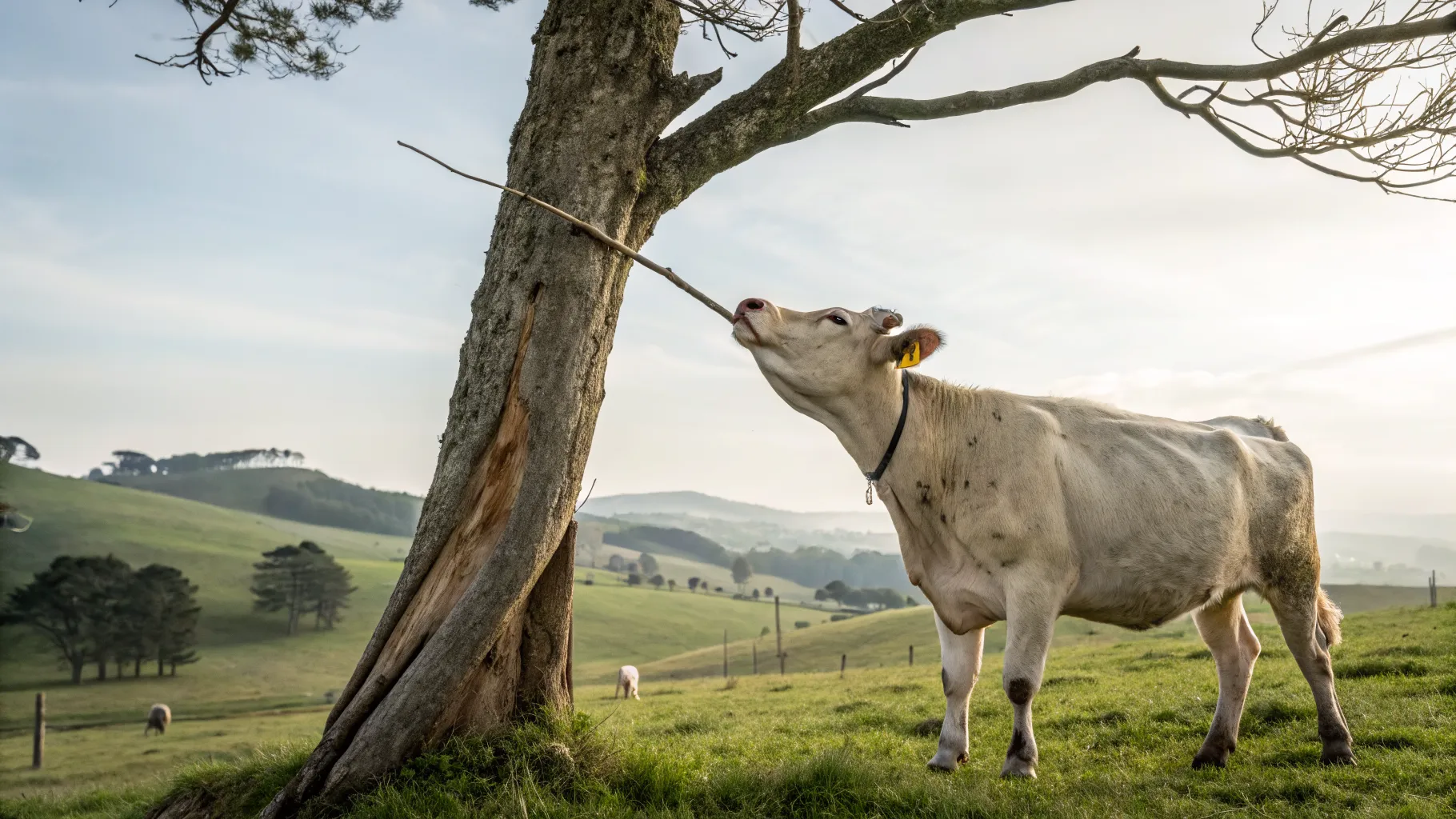
Scientists have documented the first known case of a cow using an object from her surroundings to relieve an itch, a finding that could reshape views of cattle intelligence. The observation, described by researchers as surprising and carefully reviewed, suggests cows may engage in problem-solving once thought rare in livestock. It adds new urgency to questions about how these animals think and how farms are designed.
This is the first recorded instance of a bovine using tools from her environment to relieve an itch—leaving scientists astonished.
What Happened and Why It Matters
Researchers say a female cow selected and used an environmental object for a clear purpose: to scratch an itch she could not easily reach. The act fits a standard definition of tool use, which involves selecting or manipulating an external item to achieve a goal. While primates and some birds are known for such behavior, cattle have not been part of that record.
The event challenges assumptions about the mental lives of farm animals. It also raises new questions about how cattle adapt to their surroundings and solve daily problems. If confirmed across herds and settings, the finding could expand how scientists study learning and creativity in domesticated species.
How Scientists Define Tool Use
Biologists often define tool use as the controlled use of an object from the environment to change the condition of another object or the user’s body. Scratching with a chosen item qualifies under many accepted frameworks. This kind of behavior differs from rubbing against a fixed tree or fence, which is considered use of a feature rather than a tool.
In this case, the cow did more than rely on a static surface. She appears to have selected and employed a separate item, suggesting decision-making and intentional action. That distinction is central to the scientific interest in the report.
How It Compares With Other Species
Tool use is well documented in a few groups. Chimpanzees use sticks to extract termites. New Caledonian crows bend twigs into hooks. Sea otters crack shells with stones. Elephants swat flies with branches. These examples show how animals can adapt objects to solve immediate problems.
- Primates: probing insects and cracking nuts
- Birds: crafting hooks and using bait
- Mammals: shell-cracking and branch swatting
Livestock, by contrast, are rarely credited with tool use in formal records. Cattle do show learning, social bonds, and memory. They navigate complex herds and recall food sources. But recorded use of portable tools has not been part of their profile until now.
Debate and Caution
Some scientists will ask whether the behavior was a one-off event or part of a pattern. They will also examine whether the object was truly selected and manipulated, rather than used by chance. Video, repeated observations, and independent review will be key to settling those questions.
Skeptics may argue that rubbing on a found item is a gray area. Supporters counter that selection and controlled handling meet accepted standards. Both sides agree more data is needed.
Implications for Welfare and Farming
If cows can improvise with objects, they may have richer cognitive skills than expected. This could influence how farms design enrichment, like movable brushes or safe items for manipulation. It may also affect handling practices and space planning, offering animals more choices and mental stimulation.
Producers already use fixed scratching posts to reduce stress and skin problems. Research inspired by this finding could test whether movable tools lower stress further, improve coat health, or reduce injuries from rubbing on fences.
What Comes Next
Researchers are likely to set up long-term monitoring using cameras and direct observation across multiple herds. They may track when tool use appears, whether it spreads through social learning, and which objects are preferred. Behavioral tests could probe memory, planning, and flexibility.
If more cases emerge, cattle could join a small set of animals with documented tool use. That would push scientists to rethink livestock cognition and consider new standards for enrichment and management.
The first recorded case of a cow using a tool marks a fresh point in animal behavior research. It challenges old views about livestock and opens lines of study on learning and welfare. Watch for follow-up studies, video evidence, and trials on farm design that test how choice and object use might improve cattle health and behavior.

Senior Software Engineer with a passion for building practical, user-centric applications. He specializes in full-stack development with a strong focus on crafting elegant, performant interfaces and scalable backend solutions. With experience leading teams and delivering robust, end-to-end products, he thrives on solving complex problems through clean and efficient code.