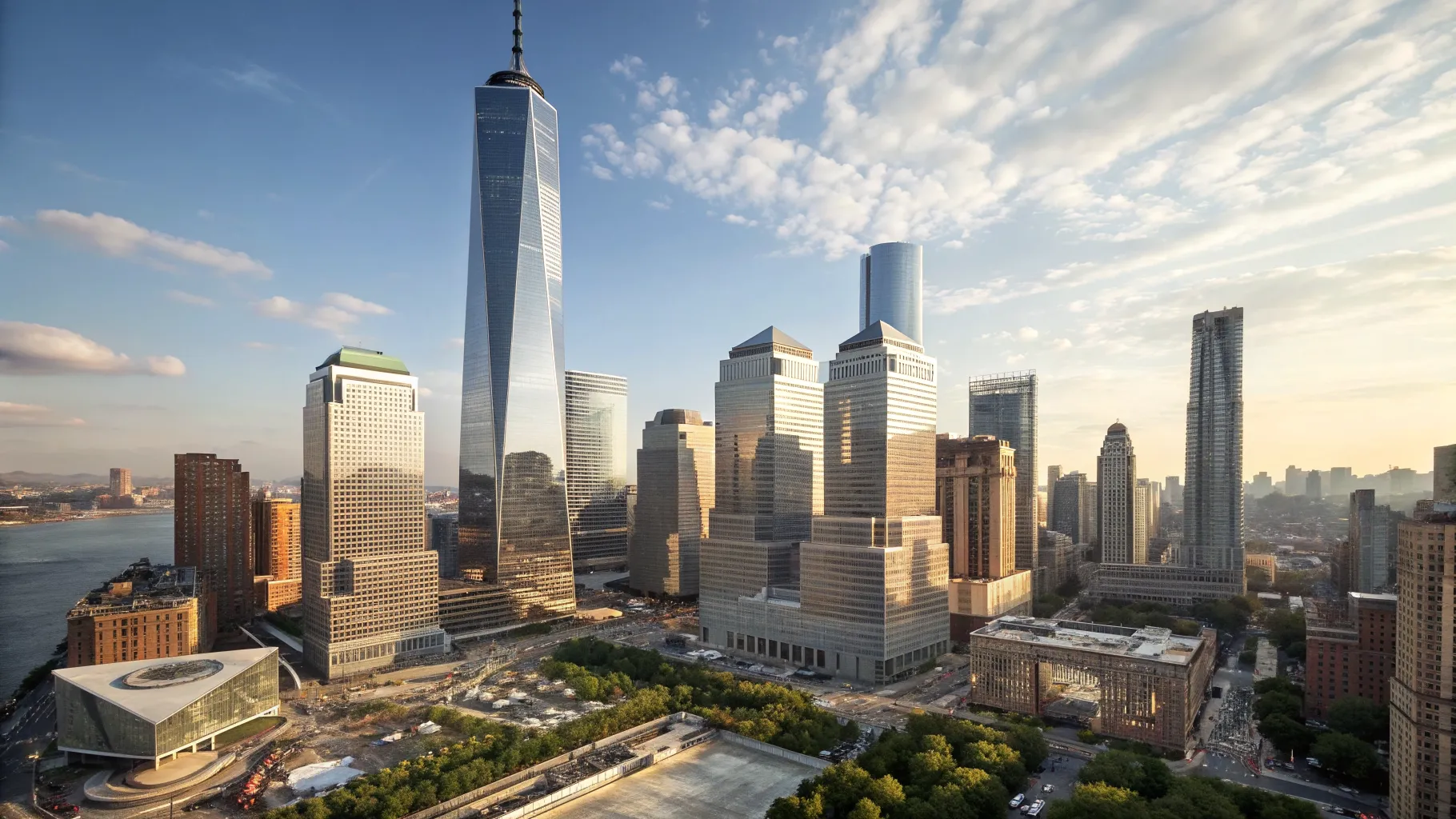
Nearly a quarter century after the September 11 attacks, the rebuild of Lower Manhattan’s World Trade Center site is approaching its final phase. The next step is the long-delayed 2 World Trade Center, which is slated to begin construction soon and serve as the headquarters for American Express. The development would mark a major piece of the site’s completion and signal confidence in the future of the Financial District.
A Project Nearing the Finish Line
The World Trade Center complex has been rebuilt in stages since 2001. One World Trade Center opened in 2014 as the site’s signature tower. Three and Four World Trade Center followed, filling out the eastern side of the campus. Seven World Trade Center, just north of the memorial, was the first to reopen in 2006. The transportation hub and retail center, designed to knit together PATH trains and subways, restored a key transit link for the region.
What remains is a smaller list of unfinished elements, led by 2 World Trade Center. The tower’s location on the site’s northeast corner makes it a visual bookend to One World Trade Center. Plans for 5 World Trade Center, a mixed-use project south of Liberty Street, are also moving ahead after state reviews.
The Latest Commitment
“Almost 25 years after the September 11 attacks devastated Lower Manhattan, the World Trade Center site’s rebuild is nearing completion. The new 2 World Trade Center skyscraper is due to begin construction soon and will serve as the headquarters for American Express.”
This commitment, paired with a construction start, would resolve years of uncertainty. Previous concepts for 2 World Trade Center cycled through different architects and potential tenants. A confirmed anchor can unlock financing and set a clear path to completion.
Design Shifts and Delays
The tower’s plans have changed over time as the office market evolved. Early designs emphasized media tenants that considered the site but never moved in. Later revisions sought to balance skyline presence with efficient floor plates. Those shifts, along with market shocks and the pandemic, slowed progress.
The site’s rebuild has also had to balance security needs with street-level activity. Planners sought to restore walkable blocks while hardening key areas. The memorial and museum established a solemn center, with office towers arranged to keep the campus open yet protected.
Market Reality and Why It Matters
Securing a major headquarters at 2 World Trade Center would land at a tricky moment for offices. Hybrid work has left many buildings with higher vacancies than before 2020. Landlords have focused on new, energy-efficient towers that can draw tenants seeking flexible layouts and strong amenities.
Supporters say a ground-up tower at the site can meet those demands with efficient systems and high environmental standards. Critics question whether the market can absorb more large floor plates without long-term leases. The anchor plan offers a clearer answer by providing a committed occupant from day one.
What to Watch
- Final design details, including height, sustainability targets, and floor layouts.
- Construction timeline, from groundbreaking to topping out and opening.
- Leasing for remaining floors and interest from finance and technology firms.
- Transit and street improvements during construction to limit disruption.
A Site with National Significance
The World Trade Center is more than a commercial district. It carries weight as a place of memory and renewal. Each step in its rebuild has been measured against that purpose. One World Trade Center’s 1,776-foot height symbolized a commitment to return. The memorial, with its reflecting pools, drew millions of visitors before the pandemic and remains central to the area’s identity.
Adding 2 World Trade Center would complete the quartet of major office towers framing the memorial. It would also extend a run of investments that have drawn residents and small businesses back to the neighborhood. Retail and dining have expanded, and the area’s schools and parks have grown busier.
Outlook
If construction begins as planned and American Express moves forward as the anchor, the long-awaited tower could reset momentum for Lower Manhattan’s office market. It would show that well-located, high-performance buildings still attract top-tier tenants even as work patterns change. The next milestones to watch are the formal announcement of design specifics and the start of foundation work. As the site edges closer to completion, the focus will shift from what was lost to what comes next for a district rebuilt with purpose.

Kirstie a technology news reporter at DevX. She reports on emerging technologies and startups waiting to skyrocket.