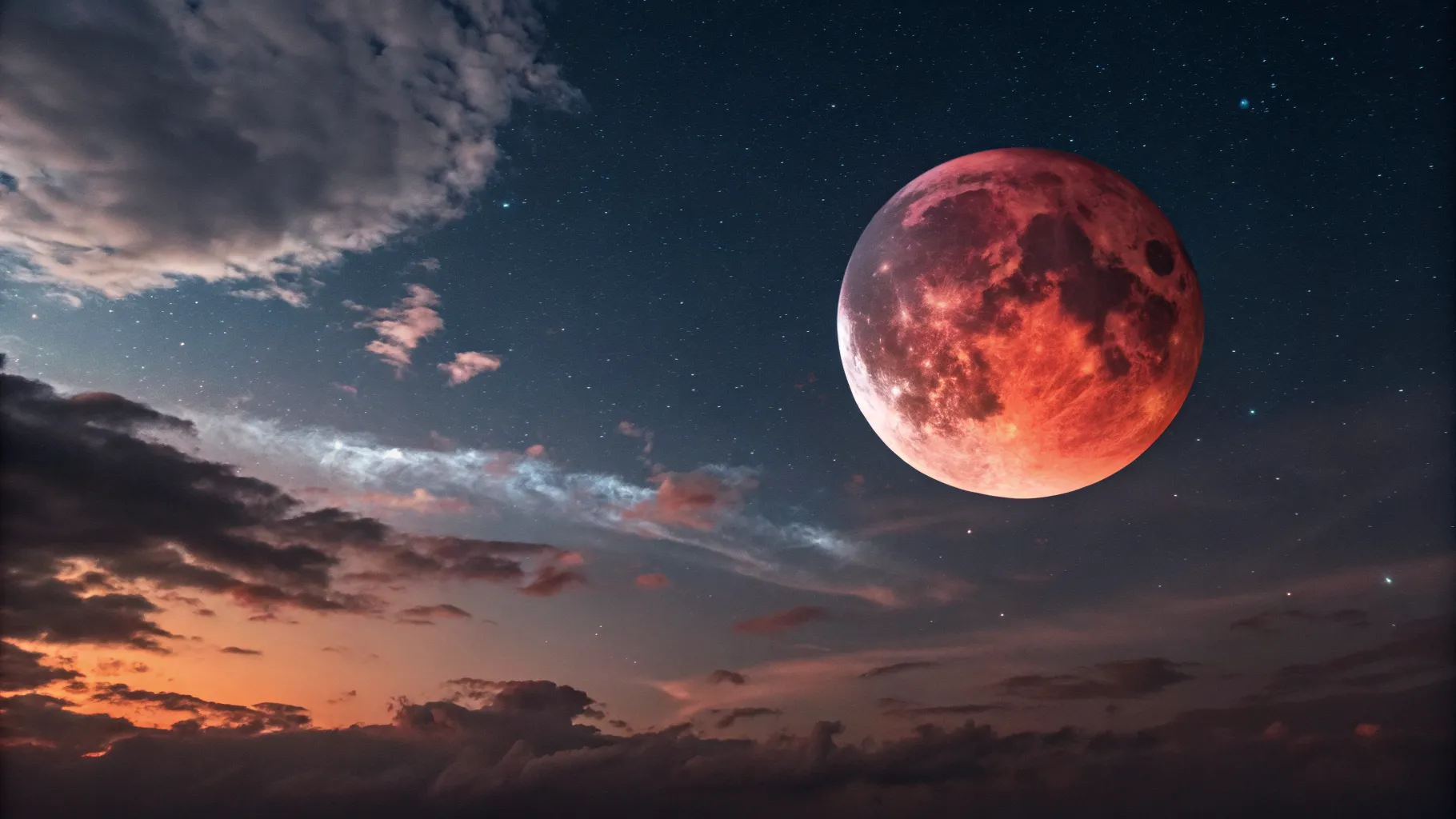
Skywatchers are set for a show next month as a lunar eclipse gives the moon a deep red tint, a sight that can be seen with the naked eye. The event will occur when the Earth moves between the sun and the moon, casting a shadow that shifts the moon’s color. The timing will vary by region, but interest is already growing among casual observers and seasoned astronomers.
What Will Happen
“Next month, the Earth will come between the sun and the moon, causing the moon to take on an eerie reddish hue.”
That red tone appears when sunlight bends through Earth’s atmosphere and filters out blue light. The remaining red and orange light reaches the lunar surface. This effect is similar to the colors seen at sunrise and sunset.
The eclipse may be total, partial, or penumbral depending on the moon’s path through Earth’s shadow. A total eclipse often shows the richest color. A partial eclipse creates a dim bite on one side of the moon. A penumbral eclipse is faint and can be hard to spot.
Background and Science
During a lunar eclipse, the Earth’s central shadow, the umbra, falls on the moon. When the moon sits fully in the umbra, the eclipse is total. If it passes only partly through, it is partial. If it stays in the lighter penumbra, the change is subtle.
The color can range from copper to brick red. Dust and clouds in Earth’s atmosphere can make the moon darker. Major volcanic eruptions have dimmed past eclipses by adding ash to the air. Clean air can produce a brighter red.
Lunar eclipses repeat a few times a year worldwide, though any one place may see them less often. They are safe to watch without eye protection, unlike solar eclipses.
Who Can See It and When
Visibility depends on nightfall and clear skies. Regions where the moon is above the horizon during the eclipse will see some or all of it. Local astronomy clubs and observatories often share precise times for their area as the date approaches.
- Check local forecasts for cloud cover on the night of the event.
- Find a spot with a clear view of the sky and low light pollution.
- Give your eyes 15 to 20 minutes to adapt to the dark.
- Use binoculars for sharper detail, though they are not required.
Unlike a solar eclipse, no special glasses are needed. This makes the event an easy option for families and schools.
Cultural and Historical Notes
Ancient records from many cultures mention red moons during eclipses. Some linked the color to omens. Today, scientists use eclipses to study Earth’s atmosphere. By measuring the moon’s brightness and color, they can learn about dust and aerosols high above the ground.
Photographers prize totality for long exposures that reveal star fields near the darkened moon. Cities sometimes host public viewing nights tied to local science programs.
What This Means for Stargazers
The event offers a rare chance to watch Earth’s shadow move in real time. Viewers can see the curved edge of the umbra slide across the lunar surface. The entire show can last several hours from start to finish, with totality lasting longer than a typical sunset.
For newcomers, the eclipse is a gateway to learning the motions of the Earth-moon-sun system. For educators, it is a ready-made lesson in light, color, and orbits.
What To Watch Next
As the date nears, precise timings will be posted by national space agencies, planetariums, and local clubs. Many will stream the event online for areas under cloud. Weather is the main risk for viewers, so backup plans are wise.
Amateur reports and photos shared after the eclipse can help compare the color across regions. Differences may point to changes in air quality or weather patterns.
The coming eclipse is a simple, shared night-sky moment that needs no ticket or gear. The moon will turn red as Earth blocks the sun, and millions will look up together. Expect a slow, steady show, clear enough for first-time watchers yet rich in detail for experts. If skies cooperate, next month’s event will bring a vivid lesson in how our planet and its nearest neighbor move through space.

Senior Software Engineer with a passion for building practical, user-centric applications. He specializes in full-stack development with a strong focus on crafting elegant, performant interfaces and scalable backend solutions. With experience leading teams and delivering robust, end-to-end products, he thrives on solving complex problems through clean and efficient code.