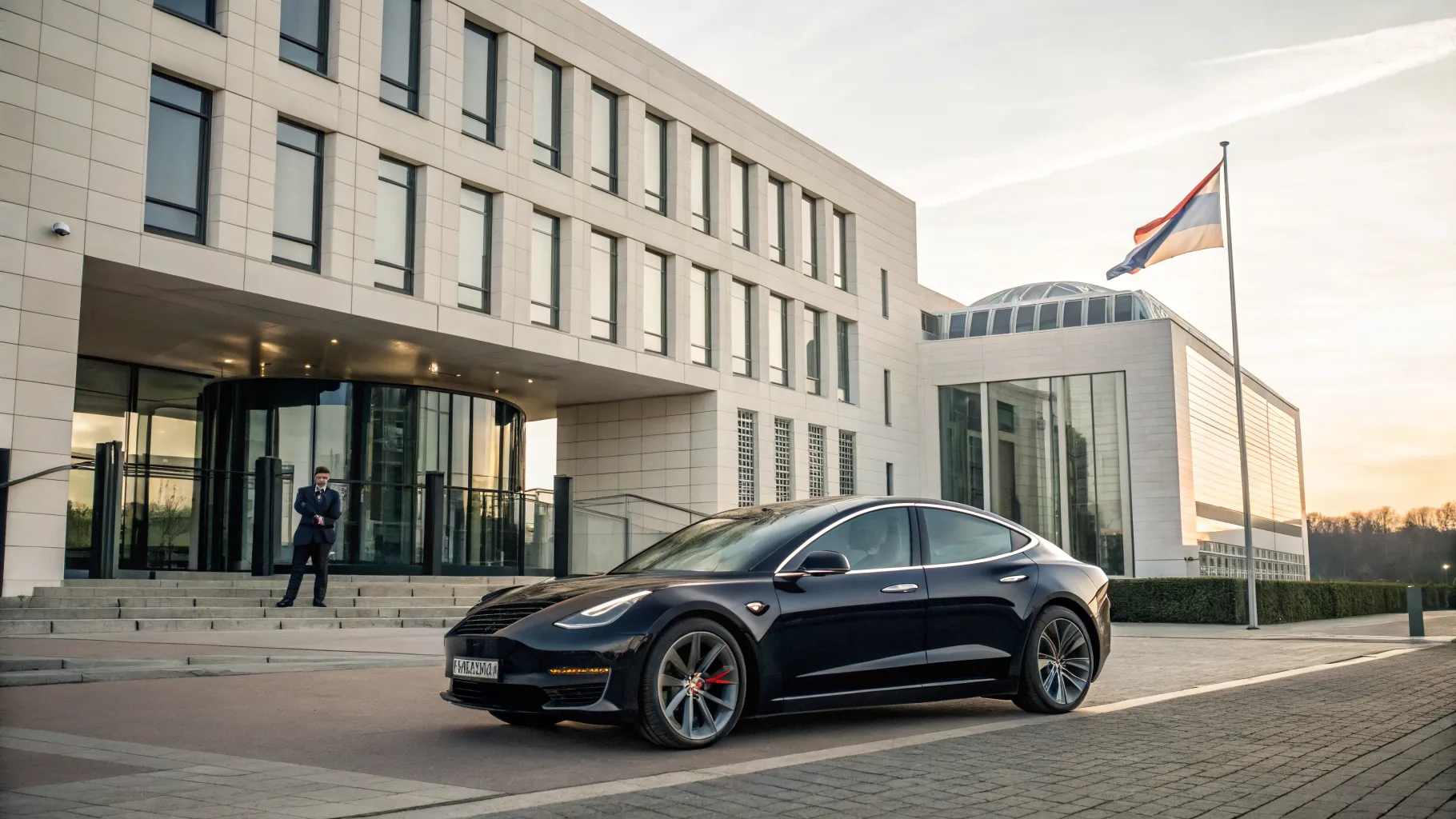
Tesla is awaiting a key ruling in the Netherlands that could shape how its driver-assistance software enters Europe. The company expects a decision by April 10 from the Dutch regulator on whether to allow its Full Self-Driving features on Dutch roads. The review is being led by the Netherlands Vehicle Authority, known as RDW, which oversees vehicle approvals used across the European Union.
In a brief statement, the company said the timeline is near-term.
“Tesla Europe expects a decision by April 10 from the Dutch vehicle authority RDW on whether to approve Full Self-Driving technology in the Netherlands,” it said on Friday.
What Is at Stake
RDW’s ruling matters because the authority can certify software updates and vehicle systems for EU-wide use through type-approval channels. A green light could let Tesla offer a wider set of driver-assistance functions in more European markets, starting with the Netherlands. A rejection or delay could keep current limits in place and trigger more testing or documentation.
Tesla’s Full Self-Driving, despite its name, requires an attentive driver with hands on the wheel. In the United States, the company offers it as a package that expands automated steering, lane changes, and navigation in city streets. Europe applies tighter rules to automated driving, which may limit certain maneuvers, speeds, or use cases unless they meet specific technical standards.
Europe’s Regulatory Path
European oversight relies on type approval and United Nations vehicle rules. These rules define what an automated system can do and how it must behave in traffic. RDW regularly works with other national authorities and technical services to test systems, review data, and validate safety claims.
Software that changes core driving functions can face extra scrutiny. Regulators often ask for evidence on human supervision, driver monitoring, emergency handling, and safe fallback behavior.
Possible Outcomes and Limits
If approved, Tesla could activate more features through software updates in the Netherlands. Any approval would likely carry conditions on use, speed, and supervision. Some features could be limited to certain roads or weather conditions.
- Approval with conditions that restrict features or speeds.
- Request for more data, leading to a delay.
- Rejection if standards are not met.
Even a positive ruling would not make the cars “self-driving” in the legal sense. Drivers would still be responsible for the vehicle at all times.
Safety, Liability, and Public Trust
Safety advocates argue that naming and marketing can confuse drivers about system limits. They warn that overreliance can lead to misuse. Tesla points to billions of miles driven with its assistance systems and regular safety updates, though regulators weigh such claims against independent testing.
Liability is another pressure point. Under current EU rules, responsibility usually remains with the driver for Level 2 systems. Any shift to higher automation would raise new questions on insurance, crash reporting, and data access for investigations.
Industry Impact and Competitive Pressure
A favorable ruling could spur other carmakers to seek similar approvals for more advanced functions. It might also push suppliers to improve driver monitoring and mapping. If the decision is negative or conditional, rivals could gain time to refine their approaches under clear regulatory lines.
Automakers are already aligning features with European standards that cover lane keeping, automatic lane changes, and highway pilot functions. The outcome in the Netherlands could signal how strict those standards will be applied to city driving and complex scenarios.
What to Watch Next
Key factors include the scope of any approval, operational limits, and reporting duties. Observers will look for requirements on driver monitoring cameras, clear handover prompts, and safe stop behavior. Any mandate for transparent logs or post-incident data could shape software updates and service terms.
For drivers, the decision may change what they can legally activate and where. For Tesla, it will set a benchmark for European rollout plans and could guide future submissions in other EU states.
With the April 10 deadline approaching, the ruling will offer a clear signal on how far automated driving features can go under Europe’s rules. Approval with tight guardrails appears the most likely path. But a delay would show regulators want more proof before allowing wider use on public roads.

Deanna Ritchie is a managing editor at DevX. She has a degree in English Literature. She has written 2000+ articles on getting out of debt and mastering your finances. She has edited over 60,000 articles in her life. She has a passion for helping writers inspire others through their words. Deanna has also been an editor at Entrepreneur Magazine and ReadWrite.