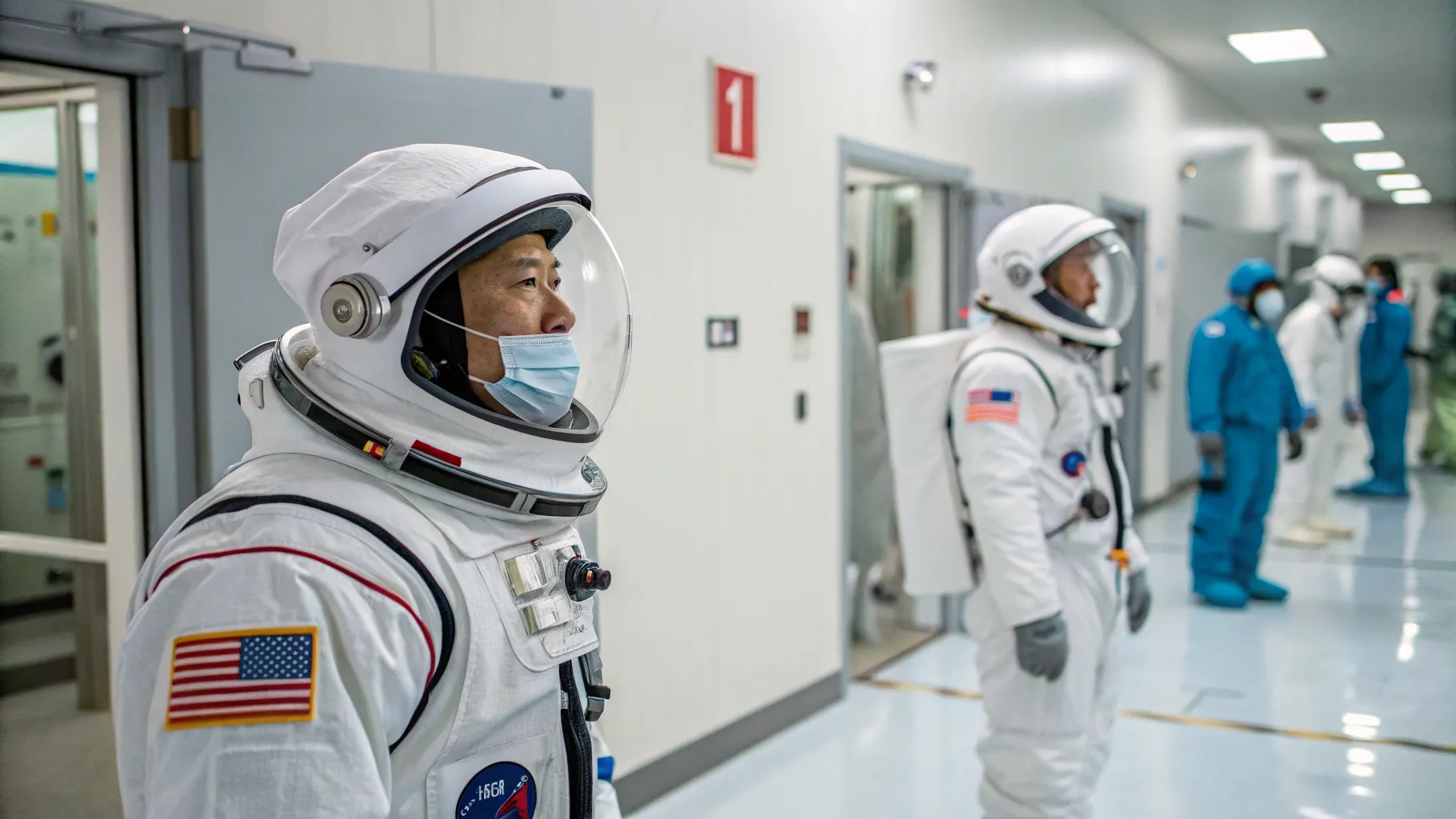
As launch day nears, astronaut crews enter a two-week quarantine designed to keep germs off the spacecraft and out of orbit. Medical teams watch their health, limit contact, and control every visitor. The goal is simple: prevent a preventable illness or a microbe hitchhiking to space.
The practice, often called health stabilization, takes place at training centers and the launch site. Agencies use it before missions to the International Space Station and other crewed flights. It reduces the risk of in-flight sickness and protects space stations from unwanted microbes.
Health Stabilization and Its Purpose
Space agencies adopted preflight quarantine during the Apollo era after crews experienced common colds before and during missions. A mild illness on Earth can become a serious problem in orbit. Immune systems can weaken in microgravity. Medical care is limited. A single respiratory virus can spread quickly in a closed habitat.
Quarantine also supports “planetary protection” and station hygiene. The International Space Station has strict microbial controls. Keeping crews healthy helps keep lab experiments clean and life support systems reliable.
“For two weeks, medical experts monitor the astronauts as they remain indoors, live in isolation, and avoid physical touch, all to prevent harmful microbes from traveling to space.”
How Quarantine Works
Agencies like NASA, ESA, and JAXA follow similar steps. The details vary by mission, but the core rules are clear.
- Limited in-person contact with only cleared and tested staff.
- Daily health checks and symptom screening.
- Controlled living spaces with filtered air and strict cleaning.
- Testing for respiratory viruses when indicated.
- Family visits allowed only under precautions or moved to video.
These steps cut the chance that a late cold or flu derails a launch. They also protect backup crew members who may join the mission on short notice.
Lessons From Recent Missions
Pandemic-era missions sharpened procedures. Crews expanded testing and reduced in-person events. Some traditions, like large send-offs, moved online. Launch providers kept schedules on track by tightening health protocols around workers who handle capsules and suits.
Flight surgeons say the two-week window matches the incubation period for many respiratory illnesses. It gives time to detect symptoms and, if needed, swap in a healthy backup. Program managers weigh the cost of isolation against the much higher cost of a scrubbed launch or a sick crew in orbit.
Balancing Risks and Human Needs
Astronauts train for years and spend long stretches away from home. The final weeks before launch are emotional. Crews describe quarantine as both reassuring and draining. Virtual visits help, but the lack of physical touch is hard on families.
Behavioral health teams plan routines to reduce stress. Exercise, scheduled calls, and clear timelines help crews stay focused. Small social bubbles, when allowed, are built around vaccinated or recently tested relatives. These steps aim to protect health without cutting off support.
Scientific and Operational Impact
Controlling microbes is also good science. Many station experiments are sensitive to contamination. Biology studies, materials research, and even air filters can be affected by extra bacteria or fungi. A cleaner start makes data more reliable.
Operationally, the policy limits mission risk. In a small spacecraft, one sick crewmate can impair tasks like docking, spacewalk prep, or emergency response. Quarantine reduces the odds of facing those challenges in flight.
What Comes Next
As commercial flights increase and crew rotations speed up, agencies will refine quarantine. Rapid testing, better air systems, and wearable health monitors may shorten isolation without adding risk. For deep space missions, like trips to the Moon or Mars, stricter controls are likely. Longer travel and no quick return raise the stakes.
The basic idea will hold: keep crews healthy, keep habitats clean, and launch on time. The two-week watch, quiet and careful, remains one of the most important steps before liftoff.
Preflight quarantine is not flashy, but it protects people and missions. Expect it to evolve with new medical tools and changing launch schedules. For now, the final countdown still begins with isolation, testing, and a promise to keep space as clean as possible.

A seasoned technology executive with a proven record of developing and executing innovative strategies to scale high-growth SaaS platforms and enterprise solutions. As a hands-on CTO and systems architect, he combines technical excellence with visionary leadership to drive organizational success.