There is a new race in computing, and it is not about clever code. It is about who controls power, land, and time. My view is simple: if you want to lead in AI, you must own your energy and your buildout. Renting is over. The engineer who walked through Meta’s Hyperion plans made that case with startling clarity. The stakes are vast for the tech sector and for the rest of us.
The New Moat: Compute, Power, Time
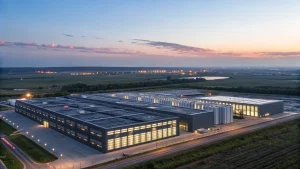
AI leadership now depends on hard assets, not just algorithms. The engineer argues that Meta’s Hyperion is not a routine data center. It is a single, purpose-built machine designed to convert electricity into intelligence at massive scale.
“Right now, AI isn’t constrained by ideas or algorithms. It constrained by compute and power.”
That line should ring in boardrooms. Meta lost ground when Llama slipped on key benchmarks. The response was blunt: buy talent and build compute. Hiring packages reached up to $300 million over four years. But the real leap is Hyperion itself: a campus aiming for up to 5 gigawatts and roughly 2 million GPUs at full buildout. The point is not elegance. The point is speed.
“Hyperion doesn’t connect to the grid, it extends it.”
That move tells us everything. Meta is not just using energy. It is becoming an energy developer. I believe that shift will define which companies stay relevant.
Evidence: Extreme Choices That Rewrite the Playbook
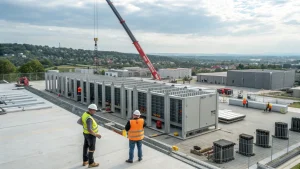
Hyperion’s design breaks rules that traditional data centers treat as sacred. Redundancy gets cut to shave months off the timeline. No diesel backup. No giant battery rooms. Training jobs can pause and resume; consumer uptime is not the target. It is a calculated risk, but a rational one.
“It’s a single machine which is designed to turn electricity into intelligence as efficiently as physics allows.”
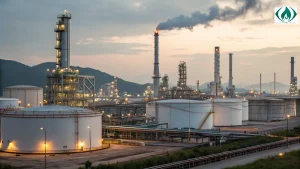
Location shows the logic. Northern Louisiana won because it could deliver land and expandable power fast. Entergy will build three gas plants sized for the campus, delivering over 2 gigawatts backed by 1.5 gigawatts of solar, with new 100-mile transmission lines and substations. Power flows straight to the racks. No sharing.
Cooling turns the scale into a civic question. A site like this can use up to 23 million gallons of water per day for cooling. The engineer points out the tougher truth: the gas plants use far more—up to 700 million gallons per day—multiplying the footprint. Louisiana’s water profile softens the risk, but the trendline is bigger than one state. Data centers could reach 20% of global energy use by 2030. That is no longer a local issue.
Inside the Racks: Where the Money Burns
Compute is the largest line item. NVIDIA’s Blackwell Ultra GPUs dominate training. The packaging is exotic, the bandwidth extreme, the cost staggering. The engineer estimates compute alone in the tens of billions—roughly $20 to $30 billion—before counting plants, lines, and buildings. Meta’s total tab could top $100 billion.
Meta’s in-house MTIA chips offload recommendation, ranking, and inference at lower cost. That frees GPUs for training. The strategy is control: optimize memory access, reduce costly data movement, and stretch each dollar of performance. It is the only way to keep up with a race where scale defines relevance.
What Matters Most Right Now
From the engineer’s account, three lessons are hard to ignore. Here is how I read them:
- AI is an infrastructure fight. The winners secure land, power, grid access, and permits—years in advance.
- Scale sets the pace. Without enough compute, ideas don’t ship.
- Speed beats elegance. Shipping first can be worth more than building perfect.
This strategy is not risk-free. The bet is that more scale equals more intelligence. That is not guaranteed. Hyperion could be a blueprint—or a very expensive error. And the aim is not lofty. These models will optimize engagement, holding our attention longer and tighter. The social cost is real.
My Take—and What We Should Do
Hyperion shows the future of AI is physical. Power plants, transmission lines, and water rights now sit at the core of machine learning. I support building the capacity we need, but I want stricter guardrails.
We should demand clear energy sourcing, tight water accounting, and transparency on emissions. We should push for more on-site solar, storage, and waste-heat reuse. And we should insist that these systems serve more than ad targeting.
The companies that control compute will shape how intelligence grows. The public should shape the rules. I want AI that advances research, health, and education—not just engagement.
My conclusion: Own the grid if you must. But own the responsibility that comes with it. Regulators, investors, and communities should make that the price of entry.
Call to action: Push for local permitting that ties buildouts to clean power commitments, water restoration targets, and transparency on model use. If this is our next factory, it should earn its place.
Frequently Asked Questions
Q: What makes Hyperion different from typical data centers?
It is built as a single giant machine for training AI, with dedicated power plants, high-speed interconnects, and design choices that trade redundancy for speed.
Q: Why did Meta pick northern Louisiana?
The site offered a large, flat campus, fast permits, expandable power, and water access. Few places can provide land and multi-gigawatt power on short timelines.
Q: How big is the energy demand?
Hyperion targets up to 5 gigawatts over time, with about 2 gigawatts by 2030. That scale requires new plants, long transmission lines, and on-site distribution.
Q: What about water use and local impact?
Cooling can reach tens of millions of gallons per day, with much recirculated. The power plants use far more. Oversight should require conservation plans and restoration projects.
Q: Is bigger always better for AI performance?
No. Scale helps, but efficiency, chip design, and software matter. Hyperion could set a model—or show the limits of scale without smarter use.