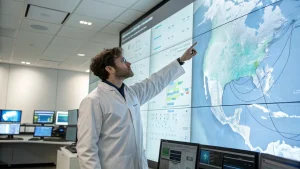
A new artificial intelligence tool designed to model the sun has demonstrated significant improvements in solar flare prediction capabilities. According to its developers, the system can forecast solar flares with 16 percent greater accuracy while requiring only half the processing time compared to existing prediction methods.
Solar flares, intense bursts of radiation from the sun’s surface, can impact Earth’s communications systems, satellites, and power grids. More accurate and faster predictions could provide critical additional warning time for operators to protect sensitive infrastructure.
Advanced Prediction Capabilities
The AI-powered solar modeling system represents a notable advancement in space weather forecasting technology. By incorporating machine learning algorithms to analyze solar data, the tool can identify patterns and indicators that might precede a solar flare event.
The dual improvement in both accuracy and speed marks a significant step forward for the field of heliophysics. The 16 percent increase in prediction accuracy could substantially reduce false alarms while catching more potential solar events before they occur.
Perhaps equally important is the reduction in processing time, which allows forecasters to issue warnings much earlier than previously possible. This time advantage could prove crucial for critical infrastructure operators who need to implement protective measures.
Implications for Space Weather Monitoring
Solar flares can cause major disruptions to modern technology systems. When these energetic bursts reach Earth, they can:
- Disrupt radio communications
- Degrade GPS accuracy
- Damage satellites
- Cause power grid fluctuations or outages
The improved prediction system could benefit numerous sectors that rely on space-based technologies, including telecommunications, aviation, defense, and power utilities. With more accurate and timely warnings, these industries can take preventive actions to minimize potential damage.
“This represents a significant improvement in our ability to forecast potentially disruptive solar events,” said one of the system’s developers. “The combination of increased accuracy and faster processing gives us a much better chance to mitigate impacts on critical infrastructure.”
Technical Approach
While specific technical details about the AI model remain limited, the system likely analyzes vast amounts of solar observation data to identify subtle precursors to flare activity. Machine learning algorithms excel at finding patterns in complex datasets that might not be apparent to human observers.
The tool appears to build on previous solar modeling efforts but adds sophisticated AI capabilities to enhance prediction performance. By processing and analyzing solar imagery and other observational data, the system can make faster and more accurate assessments of flare probability.
The development team has not yet disclosed whether the system is currently operational or still undergoing testing before deployment to space weather forecasting centers.
As solar activity continues through its 11-year cycle, with the current cycle expected to peak in the coming years, improved prediction tools will become increasingly valuable. The new AI-based system could help scientists and infrastructure operators better prepare for the solar maximum period when flares and other solar events become more frequent and intense.

A seasoned technology executive with a proven record of developing and executing innovative strategies to scale high-growth SaaS platforms and enterprise solutions. As a hands-on CTO and systems architect, he combines technical excellence with visionary leadership to drive organizational success.