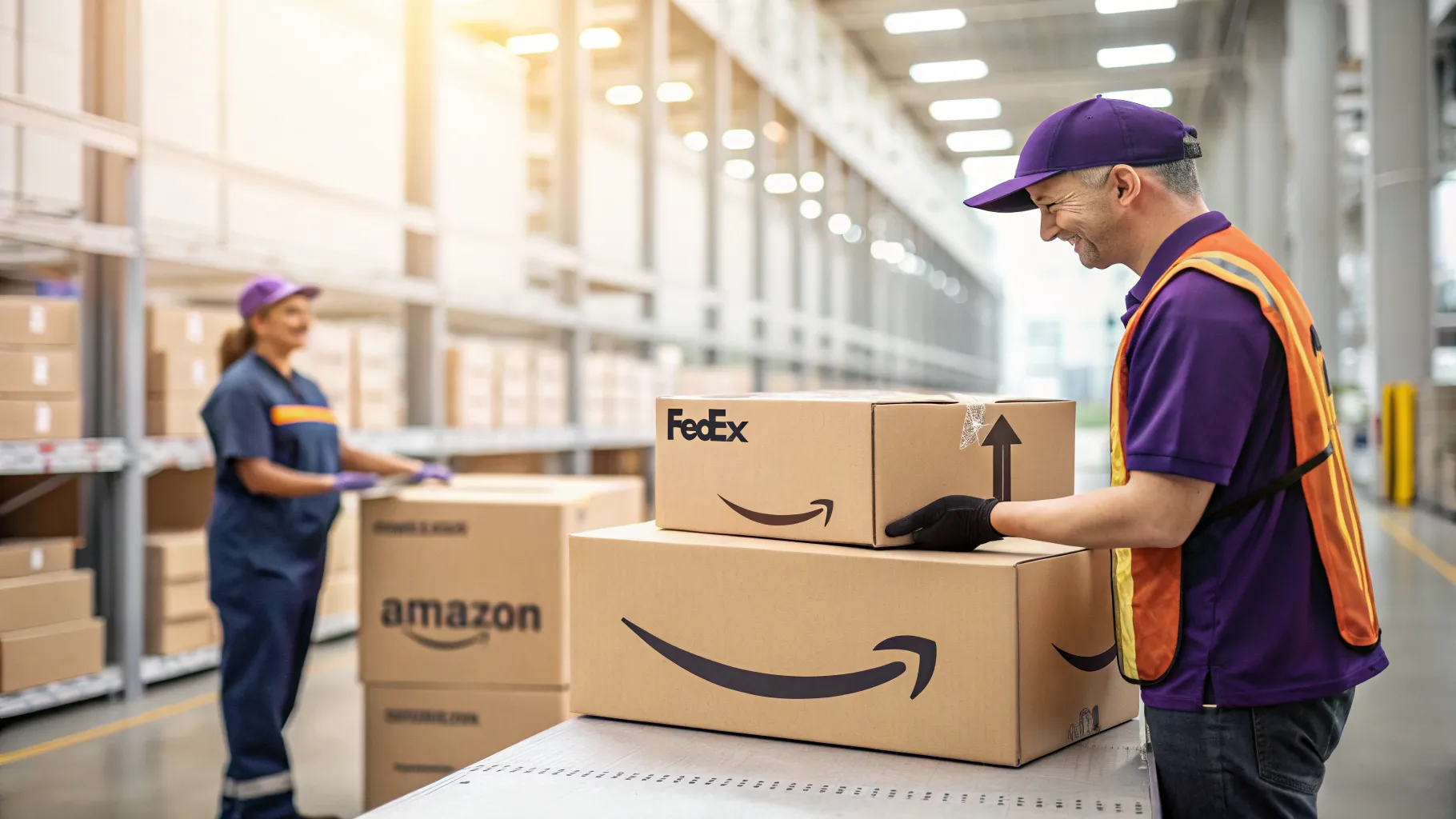
After years apart, Amazon and FedEx are working together again, linking up on customer returns in a move that could reshape how millions of packages make their way back to sellers. The renewed cooperation follows their split in 2019 and adds a fresh option for shoppers seeking an easier drop-off. The change signals shifting strategies in e-commerce logistics as both companies navigate costs, speed, and customer expectations.
From Split to Partial Reconnection
Amazon and FedEx ended their shipping ties in 2019 amid intense competition and performance concerns. Since then, Amazon built a vast delivery network and leaned on partners like UPS and the U.S. Postal Service. FedEx focused on other retailers and enterprise clients while expanding its own e-commerce tools.
Returns have been a pain point for the entire sector. Reverse logistics is expensive, slow, and prone to waste. Retailers have introduced more drop-off points and pushed for lower-cost methods. Amazon broadened its options through Whole Foods, Kohl’s, and locker networks, steering customers to locations that reduce handling and packaging.
What the New Option Offers
The new tie-up lets Amazon customers use participating FedEx locations for eligible returns. While exact steps can vary by item and region, the approach adds more neighborhood sites for people who prefer an in-person handoff. More venues can shorten trips and spread foot traffic during peak periods, like the holidays.
For FedEx, the move brings shoppers into FedEx Office stores, where staff can assist with packaging and direct customers to other services. For Amazon, it diversifies the return network and may lower costs by balancing volume across partners.
Putting It to the Test
GeekWire’s Todd Bishop examined how the partnership works in practice, describing his hands-on review this way:
Amazon and FedEx severed their logistics relationship in 2019. Now they’re patching things up, and GeekWire’s Todd Bishop put the new returns partnership to the test.
Real-world checks help answer common questions: How fast is the handoff? Are instructions clear? Do store associates know the process? Early user experiences will shape public perception and determine whether the option becomes a habit for frequent shoppers.
Why Returns Matter Now
Returns rates for online orders sit in the mid-teens as a share of sales, according to industry estimates. That translates into hundreds of billions of dollars every year flowing backward through the supply chain. Each touchpoint—customer, store, carrier, warehouse—adds cost and time.
Retailers have responded with nudges that favor low-cost channels and box-free methods. Carriers have introduced technology to speed intake, consolidate shipments, and route goods for resale or refurbishment. Adding FedEx locations to Amazon’s menu follows this pattern: more choices, simpler steps, and a push to reduce packaging and transit miles.
Wider Industry Ripples
The agreement highlights a pragmatic shift. Intense rivals can still cooperate when it suits their bottom lines. It also pressures other carriers and store partners to refine their own return experiences. UPS, the U.S. Postal Service, and retail drop-off partners may look to reduce wait times, add staff training, or expand hours to keep pace.
For sellers on Amazon’s marketplace, faster and clearer returns can improve customer satisfaction but also raise concerns about costs and restocking. The net effect will depend on item eligibility rules, handling fees, and how quickly goods get back to inventory or liquidation channels.
What Shoppers Should Watch
- Which items are eligible for drop-off at FedEx locations.
- Whether packaging or labels are required for each return.
- Any fees if multiple free options are available nearby.
- Processing speed from drop-off to refund.
Environmental impact remains a key question. Consolidated drop-offs at staffed locations can cut packaging waste and reduce extra trips. The outcome depends on routing, regional volumes, and how quickly items are sorted for reuse or recycling.
The renewed link between Amazon and FedEx stops short of full shipping integration, but it marks a calculated step on a problem that touches every online order: what happens when a purchase goes back. The early test runs will show whether the process is clear, quick, and worth repeating. If customers adopt it at scale, expect more carriers and retailers to copy the model—and for returns to keep shaping how e-commerce giants partner, even as they compete.

Senior Software Engineer with a passion for building practical, user-centric applications. He specializes in full-stack development with a strong focus on crafting elegant, performant interfaces and scalable backend solutions. With experience leading teams and delivering robust, end-to-end products, he thrives on solving complex problems through clean and efficient code.