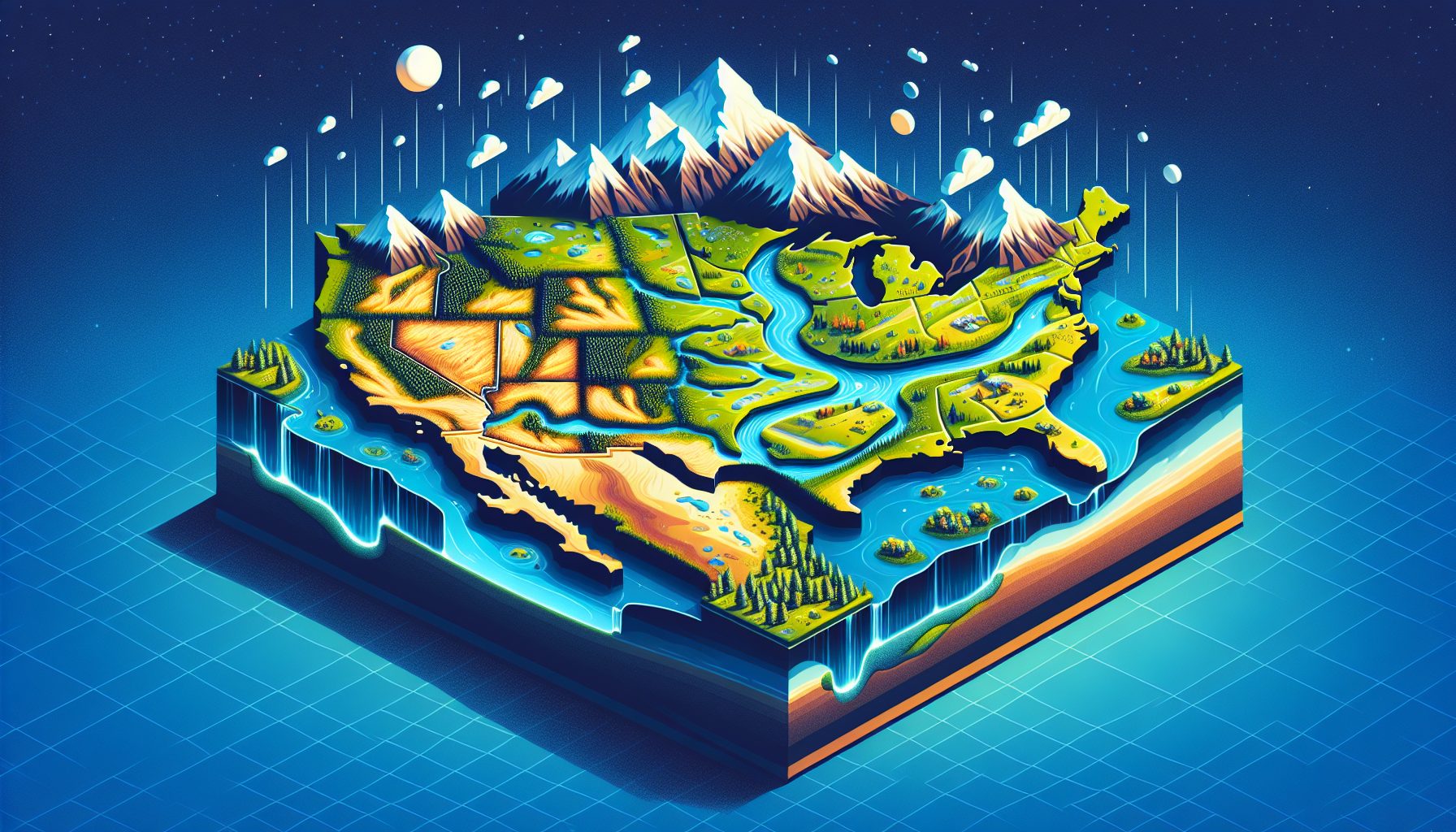
Most Americans can expect wetter winters in the future due to global warming, according to a new study led by a University of Illinois Chicago scientist. Akintomide Akinsanola and his team found that overall winter precipitation will increase across most of the country by the end of the 21st century. The study, published in npj Climate and Atmospheric Science, also indicated an increased frequency of “very wet” winters, which historically rank in the top 5% of total U.S. winter precipitation.
By the end of the century, these previously rare winters could occur as often as once every four years in parts of the country. These changes are expected to have significant implications for agriculture, flooding, and other climate-sensitive areas. Akinsanola noted that this expected increase in winter precipitation is much more robust compared to the projections for summer or other seasons, where changes are more uncertain.
Using 19 Earth system models, the team analyzed changes across seven U.S. subregions and projected precipitation at the end of the century (2070-2099) relative to the present period (1985-2014). They found an overall increase in mean winter precipitation of about 2%–5% per degree of warming across the United States.
Wetter winters expected across America
The largest increases were seen in the Northwest and Northeast regions. Six of the seven regions are also expected to experience more frequent “very wet” winters, with the sharpest increases in the Northeast and Midwest. The southern Great Plains, including states like Texas and Oklahoma, showed very small and highly uncertain projected changes.
In this region, extreme dry events are expected to offset the increasing extreme wet events. The study highlighted that changes in winter precipitation will have a significant nationwide impact, possibly more so than expected changes in spring and summer precipitation. The mix of precipitation will also likely shift from snow to rain, leading to lower snow depth and additional stress on existing infrastructure.
“There will be a need for updating or upgrading infrastructure because we’re not just talking about mean precipitation, but also an increase in extreme events,” Akinsanola said. “Drainage systems and buildings will have to be improved to cope with potential floods and storm damage.”
In ongoing research, Akinsanola plans to predict changes in precipitation and other extreme events on a more local level. He conducts some of his research in association with the Environmental Science Division at Argonne National Laboratory, where he holds a joint appointment.

Noah Nguyen is a multi-talented developer who brings a unique perspective to his craft. Initially a creative writing professor, he turned to Dev work for the ability to work remotely. He now lives in Seattle, spending time hiking and drinking craft beer with his fiancee.