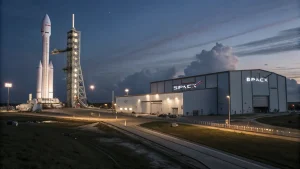
NASA’s next crewed mission around the moon is taking shape, with a defined 10-day plan that will test spacecraft systems and human performance for future lunar landings. Scheduled to launch from Kennedy Space Center, the flight will send four astronauts—Reid Wiseman, Victor Glover, Christina Koch, and Jeremy Hansen—on a lunar flyby before returning to Earth. The mission is designed to prove out the Orion spacecraft and Space Launch System (SLS) under crewed conditions, laying groundwork for later surface expeditions.
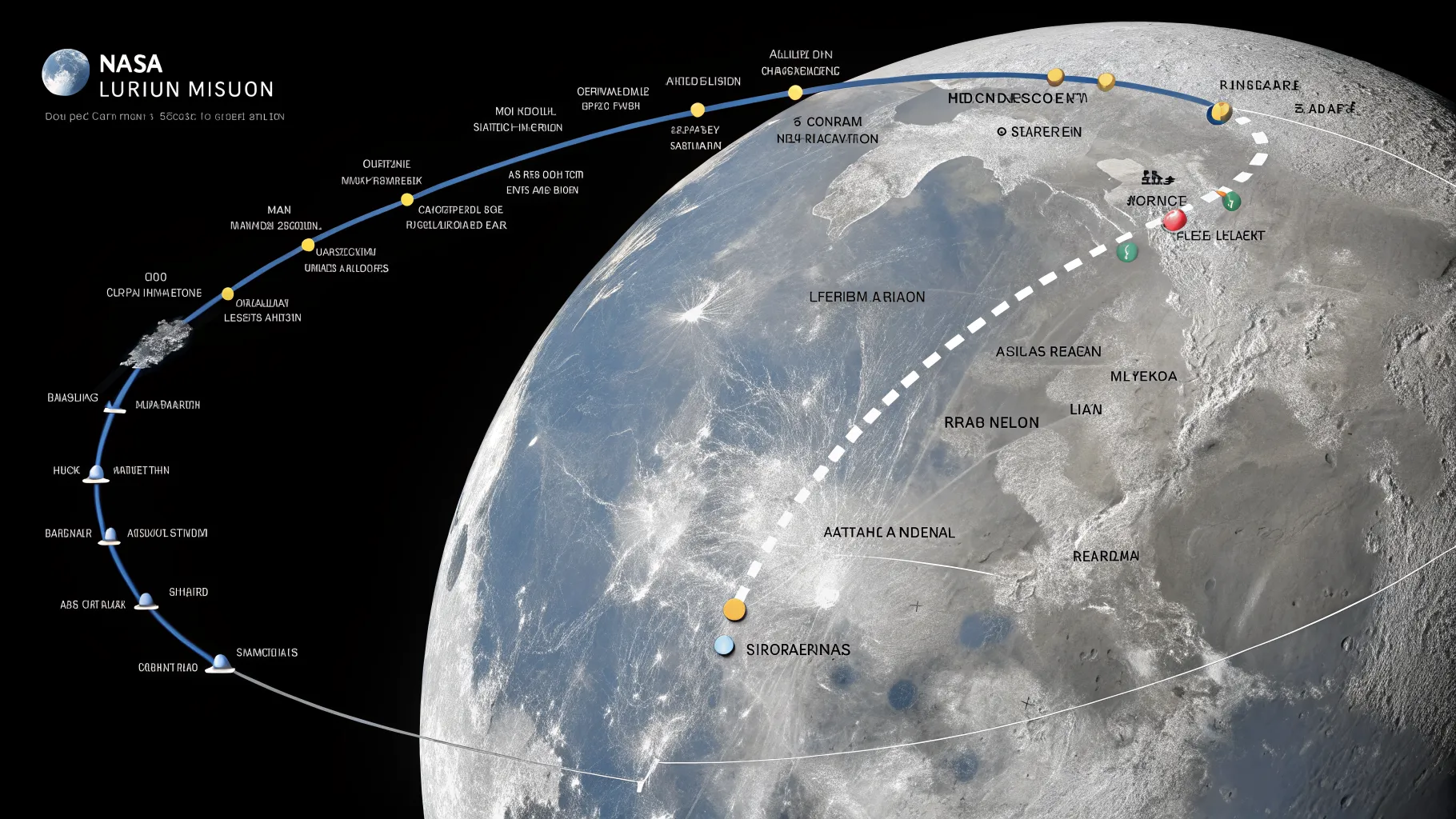
“The Artemis II crew’s 10-day journey to the moon has distinct phases.”
From Apollo to Artemis
Artemis II marks the first crewed voyage to lunar distance since Apollo 17 in 1972. The return to deep space follows Artemis I, the uncrewed 2022 test that sent Orion around the moon and back over 25 days. That flight validated the rocket and capsule but also flagged items for refinement, such as heat shield performance during reentry. NASA says the crewed follow-on will execute a shorter mission with a closer lunar pass to gather data while managing risk.
The Artemis program’s broader goal is to establish a sustained presence at and around the moon. Artemis III aims to land astronauts near the lunar south pole later in the decade, using a commercial lander staged in lunar orbit. Artemis II is the bridge between testing hardware and committing crews to the surface.
What the 10 Days Look Like
Mission planners describe a step-by-step timeline that moves from low-Earth orbit to deep space and back. Each segment checks a different system or task under real conditions:
- Launch and ascent on SLS, followed by insertion into Earth orbit for initial system checks.
- Manual piloting and proximity operations to verify crew controls and navigation.
- Trans-lunar injection burn to depart Earth orbit and begin the outbound leg.
- Free-return trajectory that swings the crew around the moon and points them home without a major course change if needed.
- Lunar flyby designed to bring Orion near the far side, enabling long-distance comms and tracking tests.
- Return cruise, reentry at lunar velocities, and splashdown in the Pacific under parachutes.
NASA highlights the free-return path as a key safety feature. If a system anomaly occurs after departure, gravitational dynamics can carry the crew back with minimal propulsion.
Why This Test Matters
Artemis II will collect data across life support, guidance and navigation, heat shield performance, and radiation exposure. Engineers will compare results with Artemis I to confirm models and close remaining gaps. The crew will practice manual control, a skill that could be essential during docking or aborts on later missions.
Operational habits are another focus. Short, repeatable checklists, quick-look data reviews, and efficient sleep and meal schedules will inform procedures for longer flights. The agency wants to prove that crews can maintain tempo without overtaxing resources or attention.
Crew Roles and Training
Commander Reid Wiseman leads the mission. Pilot Victor Glover, a naval aviator and former ISS resident, will run many of the dynamic flight tasks. Mission specialists Christina Koch, who holds the record for the longest single spaceflight by a woman, and Jeremy Hansen of the Canadian Space Agency will manage experiments, navigation support, and public engagement events.
Training has emphasized manual flying, emergency procedures, and capsule egress. The crew has rehearsed ocean recovery with Navy teams, tested suits and seats for long-duration comfort, and practiced comms for the long light-time delays near the moon.
Risks, Fixes, and What to Watch
Heat shield performance is a top watch item. Artemis I returned at lunar speed and shed more char than expected in some areas. NASA reports design margins remain adequate and has refined models and inspections for Artemis II. Mission managers also point to redundancy in life support and power systems, with added checkouts during the early orbits to catch any anomalies before committing to the moon.
Public interest will likely center on the lunar flyby distance and the live imagery from Orion. The mission also offers a check of the deep space network’s capacity for higher bandwidth communications during crewed operations.
Looking Ahead to a Surface Landing
If Artemis II meets its objectives, NASA will move closer to placing crews on the lunar surface with Artemis III. Data from this flight will guide final settings for reentry, suit operations, and spacecraft handling. It will also inform how NASA times burns and orbits for staging a lander near the south pole, where lighting and terrain add planning challenges.
For now, the focus is on a clean 10-day arc: prove the rocket, prove the capsule, and bring the crew home safely. The results will shape not only the first landing attempt, but also the cadence of later expeditions and the build-out of a small station in lunar orbit.
Artemis II is poised to show whether the program’s step-by-step method can carry crews to deep space on a regular schedule. The coming months will be about final testing, readiness reviews, and a flight plan that keeps each phase tight and verifiable. If execution matches the plan, the moon will feel closer than it has in half a century.

Kirstie a technology news reporter at DevX. She reports on emerging technologies and startups waiting to skyrocket.