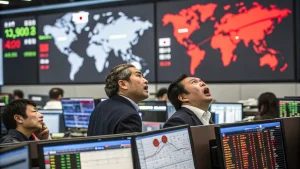
Asian shares fell sharply as traders reacted to a possible escalation in the Middle East, pulling back from risk and seeking safer assets. The slump hit major markets across the region during Monday’s session, reflecting broad caution over energy prices, shipping routes, and global growth.
Early declines were seen in Tokyo, Seoul, Hong Kong, and Sydney. Trading desks cited a quick drop in sentiment and thin liquidity. Many investors chose to wait for clearer signals from Washington and regional capitals.
Stock markets in Asia drop sharply, with investors nervous over escalation of Middle East conflict.
Market Moves Across the Region
Financials, technology, and consumer stocks led losses. Exporters came under pressure as demand risks rose. Airlines and logistics shares weakened on the prospect of higher fuel and freight costs.
Energy producers and defense-linked names held up better. Some commodity shares rose on supply concerns. Currency markets showed a tilt toward the dollar and the yen, signaling a flight to safety.
Drivers Behind the Sell-Off
The pullback reflects concern that the conflict could spread and disrupt energy flows. Investors also fear new sanctions or shipping delays that could squeeze supplies. Those risks could lift oil prices and feed inflation.
Central banks in Asia have only recently gained ground against price pressures. A new energy shock would complicate policy. Higher fuel costs can slow growth and raise living expenses, hitting consumer demand.
- Energy supply risks threaten trade routes and freight costs.
- Potential inflation flare-ups could delay rate cuts.
- Corporate margins face pressure from rising inputs.
Safe Havens and Commodities
Gold edged higher as buyers sought protection. Traders also reported inflows into government bonds. Oil prices climbed on supply and security worries, adding to the strain on transport and manufacturing.
Import-heavy economies are more exposed to oil shocks. For them, weaker currencies can worsen the hit, since fuel is priced in dollars. Policymakers must balance growth support with price stability.
Historical Parallels and Risks Ahead
Markets often react quickly to Middle East tensions. Past flare-ups saw short bursts of volatility tied to energy and shipping. The scope and length of disruption usually determine how long the stress lasts.
A contained conflict tends to produce a brief risk-off move. A wider fight, or a sustained jump in oil, can lead to a more persistent downturn in equities. Corporate earnings guidance in the next few weeks will be key.
Corporate and Policy Response
Companies with heavy fuel use may signal new hedging steps. Exporters could revise orders and shipping routes to manage risk. Lenders will watch credit conditions in trade finance.
Regional central banks may provide liquidity if volatility grows. They will also watch currency swings. Clear communication can help steady bond and equity markets.
What to Watch Next
Investors will track shipping movements in key straits and canals. Any signs of damage to energy facilities could spark more buying in oil. Diplomatic moves will matter as much as military ones.
Earnings season will test market nerves. Companies face questions on costs, pricing power, and demand. Guidance on inventories and supply chains will help set the tone for the next quarter.
Asian stocks are under pressure, and caution rules for now. The path forward hinges on the scope of the conflict and the reaction of policymakers. If tensions ease and oil stabilizes, markets could find a floor. If supply risks rise, investors should expect more swings and a longer wait for clarity.

A seasoned technology executive with a proven record of developing and executing innovative strategies to scale high-growth SaaS platforms and enterprise solutions. As a hands-on CTO and systems architect, he combines technical excellence with visionary leadership to drive organizational success.