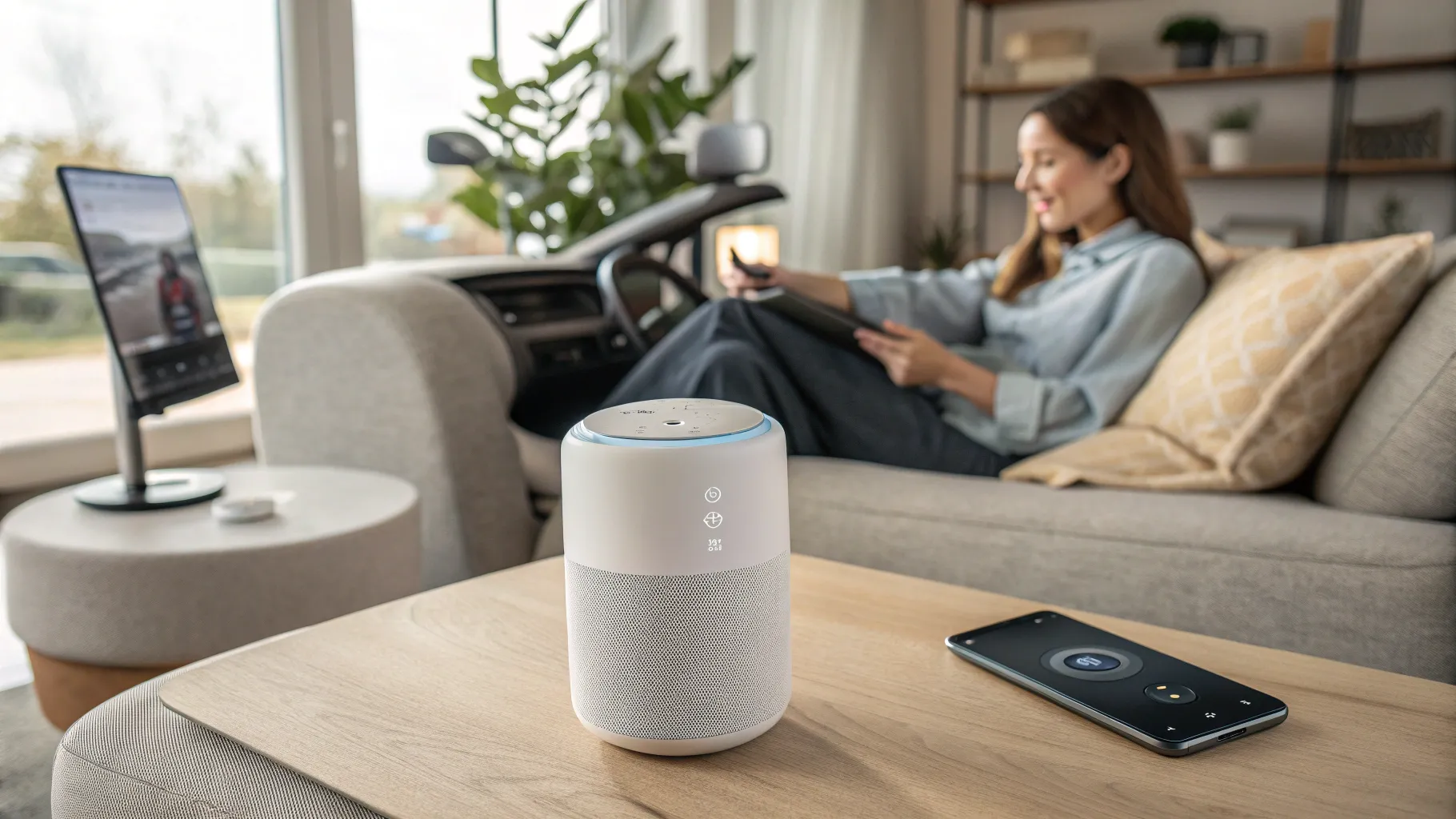
Audio controls are moving from novelty to habit as voice features spread from living rooms to cars and wearables. A recent discussion made the case that speech will guide how people use technology, and soon. The message was plain: big and small devices are listening because users want less friction and faster results.
The push is visible across major platforms and brands. Smart speakers are entrenched in homes. Automakers are building voice assistants into dashboards. Tech companies are adding microphones to earbuds and glasses. The shift is reshaping design choices, data policies, and daily routines.
“Audio is the interface of the future. Every space — your home, your car, even your face — is becoming an interface.”
From Homes to Cars: Voice Everywhere
Voice assistants entered millions of homes through smart speakers and TVs. Consumers use them for timers, music, weather, and lights. As features improved, microphones spread into thermostats, doorbells, and appliances.
In cars, voice tools are no longer optional. Drivers can ask for directions, call contacts, or adjust settings without taking hands off the wheel. Automakers pitch voice as a safety and convenience feature. Many roll out their own assistants while also supporting popular platforms from big tech firms.
Wearables are the newest frontline. Smart earbuds already support hands-free commands. Smart glasses add microphones and cameras that respond to voice prompts. The goal is simple: quick actions without pulling out a phone.
Why Companies Are Betting on Speech
Executives see three reasons for the surge.
- Speed: It is faster to speak than to type.
- Accessibility: Voice reduces barriers for people with limited vision or mobility.
- Ubiquity: Microphones are cheap and fit in small devices.
Retailers track voice shopping experiments, though use remains modest. Media services chase voice-driven discovery to surface content without menus. Workplace tools add voice notes and meeting summaries as remote work persists.
Developers are also training assistants to handle follow-up questions and context. That reduces the need for exact phrases. Improvements in speech recognition and on-device processing cut latency and keep more data local.
The Promise and the Limits
Experts caution that voice is not perfect for every task. Public spaces can be noisy. Some users feel awkward speaking commands in shared areas. Accuracy still lags with uncommon names and dialects.
Interface designers note that voice works best for short actions. Long forms, complex edits, or visual choices still favor screens. This means future products will blend buttons, touch, and speech rather than pick a single mode.
One speaker in the discussion argued that the trend is still early but inevitable. The idea is that microphones will sit beside every sensor. Companies will need to decide what should be said out loud and what should stay silent.
Privacy, Trust, and Regulation
Privacy remains the top concern. Always-on microphones raise questions about consent and storage. High-profile incidents of accidental recordings have fueled scrutiny.
Some makers now add clear mute switches and light indicators. Others process commands on the device and send less data to the cloud. Independent audits and clearer labels are becoming a selling point.
Lawmakers are watching. Data retention rules and children’s privacy laws already apply. More proposals are under review as voice features reach classrooms, offices, and cars.
Market Signals and What to Watch
Smart speaker growth has slowed, but usage per device is up. Consumers who keep their devices use them more often and for more tasks than in early years. Auto sales of voice-equipped models continue to climb as assistants become standard in mid-range trims.
Wearables may set the pace for the next wave. If smart glasses and earbuds deliver reliable voice performance, phones could recede into pockets for longer stretches. That would shift app design and advertising money toward audio prompts and spoken results.
Businesses are testing call-center tools that summarize calls, coach agents, and surface next steps. Media companies experiment with voice navigation on TVs and cars to reduce churn. Education tools add read-aloud and speech practice modes to reach more learners.
The bottom line is clear. Speech is gaining on taps and clicks, one context at a time. Companies that build clear, private, and useful voice features will earn trust. Users will judge by speed, accuracy, and control.
Watch for three signals in the months ahead: more on-device processing, stricter privacy labels, and better handling of accents and languages. If those improve, the claim that “audio is the interface of the future” will look less like a bold prediction and more like a day-to-day reality.

Senior Software Engineer with a passion for building practical, user-centric applications. He specializes in full-stack development with a strong focus on crafting elegant, performant interfaces and scalable backend solutions. With experience leading teams and delivering robust, end-to-end products, he thrives on solving complex problems through clean and efficient code.