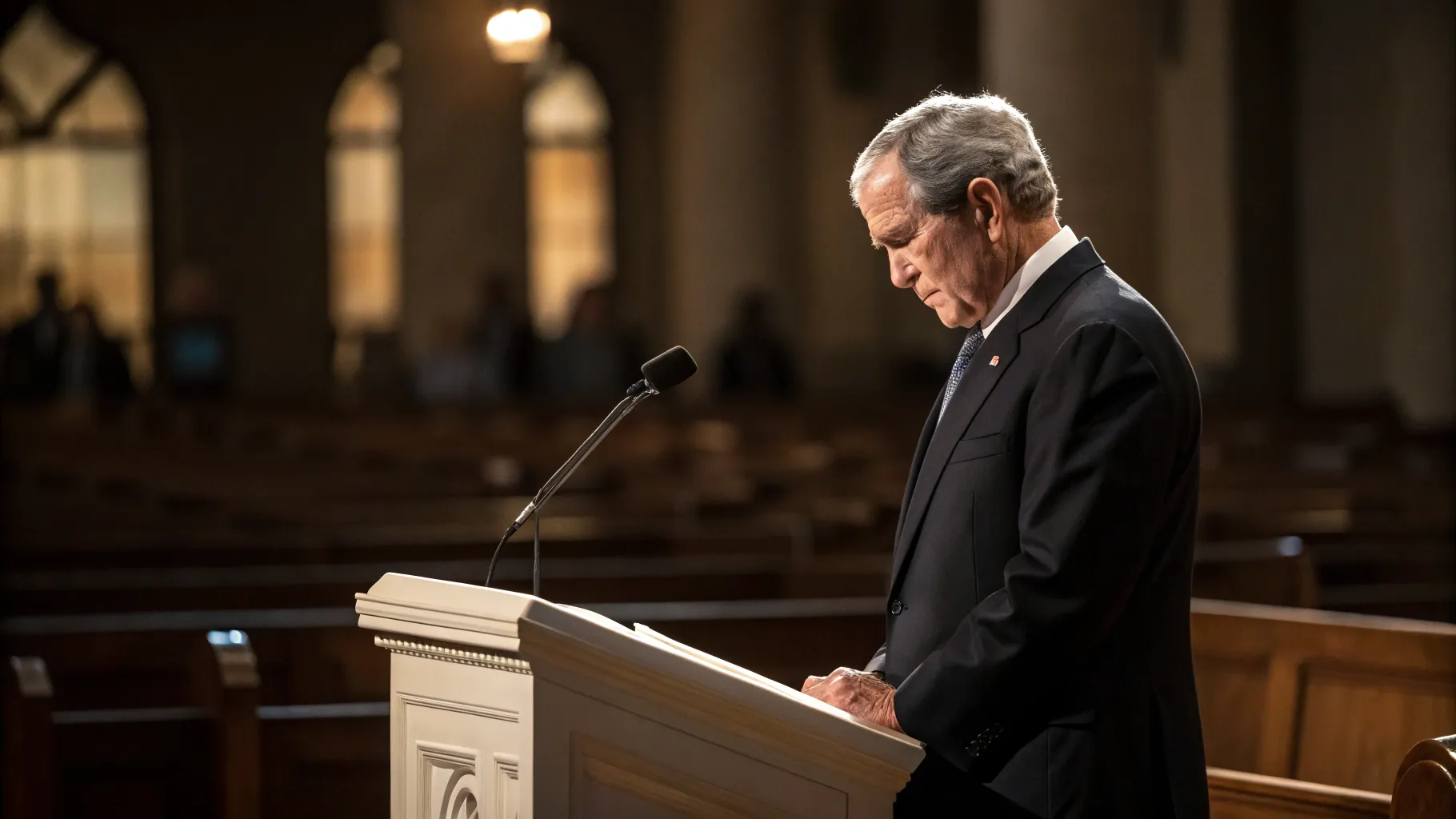
Former President George W. Bush paid tribute to former Vice President Dick Cheney at a funeral service, calling him a trusted partner and a loyal friend. Bush reflected on their time in office, his decision to choose Cheney as his running mate, and Cheney’s role as a father, husband, and public servant. The remarks framed a moment of remembrance for a central figure in two Republican administrations and decades of national security debates.
A Partnership Forged in Crisis
Bush and Cheney entered office in 2001 and faced immediate tests. The September 11 attacks reshaped the White House’s agenda and elevated the vice president’s influence on national security and foreign policy. Cheney became a leading voice on intelligence reform, homeland security, and the use of military force.
In his eulogy, Bush emphasized their bond and shared purpose.
“I was proud to call Cheney my vice president and friend.”
He also recalled the moment he selected Cheney for the ticket in 2000. He described a running mate known for discipline, preparation, and a deep knowledge of government.
Cheney’s Long Career in Public Service
Cheney’s public life spanned more than 30 years. He served as White House chief of staff under President Gerald Ford. He later represented Wyoming in the House of Representatives, including a stint as House minority whip. Under President George H.W. Bush, he led the Pentagon as secretary of defense during the Gulf War.
His return to government as vice president in 2001 placed him at the center of policy after 9/11. He championed expanded surveillance, the creation of the Department of Homeland Security, and a more aggressive posture against terrorist groups.
Legacy and Debate
Supporters credit Cheney with clarity on security threats and a firm approach to defense. Critics point to the Iraq War and the use of harsh interrogation methods as central failures. Both views remain part of his legacy.
- Backers say he helped modernize intelligence and keep focus on counterterrorism.
- Opponents argue decisions on Iraq and detentions caused lasting damage abroad and at home.
Bush’s remarks focused on service and character. He described Cheney as devoted to his family and unwavering in public duty, echoing a theme of loyalty under pressure.
Policy Outcomes That Still Shape Washington
The administration’s choices continue to influence defense and intelligence policy. The wars in Afghanistan and Iraq reshaped U.S. force structure, veterans’ care, and foreign alliances. Oversight of surveillance programs and detention practices remains a live debate in Congress and the courts.
Analysts note that budgets, authorities, and agencies formed or expanded after 2001 still define the government’s response to threats. The Department of Homeland Security, established in 2002, grew into one of the largest federal departments. Debate over executive power in wartime remains unsettled.
A Personal Farewell From a Former President
Bush’s eulogy was also personal. He spoke about the decision to add Cheney to the 2000 ticket and the trust that followed. He highlighted family as a constant in Cheney’s life, placing his public work in the context of private commitments.
Funerals for national figures often invite a reexamination of their policies. Bush’s tribute balanced respect with reflection on a turbulent period that defined both men.
What Comes Next
Historians, former officials, and veterans will continue to assess Cheney’s record. The programs and doctrines shaped during his tenure will remain part of policy debates, from intelligence oversight to the use of force.
For many inside government, the questions raised during the Bush-Cheney years still guide planning for new threats. Bush’s farewell placed emphasis on duty and partnership, signaling how the era will likely be remembered—through the choices made in crisis and the leaders who made them.
Bush’s final message was clear: the former vice president was a steadfast ally who shaped policy during challenging years. As Washington revisits those chapters, the arguments over security, liberty, and war will endure. The service offered a reminder that history often judges both outcomes and the people who carried them out.

Deanna Ritchie is a managing editor at DevX. She has a degree in English Literature. She has written 2000+ articles on getting out of debt and mastering your finances. She has edited over 60,000 articles in her life. She has a passion for helping writers inspire others through their words. Deanna has also been an editor at Entrepreneur Magazine and ReadWrite.