China launched a test satellite on Tuesday to advance satellite internet technology. The Long March-2D carrier rocket lifted off at 12:00 p.m. (noon) Beijing Time from the Jiuquan Satellite Launch Center in northwest China. The test satellite successfully entered its planned orbit.
It will conduct technical verification and experiments, including mobile-to-satellite broadband connections and the integration of space-ground networks. This launch marks the 567th mission for the Long March series of carrier rockets. The Shanghai Academy of Spaceflight Technology (SAST) revealed that the payload consisted of satellite Internet technology test satellites.
These satellites will primarily be used for technical tests and verification for direct-to-cell satellite broadband and space-ground network integration. The Ministry of Industry and Information Technology (MIIT) Radio Management Bureau stated that the launch carried four internet satellite test satellites, designated 0001-0004. They are equipped with Ka and other frequency band payloads.
Commercial satellite manufacturers and operators Changguang Satellite Technology and Galaxy Space confirmed they provided a pair of satellites for the launch.
China advances satellite internet testing
This launch is part of China’s ongoing “satellite Internet technology test satellite” program.
It is the sixth launch since 2023, with previous missions utilizing different launch vehicles and carrying 1-3 satellites each. Information released about these missions has been minimal. The development of these satellites has been largely attributed to the China Academy of Space Technology (CAST), a major state-owned spacecraft maker.
China is already advancing two low-Earth-orbit mega constellations, although the specific role of these test satellites in these projects remains unclear. China also launched three separate “high-orbit” internet satellites in 2024, intended for geostationary orbit. Details about these spacecraft are sparse, leading to speculation about their potential military or dual-use applications.
These missions form part of China’s broader strategy to strengthen its communications space infrastructure, ensuring sovereign access to space-based internet services without relying on foreign networks. In 2020, China’s government added “satellite internet” to its list of priority “new infrastructures.
Tuesday’s mission was China’s 17th orbital launch of 2025. Driven by mega constellation projects and the development of new launchers, China could potentially target 100 or more launches in 2025.
Highlight missions will include the Shenzhou-20 and 21 human spaceflight missions to Tiangong, and the near-Earth asteroid sample return mission expected to launch in May.
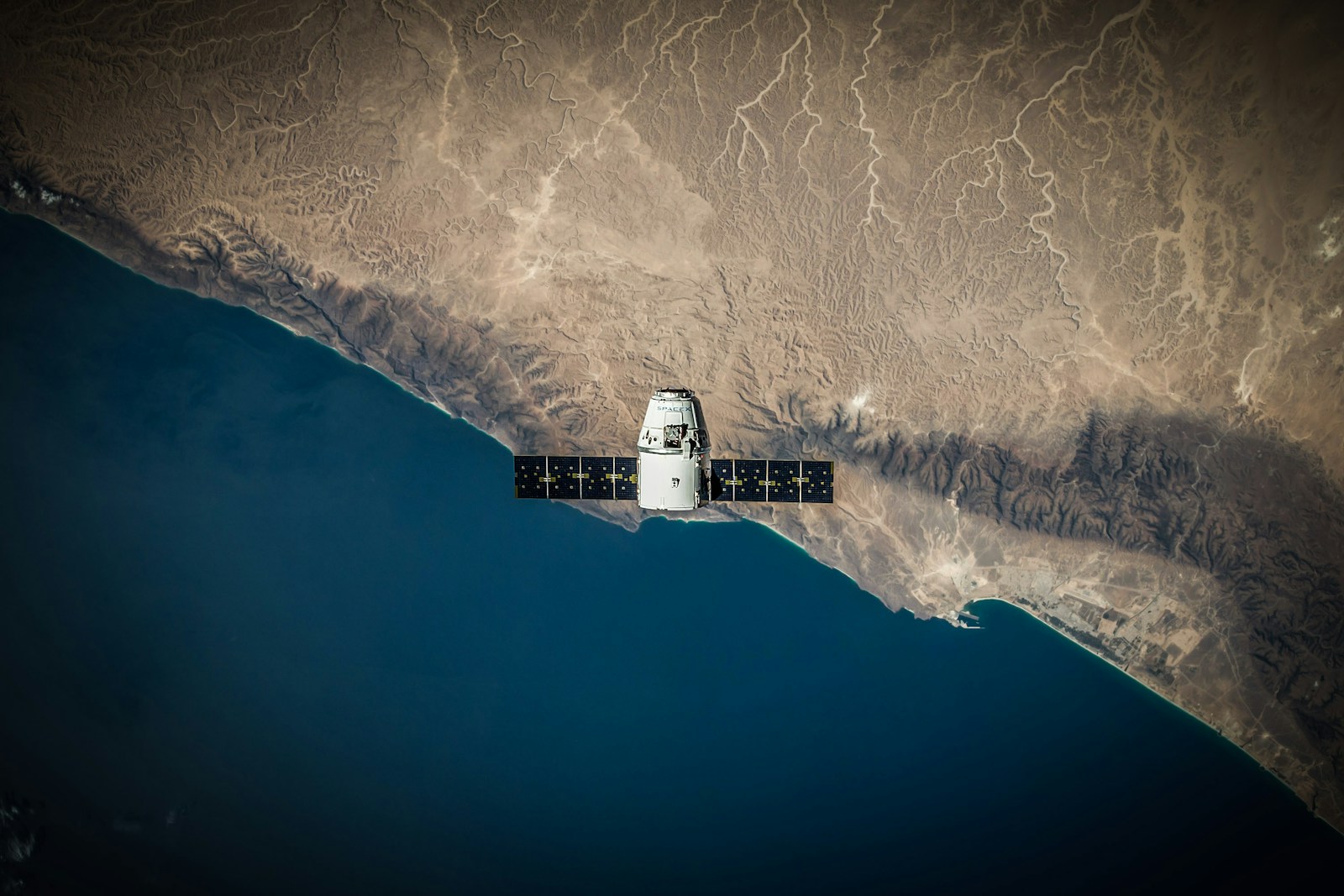
Image Credits: Photo by SpaceX on Unsplash

April Isaacs is a news contributor for DevX.com She is long-term, self-proclaimed nerd. She loves all things tech and computers and still has her first Dreamcast system. It is lovingly named Joni, after Joni Mitchell.