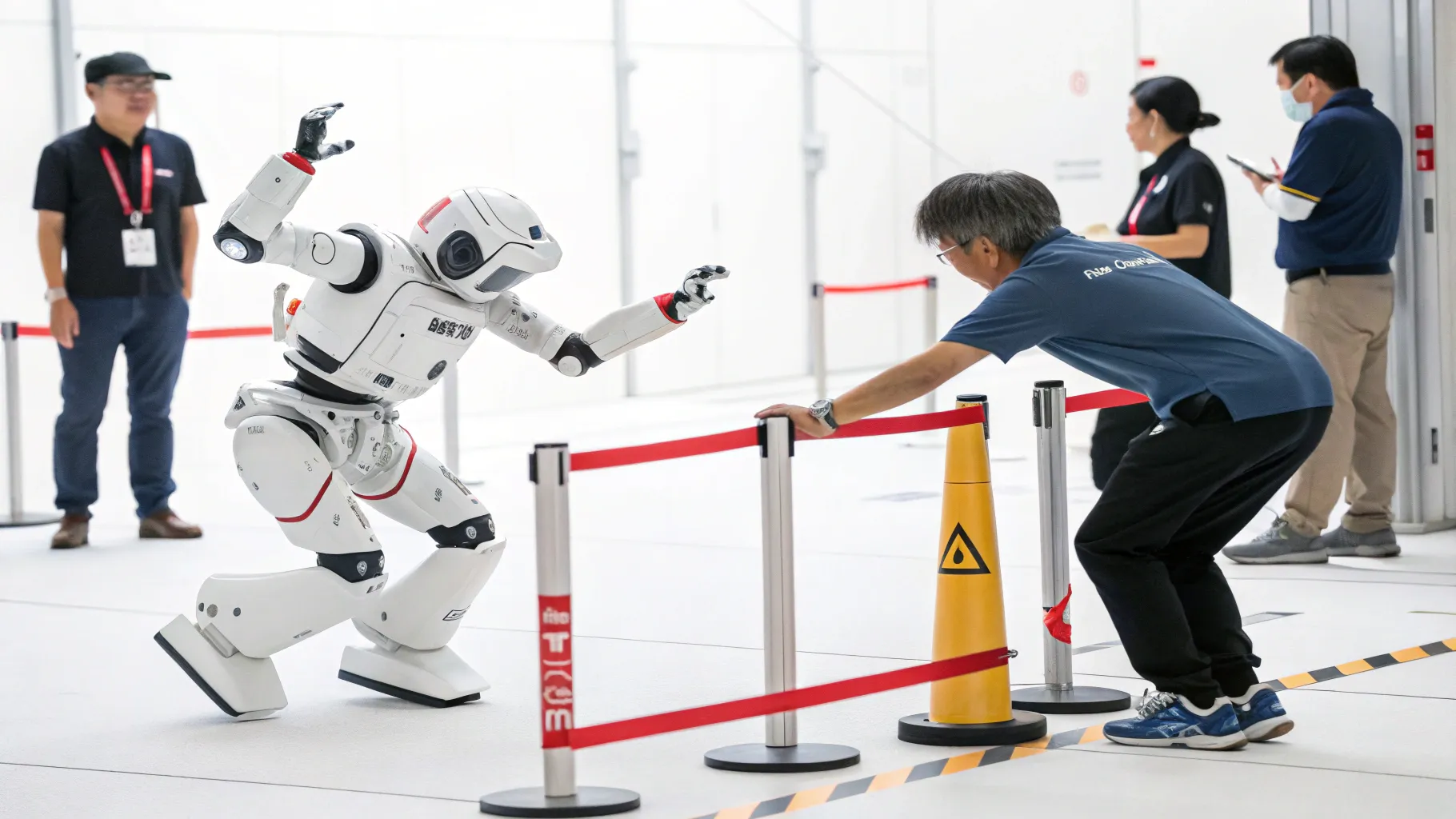
A dancing robot halted mid-performance after getting tangled in a small barrier, prompting on-site staff to step in and help. The brief interruption, captured by bystanders during a recent public demonstration, ended without injury or damage. It offered a clear reminder that even polished displays of autonomous movement still rely on human oversight.
Organizers paused the show while staff freed the machine and checked its systems. The performance resumed shortly after. While minor, the incident drew attention because such demos often serve as marketing showcases for consumer and industrial robotics. It also raised questions about how these systems handle cluttered spaces and surprise obstacles.
What Happened and Why It Matters
“A dancing robot needed some human guidance after getting caught up in a barrier.”
The scene was routine until the robot’s footwork brought it into contact with a low divider. Its gait faltered, and it could not back away on its own. Staff intervened and repositioned it, an example of human-in-the-loop support that remains common in public trials.
Such hiccups, while rare in polished videos, are part of live demonstrations. The setup often includes temporary stages, wires, and barriers meant to manage crowds or hide equipment. These elements can create blind spots for sensors or snag moving parts.
Background: Robots on Stage and in the Street
Public demos of mobile robots have grown more common as companies showcase advances in balance, navigation, and synced movement. Viral clips of robots dancing have set high expectations for smooth performance. Yet those videos are usually choreographed, tested in controlled environments, and edited for clarity.
In real-world settings, robots must parse mixed lighting, reflective surfaces, and unexpected obstacles. Low barriers are a known challenge. They can fall below a camera’s field of view or reflect signals in ways that confuse object detection. This makes staging and safety planning essential for crowd-facing events.
- Obstacle detection can struggle with low, narrow, or glossy objects.
- Terrain changes, such as cords or uneven mats, affect stability.
- Crowd dynamics add movement and noise, increasing sensor workload.
Safety Protocols and Human Oversight
Event teams often use redundant safeguards. These include remote stops, perimeter barriers, and staff trained to intervene quickly. The quick response in this case shows how human supervision can reduce risk when autonomous systems face edge cases.
Manufacturers have long emphasized that autonomy is not absolute. Even with advanced perception, robots benefit from procedural checks. That means mapping the stage, testing routines with props in place, and planning recovery steps if the robot stalls or loses balance.
Technology Limits: What the Stall Suggests
The barrier entanglement points to gaps common in mobile robotics. Short objects can evade detection or confuse depth estimates. Dance routines add extra complexity because timing takes priority, leaving less room to re-plan motions on the fly.
Engineers often tune systems to favor smooth movement during choreography. When a conflict occurs, the safest action may be to freeze to avoid falls or collisions. That seems to be what happened here, allowing staff to step in safely.
Public Perception and Industry Response
For audiences, the pause is a reminder that stagecraft and engineering share the spotlight. A stall can dent the show’s momentum, but it can also improve trust if handled transparently. Clear staffing and visible safety steps tend to reassure viewers more than perfectly edited clips.
For companies, such incidents provide valuable data. Logs from the event can help refine sensor thresholds, adjust choreography to maintain clearance, and improve recovery behaviors. Small changes—like raising barriers, adding bright edge tape, or modifying footwork—can reduce risk during repeat performances.
What Comes Next
Expect more live showcases as robotics moves from labs to everyday venues. Each outing tests how well systems handle cluttered stages and shifting conditions. Improvements will likely focus on obstacle perception, better path replanning during timed routines, and clearer operator tools for quick resets.
The brief stall will change little about the march of demos, but it offers a practical lesson: public-facing robots still benefit from human guidance. That partnership keeps performances safe and gives engineers the feedback they need to improve.
As demonstrations scale, watch for tighter venue standards, enhanced safety signage, and smarter choreography that avoids low-profile hazards. The incident ended calmly, and the show went on—an outcome that reflects where the field stands today: advanced, capable, and still grounded by careful planning.

Kirstie a technology news reporter at DevX. She reports on emerging technologies and startups waiting to skyrocket.