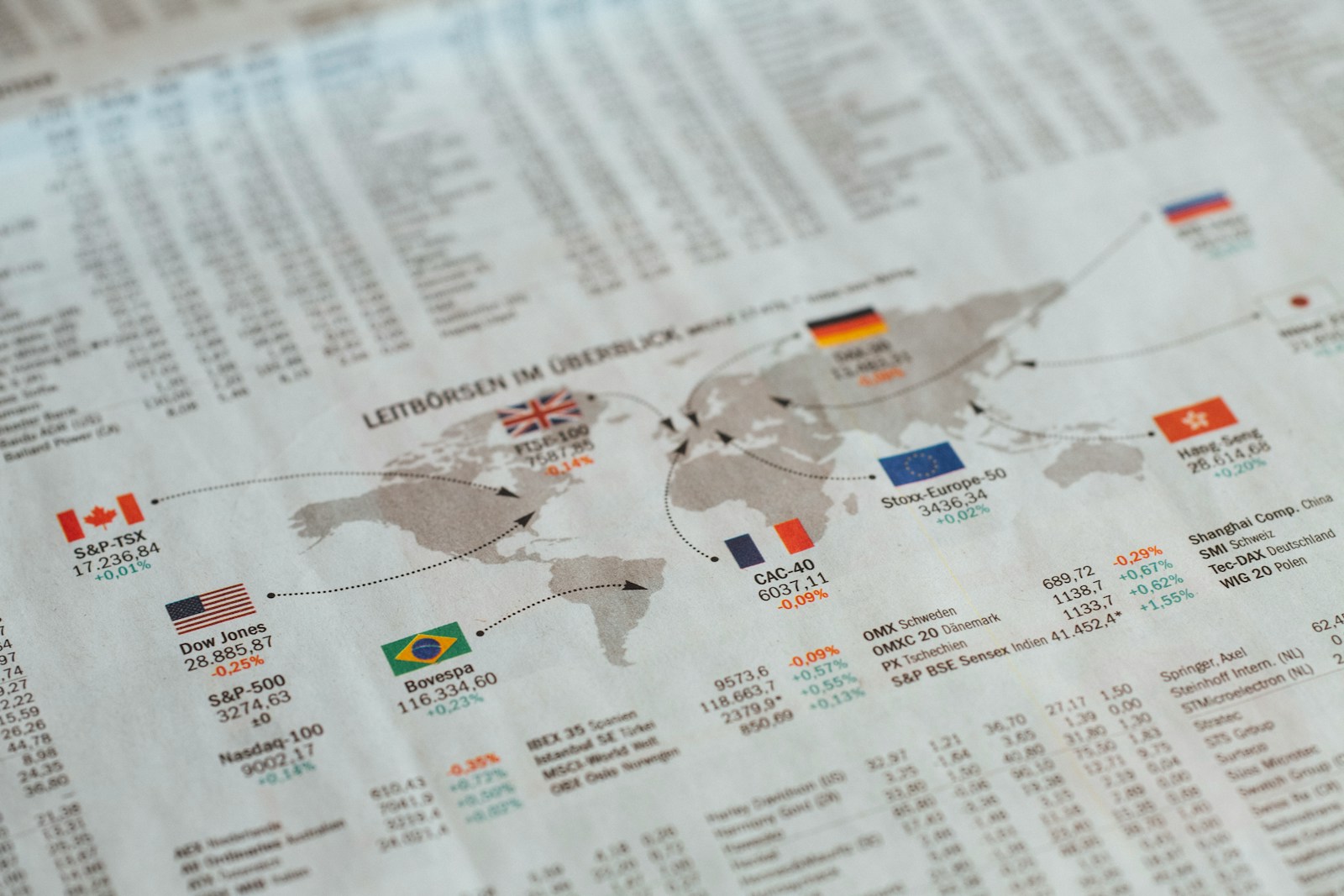
Many Americans find themselves puzzled by the current state of the US economy, with conflicting signals from key indicators creating widespread uncertainty. The mix of news about inflation, trade policies, Federal Reserve decisions, and employment data has left both ordinary citizens and some experts struggling to form a clear picture of economic conditions.
This confusion isn’t limited to those without financial expertise. Even seasoned observers acknowledge the difficulty in interpreting the sometimes contradictory economic signals that have characterized recent months.
Mixed Economic Signals
The US economy currently presents a complex picture with multiple indicators pointing in different directions. Inflation data, which had shown signs of cooling earlier in the year, has remained volatile, making it difficult for consumers to predict their future purchasing power.
Trade figures add another layer of complexity. International commerce patterns have been affected by global tensions, supply chain adjustments, and policy shifts, creating an economic landscape that’s challenging to navigate.
The Federal Reserve’s monetary policy decisions, particularly regarding interest rates, have added to public confusion. As the central bank attempts to balance inflation control with economic growth, its communications and actions are scrutinized for hints about the economy’s trajectory.
Employment Puzzle
Job market data presents perhaps the most perplexing aspect of the current economy. While unemployment figures remain relatively low by historical standards, other employment indicators show signs of cooling. This includes:
- Slowing job creation in some sectors
- Shifts in labor force participation rates
- Changes in wage growth patterns
- Regional disparities in employment opportunities
These mixed signals in the labor market make it difficult for workers, job seekers, and businesses to make informed decisions about their economic futures.
Public Perception Gap
The disconnect between economic data and public perception has grown more pronounced. Many Americans report feeling economic pressure despite some positive indicators, highlighting how personal financial experiences can differ from broader economic measures.
“The economy isn’t just numbers on a page. It’s how people experience their daily financial lives,” notes one economic analyst. “When official data doesn’t match personal experience, confusion is the natural result.”
This perception gap affects consumer confidence, spending patterns, and investment decisions, creating a feedback loop that further complicates economic forecasting.
Information Overload
Part of the confusion stems from the sheer volume of economic information available to the public. News cycles rapidly shift between different economic indicators, often without providing sufficient context for proper interpretation.
Social media amplifies this problem, with economic data frequently presented without nuance or proper explanation. The result is an environment where even engaged citizens find it challenging to form an accurate picture of economic conditions.
Financial experts suggest focusing on a few key indicators rather than trying to process all available economic data. They recommend tracking personal inflation experiences, local job markets, and Federal Reserve communications as starting points for understanding the broader economy.
As the economic landscape continues to evolve, both experts and ordinary Americans face the challenge of making sense of complex, sometimes contradictory information. The current state of confusion appears to be a shared experience across different segments of society, suggesting that uncertainty itself has become a defining feature of the present economic moment.

Deanna Ritchie is a managing editor at DevX. She has a degree in English Literature. She has written 2000+ articles on getting out of debt and mastering your finances. She has edited over 60,000 articles in her life. She has a passion for helping writers inspire others through their words. Deanna has also been an editor at Entrepreneur Magazine and ReadWrite.