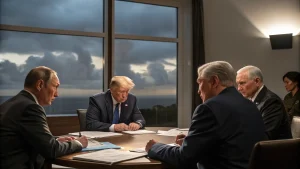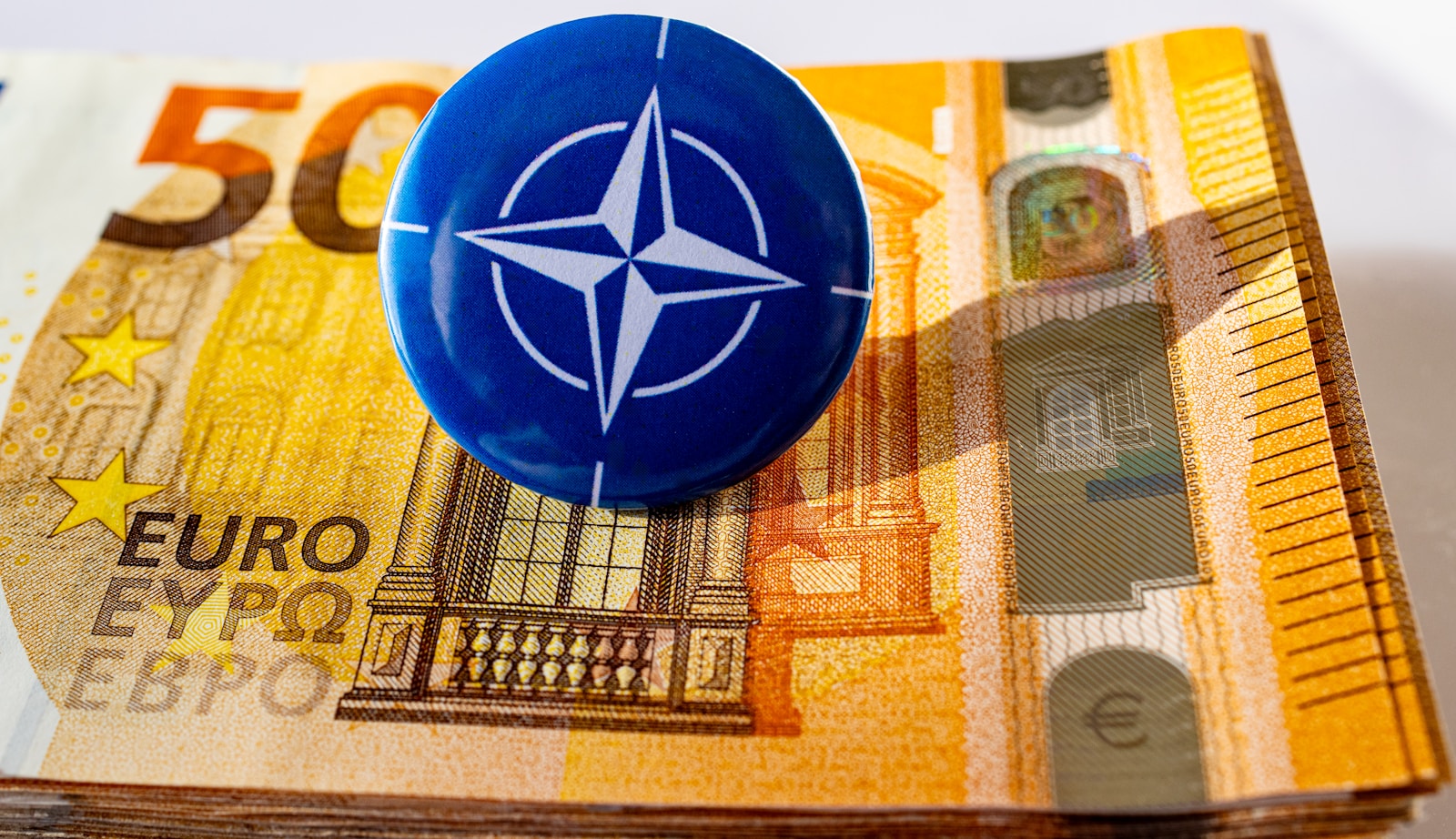
Earlier this week, @SecGenNATO wrapped up a successful #NATOsummit where he highlighted that Allies agreed to invest 5% in defence through a historic new defence investment plan
— NATO (@NATO) June 29, 2025
Europe is increasing its military spending, but economists warn this could come at the cost of investing in climate and social programs. According to a New Economics Foundation (NEF) analysis, if EU Nato members meet the proposed 5% GDP target for defense spending, it would require an additional €613 billion annually. This contrasts with the estimated annual shortfall of €375 billion to €526 billion needed to meet the EU’s green and social goals.
At the #NATOsummit, Allies agreed on a new defence investment plan. The plan is grounded in what we know we will need to be able to deter and defend in order to keep our one billion people safe 🛡️
Learn more about defence expenditures and NATO’s 5% commitment ⤵️
— NATO (@NATO) June 28, 2025
Critics argue that the focus on military spending, driven by the US and NATO, fails to account for the security risks posed by environmental degradation and social decay.
Military expenditure raises investment concerns
Sebastian Mang, senior policy officer at NEF, stated, “If extraordinary sums can be mobilized for the military, with far lower economic returns and much lower social benefits, then the refusal to fund a just transition and stronger public services is political, not economic.”
"Over 8 decades of leadership born of gratitude from a destroyed Europe, generations of 🇺🇸officials have gotten used to European concessions to 🇺🇸 priorities. Now, they will have to get better at dealmaking & compromise."
Smart piece by Celeste Wallanderhttps://t.co/dM7iL9FAZ4— Iskander Rehman (@IskanderRehman) June 26, 2025
The NEF argues that increasing military budgets while cutting green and social spending risks fueling public backlash, widening inequality, and eroding trust in democratic institutions.
"If governments can consider raising defence spending to 5% of GDP, they cannot in the same breath say there is no money to insulate homes, decarbonise transport, strengthen care or fix the housing crises."
Read Sebatian Mang's latest blog👇https://t.co/WMo0RgK40J
— NEF (@NEF) June 29, 2025
The UK has also agreed to increase its military budget, with estimates suggesting that raising defense spending to 3.5% of GDP would cost an additional £32 billion annually. Chris Hayes, chief economist at Common Wealth, noted, “Demands for further increases in military spending have a stark opportunity cost—prioritizing clean energy would deliver the energy security whose absence was painfully exposed in 2022.”
The environmental impact of increased military spending is also a concern, with the buildup planned by Nato members (excluding the US) potentially increasing greenhouse gas emissions by nearly 200 million tonnes annually. As Europe grapples with these complex trade-offs, the debate highlights the broader question of what societies choose to prioritize in their budgets and how these choices shape future security and well-being.

Senior Software Engineer with a passion for building practical, user-centric applications. He specializes in full-stack development with a strong focus on crafting elegant, performant interfaces and scalable backend solutions. With experience leading teams and delivering robust, end-to-end products, he thrives on solving complex problems through clean and efficient code.