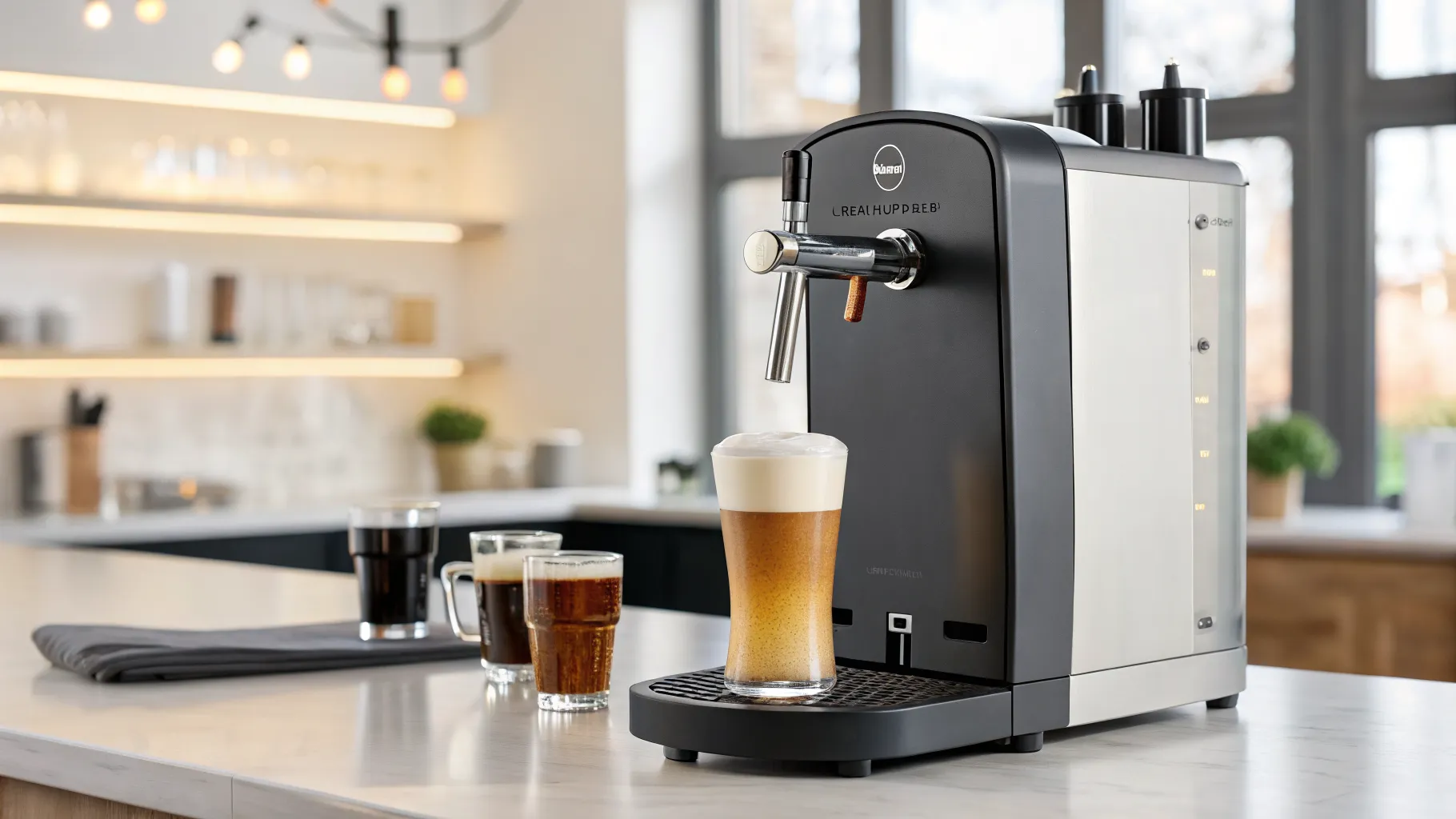
EverNitro is taking aim at the nitro beverage market with a pitch for lower long-term costs and simpler operations, positioning itself against players like NitroBrew. In a recent briefing, founder and CEO Terry Tan described an all-in-one system meant to deliver café-quality nitro drinks without recurring gas purchases. The company says it combines a small footprint with performance that matches commercial taps, seeking traction among cafés, bars, offices, and home enthusiasts.
A Pitch for Cost Savings
At the heart of EverNitro’s message is the cost of gas. Many nitro systems depend on nitrogen tanks or cartridges, which add ongoing expense and logistics. Tan argues that this is the wrong place for operators to spend money, and that technology can replace those consumables over time.
“We offer the quality of a commercial tap with the footprint of a coffee maker. While others sell you gas, we give you technology to harvest it for free,” founder and CEO Terry Tan said.
The claim suggests on-site nitrogen generation, which could reduce the need for deliveries or single-use cartridges. If the hardware cost is competitive, the model could appeal to small cafés and caterers watching margins. For large venues, predictable input costs also matter, especially during peak seasons when logistics can be tight.
Design and Use Cases
EverNitro describes its device as an all-in-one unit. That approach aims to reduce setup time, counter space, and staff training. A compact device that dispenses nitro cold brew, tea, or cocktails can help a small shop expand its menu without adding kegs or complex gas lines.
Speed of service is another key point. The appeal of nitro is a stable, creamy pour that looks and tastes consistent. If a countertop unit can deliver that experience on demand, it could serve cafés that rotate seasonal drinks, as well as bars offering lower-alcohol options like nitro espresso martinis or mocktails.
Competition and Market Context
NitroBrew and other brands set the bar for countertop or modular nitro systems, often leveraging cartridges or tank-based setups. Those solutions are proven, and they give buyers a clear path with known costs. Tank-based systems can also support high volume when managed well.
EverNitro’s strategy leans on a different cost curve. Upfront hardware may be higher, but the promise is lower variable expense. For buyers, the choice reduces to reliability, total cost of ownership, and maintenance. If on-site nitrogen generation requires filter changes or periodic servicing, the savings must outweigh that burden.
For now, independent cafés and specialty roasters remain a core market for nitro cold brew. Offices and co-working spaces have added self-serve taps to attract tenants and employees. Bars continue to experiment with batched cocktails where nitrogen adds texture and speed. In each setting, consistency and downtime risks drive purchasing decisions as much as sticker price.
Claims and Caveats
Tan’s promise of “harvesting” nitrogen suggests less dependence on third-party gas suppliers. That could be attractive where deliveries are costly or storage space is tight. It could also reduce waste from single-use cartridges.
There are open questions. Buyers will ask about maintenance intervals, parts availability, and long-term durability. They will also look for clear guidance on cleaning, sanitation, and warranty support. Competitors may counter with package deals that bundle service and gas at negotiated rates.
- Cost: Upfront device price versus ongoing gas or cartridge expense.
- Throughput: Ability to handle rush periods without quality loss.
- Maintenance: Schedule, parts, and staff time required.
- Consistency: Pour quality, temperature control, and foam stability.
Industry Impact and Outlook
If EverNitro’s model holds, it could pressure rivals to rethink pricing or add on-site generation options. For multi-location operators, a shift away from gas deliveries might simplify logistics and reduce carbon footprint. For single shops, it could free up working capital otherwise tied to consumables.
However, established systems have years of field use, and switching costs are real. Training, spare parts, and service networks still carry weight. Any new entrant must prove reliability across varying water quality, ambient temperatures, and drink recipes.
The next phase will hinge on pilots, third-party tests, and testimonials from busy cafés and bars. Proof points on uptime, taste, and total cost will shape adoption. If early results match the pitch, expect broader interest from offices and hospitality operators seeking predictable costs and smaller footprints.
For now, EverNitro is staking a clear claim: bring commercial-grade nitro to a countertop device and cut recurring gas spend. The coming months will test whether that promise holds under daily service demands. Buyers should watch for independent reviews, service metrics, and case studies that show how the system performs through peak periods and routine maintenance cycles.

Senior Software Engineer with a passion for building practical, user-centric applications. He specializes in full-stack development with a strong focus on crafting elegant, performant interfaces and scalable backend solutions. With experience leading teams and delivering robust, end-to-end products, he thrives on solving complex problems through clean and efficient code.