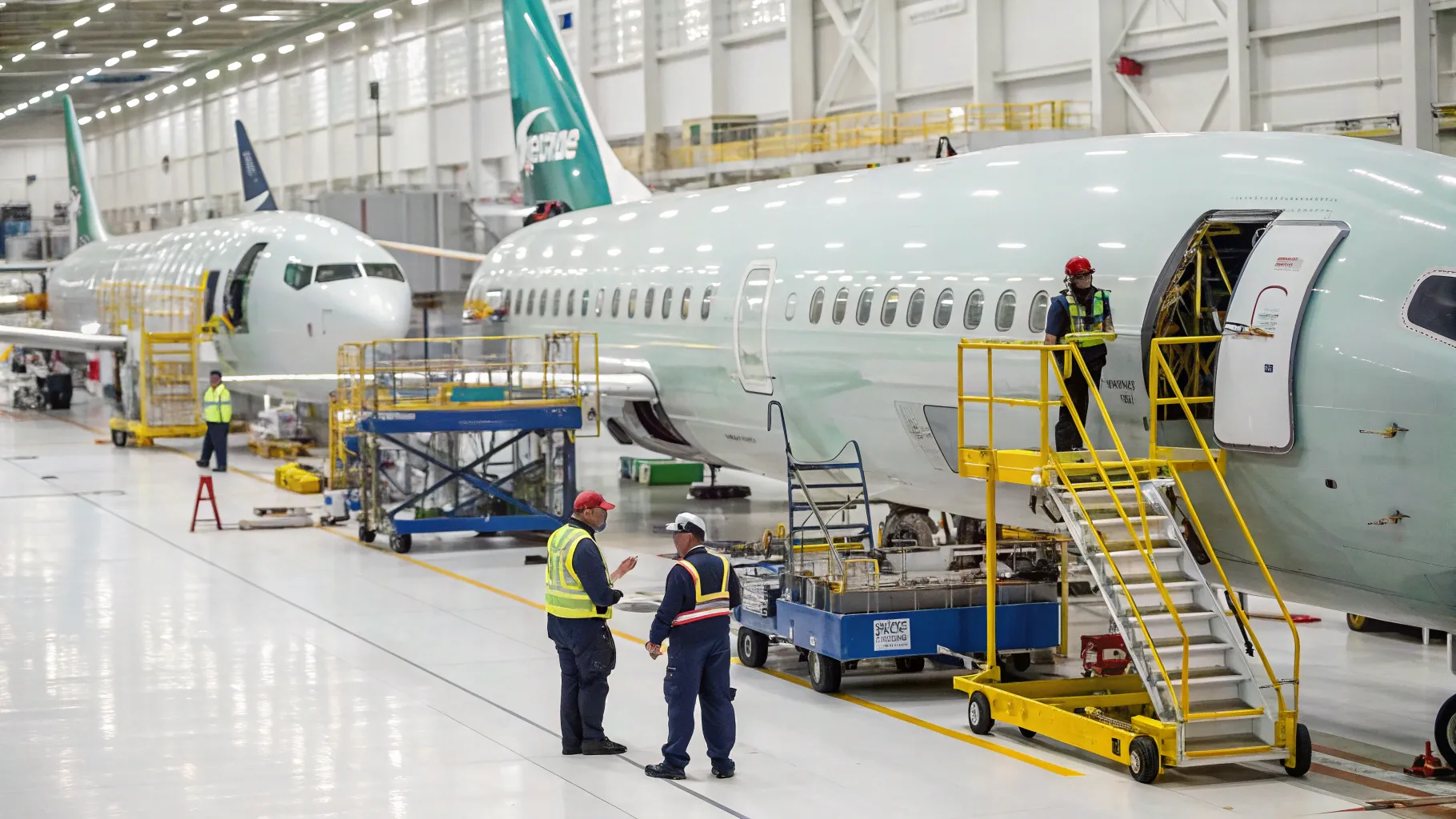
The Federal Aviation Administration moved to rein in Boeing’s output after a panel on a new 737 Max 9 blew out midair in January, setting a ceiling of 38 jets per month while safety work continued. The action reflected mounting concern over manufacturing quality and oversight at one of the world’s largest planemakers, and it rippled across airlines and suppliers in early 2024.
The cap came as regulators and airlines sought answers following the cabin blowout on a flight over Oregon. No serious injuries were reported, but the scare triggered new inspections and paused some aircraft from service. The agency said it would not allow higher production until it was satisfied with results from audits and corrective actions.
What Prompted the Cap
The trigger was a door plug failure on a nearly new 737 Max 9 operating a U.S. domestic route in early January. The panel, used to cover an emergency exit cutout, separated during climb, creating a sudden loss of cabin pressure. The incident led to temporary grounding and inspections of 171 aircraft of the same type.
Reflecting the policy, one assessment summarized:
“The FAA had capped Boeing’s production at 38 a month in early 2024 after a door plug blew out of a nearly new 737 Max 9.”
The agency also launched a detailed review of manufacturing and supplier processes tied to the 737 program. That included audits at Boeing and at Spirit AeroSystems, which builds the 737’s fuselage.
Safety Scrutiny and Oversight
This was the most forceful intervention since the 737 Max grounding in 2019–2020, which followed two fatal crashes overseas. Since then, regulators have increased direct oversight of Boeing’s production system and quality controls. In the new case, the FAA said it would keep inspectors on the factory floor and would not approve rate increases until improvements were verified.
Industry analysts note that more rigorous inspections and documentation checks are now routine. They point to recurring fit-and-finish issues flagged in recent years, including fuselage alignment problems and fastener defects. The cap tied production to measurable outcomes: reworked procedures, better supplier coordination, and proof that fixes hold up over time.
Impact on Airlines and Suppliers
The rate limit constrained deliveries to carriers counting on new single-aisle jets for their schedules. Alaska Airlines and United Airlines, both major 737 Max 9 operators, adjusted capacity plans in the first half of 2024 while awaiting aircraft returning from checks and new deliveries. Some routes saw schedule trims and equipment swaps.
Suppliers across the chain—from fuselages and wings to avionics—felt the slowdown. Lower throughput can raise unit costs and strain cash flows. Yet many vendors also welcomed tighter quality gates, arguing that catching defects earlier prevents costlier rework and disruptions later.
- Airlines delayed fleet growth targets tied to new 737 deliveries.
- Suppliers adjusted staffing and inventory to match the 38-per-month pace.
- Investors watched Boeing’s cash flow as deliveries slowed.
What Comes Next
Regulators set clear conditions before any increase above 38 per month. Boeing must demonstrate sustained process control, stronger supplier oversight, and a culture that rewards stopping work when issues arise. The company has said it is revising work instructions, tightening torque and inspection sign-offs, and expanding training for both employees and supplier teams.
Airlines are pressing for predictability. Carriers want stable delivery schedules, even at a lower rate, rather than repeated resets. Safety advocates welcome the slower approach if it reduces quality escapes.
Wider Industry Stakes
The single-aisle market is tight, with strong demand from low-cost carriers and network airlines replacing older fleets. Airbus has a large backlog for its A320neo family, leaving little room for airlines to make near-term switches. That reality increases pressure on Boeing to restore confidence in its 737 program without sacrificing rigor.
For travelers, the immediate effect has been limited, with most flights operating as planned. The larger question is whether sustained quality improvements can support a gradual return to higher output without repeating past lapses.
The FAA’s cap at 38 aircraft per month marked a reset in how production growth is earned. The latest steps tie output to verified quality, not targets alone. If the fixes prove durable, deliveries could climb later. Until then, airlines and suppliers will plan around the cap, while regulators monitor results and the industry waits for steadier ground.

A seasoned technology executive with a proven record of developing and executing innovative strategies to scale high-growth SaaS platforms and enterprise solutions. As a hands-on CTO and systems architect, he combines technical excellence with visionary leadership to drive organizational success.