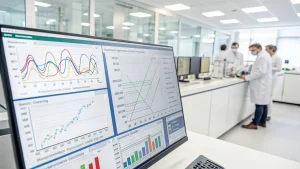
Fundamental is taking aim at a long-standing bottleneck inside large companies: turning spreadsheets, tables, and databases into useful guidance for decisions. The company has introduced a new AI model designed to analyze structured data at scale and return clear answers. It is pitching the tool as a way to help teams move faster on reporting and planning while keeping closer to the source of truth in their systems.
The pitch is direct. The company is focused on the information firms already collect in finance, sales, supply chains, and operations. That is where daily decisions get made and where delays can be costly.
Fundamental has built a new foundation model to solve an old problem: how to draw insights from the huge quantities of structured data produced by enterprises.
Why Structured Data Remains A Sticking Point
Enterprises generate rows and columns of data from transactions, sensors, and user activity. The information lives in warehouses and business systems. It fuels dashboards and quarterly reports. Yet many teams still rely on manual exports, custom queries, and spreadsheets to answer new questions. That creates slow cycles, version drift, and missed context.
AI tools have so far excelled with text, images, and code. They can draft emails or summarize documents. But structured data needs precision. A small error in a join or filter can flip a conclusion. That gap has kept analysts in the loop, even as executives seek faster answers.
How The Approach Differs From Chat-First AI
General chatbots guess tokens based on patterns in text. Work on tables must respect schema, types, keys, and business rules. A model tuned for structured data needs to map questions to exact queries, trace sources, and explain steps. It must show how it grouped, filtered, and calculated.
That calls for strong links to data catalogs and permission systems. It also calls for audit trails. Users want to see which table fed a metric and who changed a field. Trust grows when they can rerun the steps and get the same result.
Potential Uses Across Business Teams
If the tool performs as promised, it could speed routine analysis and let experts focus on harder work. Possible use cases include:
- Finance: variance analysis, cash forecasting, and expense trending.
- Sales: pipeline health, win rates, and quota pacing.
- Supply chain: inventory turns, stockout risk, and lead time shifts.
- Operations: capacity planning, ticket backlogs, and SLA tracking.
Each case depends on strict data handling and clear definitions. Revenue should match the general ledger. Inventory should match the warehouse system. The model needs to learn those links.
Accuracy, Control, And Risk
The biggest test will be accuracy and control. Leaders want answers that line up with the company’s official metrics. That means the model must read from governed sources and respect row-level access. It must avoid guessing when data is missing. In high-stakes settings, a refusal can be safer than a wrong answer.
Another issue is cost. Running large models against big tables can be expensive. Smart caching, query planning, and incremental updates can help. Clear pricing and usage caps will matter for adoption.
There is also change management. Analysts may worry about quality or job scope. A practical path is to start with assistive workflows. The model drafts an analysis, and an analyst reviews and approves it. Over time, trust can expand.
How Success Will Be Measured
Buyers will look for proof on a few fronts. Speed to value will be key. Can a team connect warehouses and produce a vetted dashboard in days, not months? Traceability will also matter. Users should be able to click a number and see source tables, filters, and time windows. Finally, alignment with existing tools is vital. Many firms use SQL, dbt, and BI platforms. The new system should fit into that stack without forcing a rewrite.
What Industry Watchers Will Track Next
Three signals will show whether this approach takes hold:
- Benchmarks on complex joins and large schemas.
- Case studies showing fewer manual reports and faster close cycles.
- Governance features that satisfy audit and compliance teams.
If these show progress, interest from finance, retail, and manufacturing could grow. These sectors sit on large data stores and face tight margins.
Fundamental is framing its launch around a simple promise: quicker, clearer answers from the data companies already trust. The road ahead runs through accuracy, control, and fit with current stacks. If the company can prove gains on those points, it could change how teams ask and answer everyday business questions. Watch for early deployments, published accuracy tests, and signs of analyst buy-in over the next product cycles.

Senior Software Engineer with a passion for building practical, user-centric applications. He specializes in full-stack development with a strong focus on crafting elegant, performant interfaces and scalable backend solutions. With experience leading teams and delivering robust, end-to-end products, he thrives on solving complex problems through clean and efficient code.