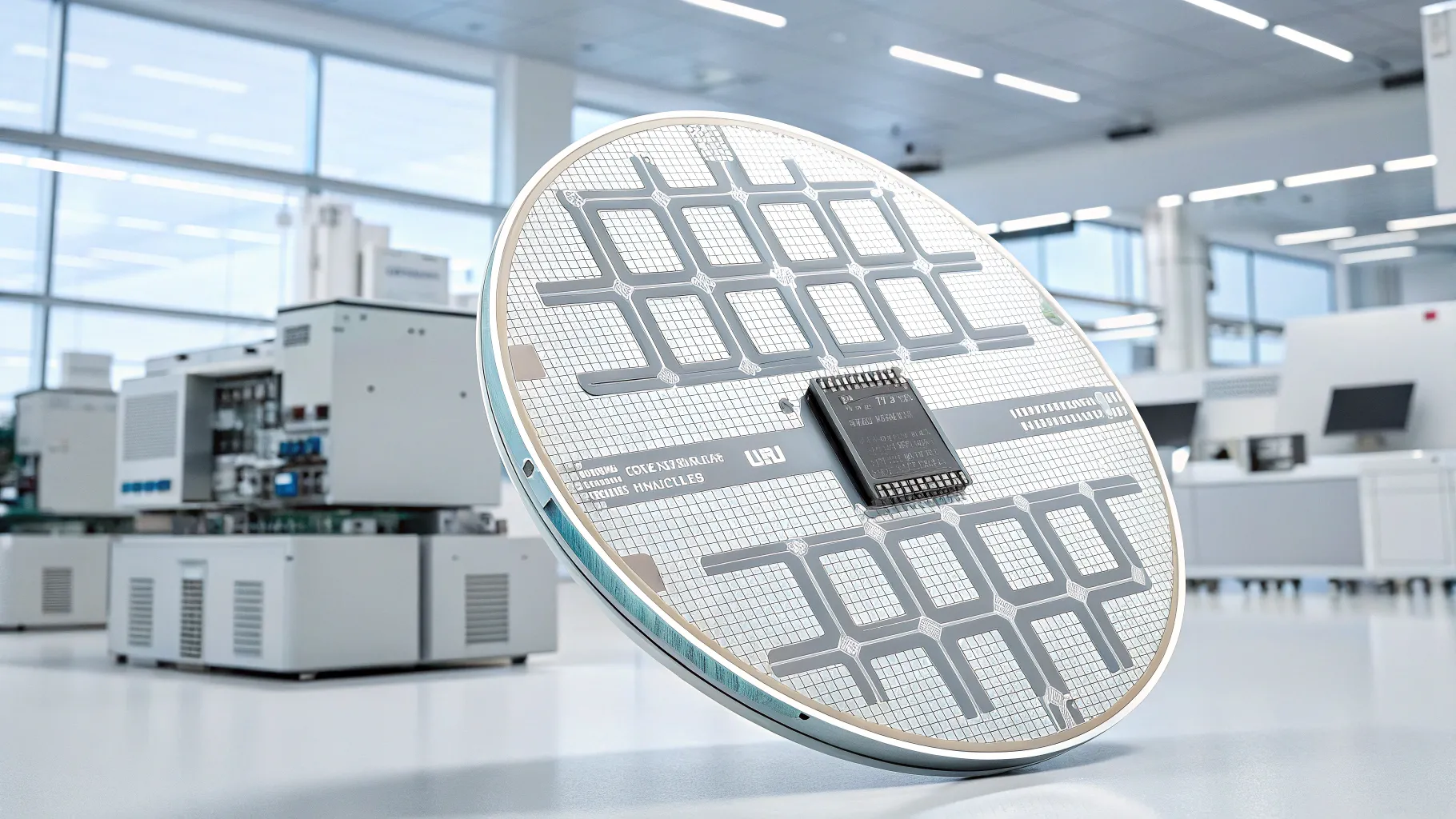
A new approach to chip design could bring classical and quantum circuits onto the same wafer, cutting complexity and boosting reliability for next-generation computers. Researchers developing a germanium-based superconductor say the material could support both control electronics and quantum devices in one stack. If it works at scale, the method could lower costs and improve performance for systems that now rely on delicate wiring and bulky cryogenic hardware.
“A new type of germanium superconductor could allow classical and quantum chips to be built into one device, creating better and more reliable quantum computers.”
The idea addresses one of the hardest parts of quantum engineering: moving signals between room-temperature electronics and qubits that sit near absolute zero. Integrating the two on a single platform has long been a goal for chipmakers and labs. Germanium, which already pairs well with silicon manufacturing, may offer a new path to that goal.
Why Integration Matters
Most quantum computers use separate layers. Qubits operate inside a cryostat. Control electronics sit outside, connected by thousands of cables. Each cable adds loss, heat, and points of failure. Packaging is slow and expensive. Scaling up to more qubits magnifies each problem.
A single-device approach changes the equation. Placing control circuits near the qubits shortens connections. Shorter paths mean lower noise and less heat. That could improve gate fidelity and stability. It also reduces assembly steps and improves reproducibility.
- Fewer cables and interposers reduce failure risk.
- Shorter routes cut signal delay and noise.
- Shared materials simplify thermal design.
Why Germanium
Germanium is a familiar material in advanced chips. It pairs with silicon for high-mobility transistors and photonics. Researchers now suggest it can also support superconducting behavior under the right conditions. That opens the door to qubits and control logic built on related stacks.
Silicon and silicon-germanium platforms already host several qubit types. These include superconducting circuits and spin qubits using quantum dots. A germanium superconductor could tighten that link. It could allow superconducting interconnects and elements to sit beside CMOS-like control blocks that are optimized for cryogenic temperatures.
How It Compares With Current Approaches
Today’s leading quantum systems use aluminum or niobium for superconducting qubits. They work well but rely on separate fabrication lines. Spin qubits in silicon promise tighter integration but face readout and scaling hurdles. Trapped ion and photonic systems excel in coherence or connectivity, yet integration with standard chip flows is harder.
A germanium path would not replace every approach. It could, however, bridge a gap for platforms that seek tight coupling between fast control and low-noise quantum elements.
Technical Questions Still Unanswered
Key issues remain. Material purity must meet strict limits. Any defects can introduce loss and reduce coherence. Interfaces between superconducting layers and semiconducting regions must be clean and repeatable. Yield at wafer scale will decide if production is viable.
Thermal design also matters. Even with local integration, the device must operate at cryogenic temperatures without adding heat that disturbs qubits. Packaging, wiring density, and shielding must work with the material stack.
Measurement will be the proof. Researchers will need to show high coherence times, low error rates, and stable operation across many devices. They will also need to demonstrate repeatable fabrication across wafers and batches.
Industry Impact and What Comes Next
If germanium superconductors support hybrid chips, suppliers could simplify cryogenic systems and speed deployment. Data centers exploring quantum acceleration could see smaller footprints and lower maintenance. Chipmakers might reuse parts of existing silicon lines, cutting cost and time to pilot runs.
Experts will watch for three early signs of progress:
- Peer-reviewed results showing coherence and gate fidelity on par with leading devices.
- Demonstrations of on-chip control running at cryogenic temperatures beside qubits.
- Evidence of wafer-scale yield with consistent performance.
The promise is clear: fewer moving parts, tighter control, and a smoother path to scale. But materials and manufacturing will decide how fast the idea moves from lab to product.
The next year should bring early prototypes and benchmark data. If the metrics hold up, germanium could join silicon as a key player in quantum-era chips. If not, lessons from the effort will still guide better integration strategies for future devices.
For now, the claim is simple and bold, and the destination is practical: a single device that merges classical control and quantum logic to make systems better and more reliable.

A seasoned technology executive with a proven record of developing and executing innovative strategies to scale high-growth SaaS platforms and enterprise solutions. As a hands-on CTO and systems architect, he combines technical excellence with visionary leadership to drive organizational success.