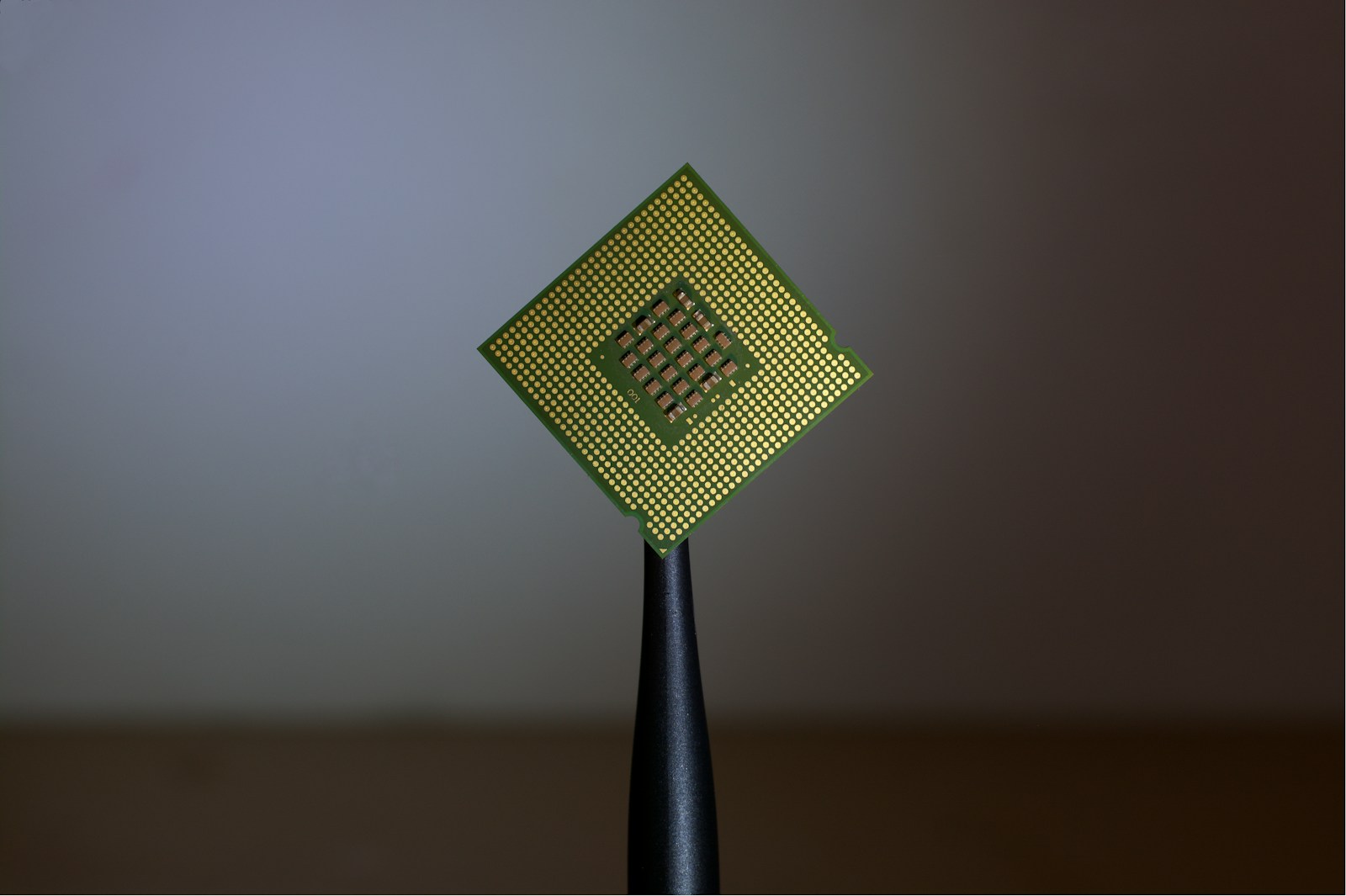
Google has unveiled a new breakthrough in quantum computing with its Willow chip.
Introducing Willow, our new state-of-the-art quantum computing chip with a breakthrough that can reduce errors exponentially as we scale up using more qubits, cracking a 30-year challenge in the field. In benchmark tests, Willow solved a standard computation in <5 mins that would…
— Sundar Pichai (@sundarpichai) December 9, 2024
The chip can complete a mathematical calculation in less than five minutes that would take the world’s most powerful supercomputers over 10 septillion years to accomplish. The Willow chip demonstrates significant advancements in error correction, reducing errors as the system scales up.
I was thrilled to hear about the surface code when Alexei Kitaev visited @Caltech in April 1997. It's heartening to see the hardware catching up with the theory of quantum error correction. There's still far to go but encouraging progress @GoogleQuantumAI.https://t.co/orgET79YCc
— John Preskill (@preskill) December 9, 2024
This addresses one of the key challenges in quantum computing and positions Willow as a major milestone toward developing a large-scale, commercially relevant quantum computer. In tests, Willow cut the error rate in half each time the array of qubits was increased. This achievement, known as being “below threshold,” means Willow’s errors decrease faster than they accumulate as qubits are added.
Willow’s performance is exemplified by its ability to execute a benchmark computation known as random circuit sampling (RCS).
This is an off-brand tweet for me, but…
Google’s new quantum computing chip solved a problem in 5 minutes that would’ve taken one of the world’s most powerful supercomputer 10 septillion years to do so.
A septillion is 1,000 followed by 21 zeroes. 🤯 https://t.co/QNyRc18Tb7
— Frank Luntz (@FrankLuntz) December 10, 2024
Google’s breakthrough in quantum computing
This rigorous test demonstrates quantum supremacy by performing computations beyond the capabilities of classical machines.
The chip was manufactured in a state-of-the-art fabrication facility in Santa Barbara, specifically designed for producing advanced quantum hardware. The fabrication process integrates all essential components to ensure optimal system performance. Google’s quantum computing cooling system allows the Willow chip to operate at extremely low temperatures, specifically 460 degrees below zero, which is essential for its performance.
As quantum researchers continue to push the boundaries of what these machines can do, the future of computing appears to be heading towards unprecedented computational capabilities. Willow’s advancements bring us significantly closer to building practical, large-scale quantum computers capable of running commercially relevant algorithms. These quantum systems have the potential to revolutionize various fields by making computations that are currently impossible with classical computers.
While ongoing improvements in classical computing are expected, Willow’s rapid advancements suggest that quantum processors will continue to outpace classical systems exponentially.

April Isaacs is a news contributor for DevX.com She is long-term, self-proclaimed nerd. She loves all things tech and computers and still has her first Dreamcast system. It is lovingly named Joni, after Joni Mitchell.