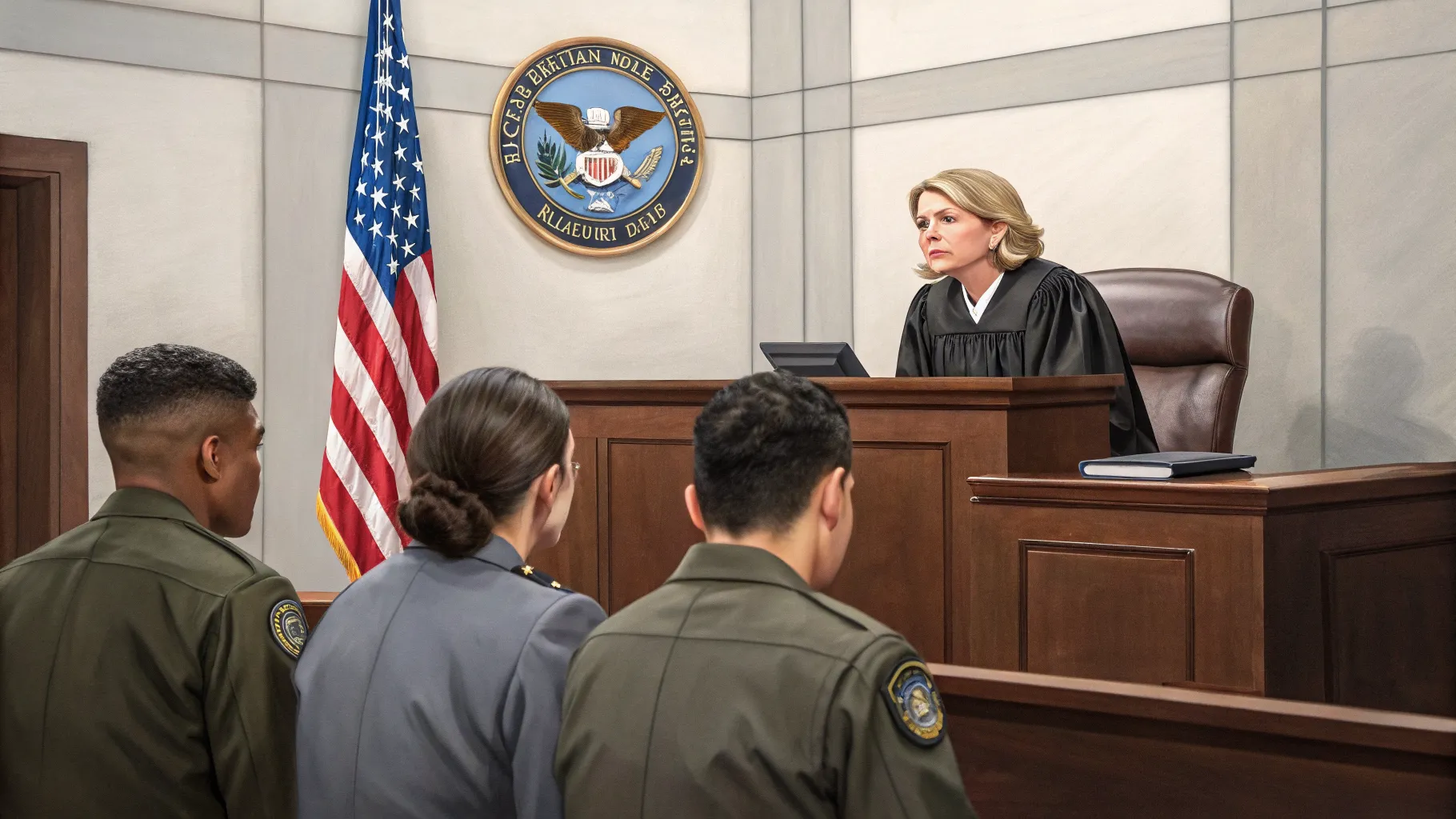
A federal judge pressed the Pentagon on Tuesday over its decision to label the developer of Claude AI a supply-chain risk, signaling heightened scrutiny of how the government classifies fast-growing artificial intelligence firms.
The exchange occurred in a district court hearing, where the judge questioned the Department of Defense’s rationale and process. At issue is whether the government followed fair procedures and relied on adequate evidence when flagging the company, which shapes how federal agencies buy software and services.
During a hearing Tuesday, a district court judge questioned the Department of Defense’s motivations for labeling the Claude AI developer a supply-chain risk.
Why the Risk Label Matters
Supply chain risk designations can shut companies out of sensitive contracts. They influence which tools defense agencies can deploy and which vendors must submit to extra oversight. In recent years, federal officials have expanded risk screening of software and cloud providers due to fears about hidden code, foreign influence, and data exposure.
The developer of Claude AI, Anthropic, has emerged as a major provider of large language models to businesses and public-sector users. The firm markets Claude as a safer, more steerable tool for tasks such as drafting, coding help, and document analysis. Any federal label that flags the company could ripple through procurement and partnerships across agencies.
Government Scrutiny of Software Supply Chains
Washington has tightened software security rules since a wave of breaches and tampering incidents exposed weaknesses in vendor oversight. Agencies now demand software bills of materials, stricter vulnerability reporting, and clearer provenance for third-party code. Defense officials also conduct national security reviews that weigh ownership, data flows, and reliance on foreign infrastructure.
Past actions against firms like Kaspersky and Huawei showed how broad risk findings can reach far past a single product line. While those cases centered on alleged foreign ties, AI models add new questions: model training data, reliance on open-source components, and the use of external cloud services for inference and fine-tuning.
What the Court Is Weighing
The court appears focused on process and evidence. Judges often ask whether agencies gave affected companies a chance to respond, whether the record supports the decision, and whether the government applied consistent standards. Those steps are essential in procurement disputes that can reshape competition in federal markets.
Legal experts say courts rarely second-guess national security judgments if procedures are sound. But they do examine if agencies acted within their authority and avoided arbitrary decisions. Tuesday’s questioning suggests the court wants clarity on the Pentagon’s criteria and any national security findings tied to AI tooling.
Industry Stakes and Possible Ripple Effects
AI vendors are racing to win government work, especially as agencies explore copilots, classified analysis tools, and secure chat systems. A risk label for a top model provider could push agencies to reconsider pilot programs and pause deployments until policy questions are settled.
- Procurement: Agencies may adjust solicitations or add new security conditions.
- Compliance: Vendors could face added audits, documentation, and data controls.
- Market impact: Integrators may shift to alternative models to avoid uncertainty.
Federal buyers also watch for guidance from the Office of Management and Budget and the Cybersecurity and Infrastructure Security Agency on safe use of generative AI. A court fight over a risk label could shape those playbooks, influencing model evaluation, red-teaming, and incident response requirements.
What Comes Next
The judge’s questions hint that further filings or disclosures may be required from the Pentagon. The court could request a more detailed record explaining the basis for the decision. It might also set timelines for additional argument or a preliminary ruling that affects near-term contracting.
For now, agencies and vendors face a familiar bind: move fast on AI or wait for legal clarity. Procurement officers may seek interim safeguards, such as tighter data-handling rules, model access restrictions, and independent security testing, to keep pilots on track while the case proceeds.
The outcome will signal how the government treats major AI suppliers and how far national security concerns reach into civilian use cases. If the court finds the Pentagon’s process sound, agencies may adopt similar screens across contracts. If not, it could prompt a reset of how AI vendors are assessed, with clearer standards and a stronger record for future decisions.
Either way, buyers and builders should expect closer scrutiny of training data sources, model update pipelines, and vendor governance. The next hearing date, and any interim orders, will be the key markers to watch.

Deanna Ritchie is a managing editor at DevX. She has a degree in English Literature. She has written 2000+ articles on getting out of debt and mastering your finances. She has edited over 60,000 articles in her life. She has a passion for helping writers inspire others through their words. Deanna has also been an editor at Entrepreneur Magazine and ReadWrite.