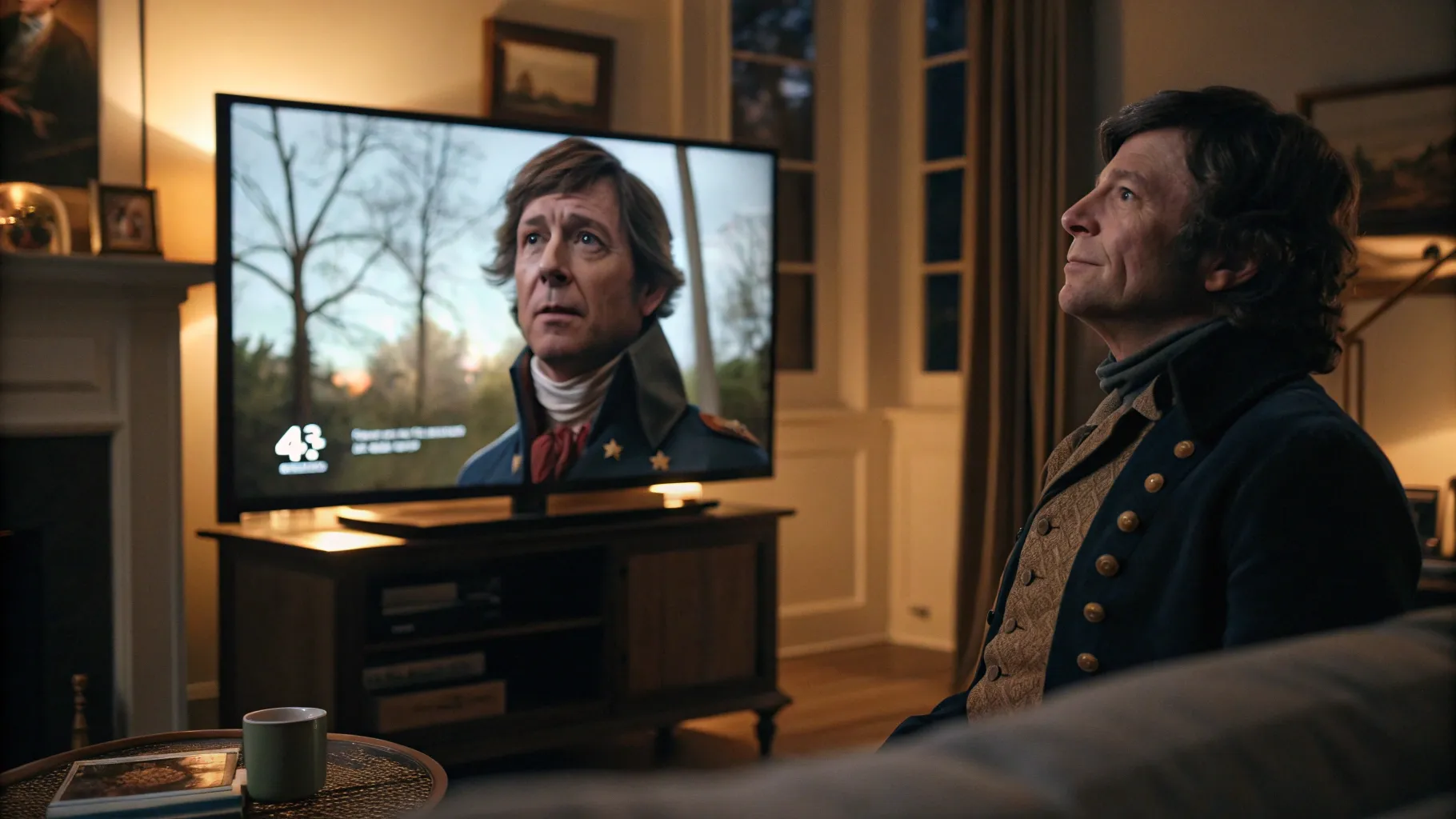
Ken Burns’ latest PBS series, The American Revolution, premiered Sunday with more than a history lesson on offer. It arrived as a pointed cultural moment, testing public media’s place amid political pressure and budget fights in Washington. The series opened on PBS stations nationwide, drawing interest from viewers and media advocates who see it as both art and argument for the value of public broadcasting.
“Sunday’s premiere of Ken Burns’ new PBS series ‘The American Revolution’ doubles as an attention-grabbing statement, months after President Donald Trump succeeded in stripping away all federal funding for public media.”
The claim speaks to the ongoing debate over public funding for PBS and NPR member stations. While the White House in recent years proposed eliminating money for the Corporation for Public Broadcasting (CPB), Congress holds the purse strings. Lawmakers have continued to appropriate funds, though the programs have faced repeated threats.
Public Media’s Funding Fight
CPB grants make up a modest share of national public media revenue, but they are vital for many small and rural stations. Cuts or delays could force schedule reductions, staff losses, or station closures. Policy analysts note that a loss of federal support would hit rural audiences the hardest, since local underwriting and large donations are harder to secure in smaller markets.
Federal investment has hovered around the mid-hundreds of millions annually for CPB in recent years, spread across radio, television, and system support. For a large urban station, that may be a small slice of the budget. For a rural station, it can be a lifeline.
- Nationally, federal dollars are a minority share of funding.
- Rural and small stations often rely on CPB for survival.
- Cuts would likely reduce local news, education, and children’s programming.
Why This Series Matters Now
Burns’ work often lands at moments when the country is arguing about its past and present. The American Revolution revisits the nation’s founding era, a period marked by conflict over representation, power, and identity. Viewers and critics see parallels with current debates over civic education, truth in history, and the role of public institutions.
The timing adds weight. A high-profile historical series on a free, widely accessible network presents a quiet rebuttal to efforts to weaken public broadcasting. Supporters argue that programs on U.S. history, science, and the arts reach classrooms and families who may not have access to subscription services.
A Broader Conversation on Civic Education
Teachers often use PBS history films in classrooms. Education groups say free curriculum and streaming support make a difference for districts with tight budgets. With student achievement uneven after the pandemic, advocates argue that trusted, standards-aligned content can help close gaps, especially in subjects like history and civics.
Public media leaders also point to local reporting, emergency alerts, and community engagement. During wildfires, hurricanes, and heat waves, public stations serve as crucial information hubs. Budget uncertainty can hamper that mission.
Dispute Over the Facts
The statement that federal funding has been “stripped away” overstates the case. While past administrations proposed zeroing out CPB, Congress did not adopt those plans in full. Appropriations continued, though the political pressure has remained steady, and debates over what public money should support continue to flare.
Media policy experts caution that even recurring proposals can cause harm. Stations delay investments and hiring when future budgets look at risk. That uncertainty can lead to fewer local programs and partnerships, even if funding ultimately arrives.
What Viewers and Stations Are Watching
As The American Revolution rolls out, stations will watch ratings, classroom adoption, and pledge performance. Success can strengthen the case for continued support and help stations raise private funds. Critics will scan the series for balance, source quality, and relevance for today’s audiences.
PBS has weathered political fights before. Public support has often surged when programs on U.S. history, the arts, and children’s education resonate. The question now is whether a new history epic can rally viewers and lawmakers around the value of a shared public square.
The premiere signals that public media is not retreating from big, national projects. It also highlights the stakes. If funding grows unstable, ambitious, multi-year series become harder to make and share for free. For now, the series arrives as planned, with history on screen and a policy battle just offstage.
The next test will come with budget debates on Capitol Hill and how stations adapt to shifting revenue. Viewers can expect more discussion about the role of public institutions, what stories get told, and who has access to them. The American Revolution may prompt fresh reflection on the nation’s beginnings, even as public media fights for its future.

Senior Software Engineer with a passion for building practical, user-centric applications. He specializes in full-stack development with a strong focus on crafting elegant, performant interfaces and scalable backend solutions. With experience leading teams and delivering robust, end-to-end products, he thrives on solving complex problems through clean and efficient code.