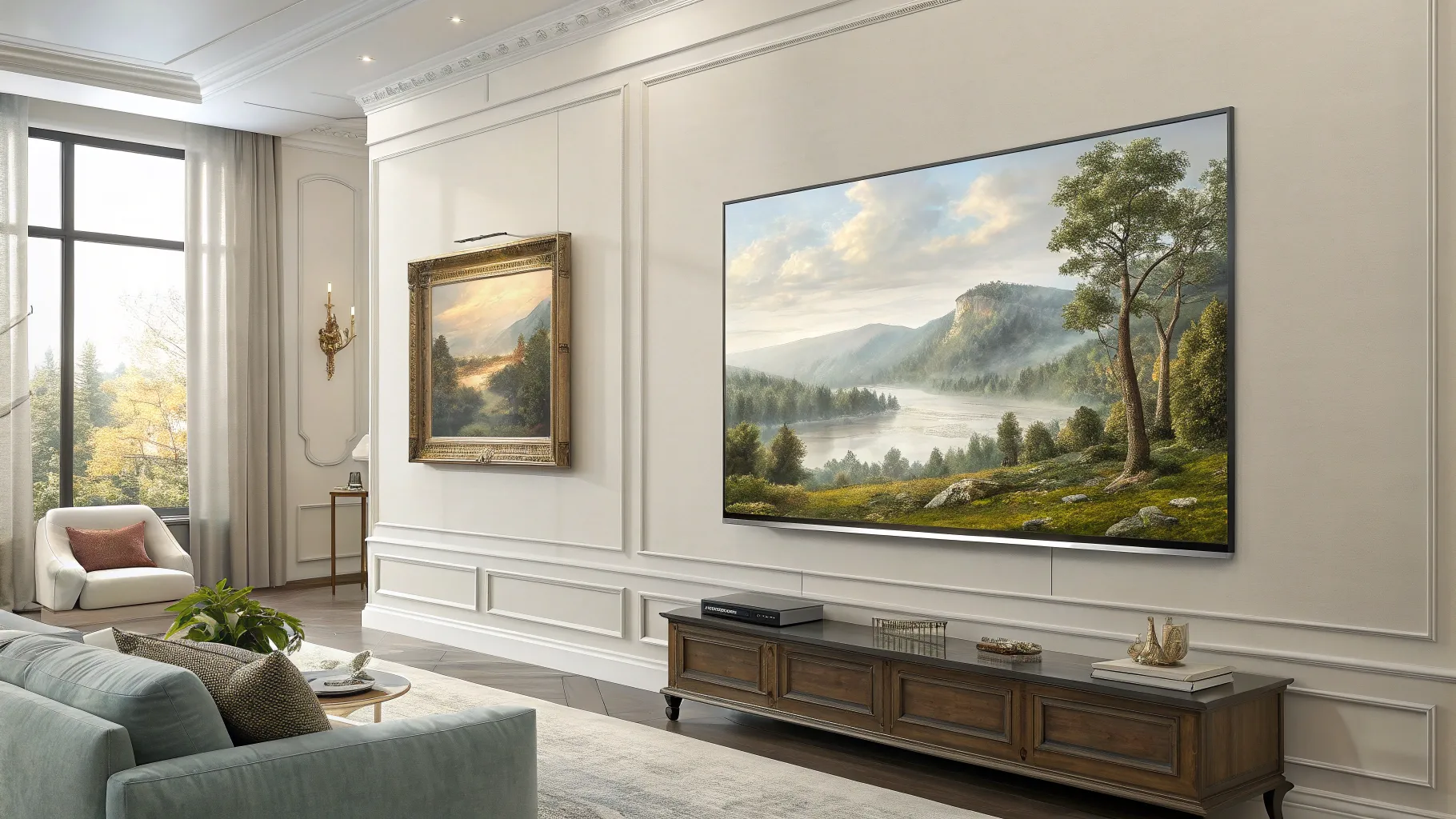
LG is moving into the art-style TV segment, setting up a direct clash with Samsung’s The Frame, one of the most popular lifestyle televisions on the market. The company signaled the shift this week, suggesting a new model or feature set designed to double as wall art in living rooms and galleries. The announcement points to a bid to win style-focused buyers as the premium TV race intensifies.
LG will now compete directly with The Frame.
The Frame has been a standout for Samsung since its debut in 2017, offering a matte display, swappable bezels, and an art subscription service. LG’s entry suggests a fresh fight over design, display tech, and content in a category that blends decor and home entertainment.
Why This Market Matters
Lifestyle TVs have grown from a niche into a steady seller as people look for screens that look intentional on the wall. Samsung has said The Frame crossed several million units in cumulative sales in recent years, helped by aggressive bundles and home design partnerships. The TV’s matte finish reduces reflections and supports a gallery-style look when idle.
LG has long pushed thin, wall-flush OLED models under its Gallery series and the Objet collection. Those products emphasized minimalism and room integration but did not match The Frame’s art-first pitch. A move to compete head-on suggests LG will package its OLED strengths with design touches like customizable bezels, anti-glare treatments, and an idle art mode.
What LG Could Bring
LG’s core advantage is OLED, which offers deep blacks and strong contrast. That may help artwork and photography look more lifelike in dim lighting. The tradeoff has been brightness and the risk of image retention with static images, factors LG has addressed over several product cycles with panel improvements and pixel shift features.
Samsung’s The Frame, built on QLED with a matte layer, favors bright rooms and resists reflections. It relies on an art marketplace and a low-power display mode for static images. If LG follows suit, the contest may center on picture quality in ambient light, bezel options, and content libraries rather than raw TV specs.
Consumer Considerations
Design-led TVs carry price premiums for style and accessories. Buyers often choose based on the room’s lighting, the desired frame look, and the quality of art when the TV is idle. The value proposition hinges on how often the screen is used as decor versus traditional viewing.
- Display approach: OLED blacks versus QLED brightness and matte finish.
- Reflections: Matte coatings versus low-reflection treatments.
- Art mode: Image persistence safeguards and power use.
- Content: Built-in galleries, subscriptions, and user uploads.
- Design: Swap-in bezels, wall-mount depth, and cable management.
- Price: Hardware cost plus ongoing art services, if any.
Industry Impact and Next Steps
Samsung’s early lead set the standard for art-centric TVs, drawing furniture retailers, designers, and museums into partnerships. LG’s entry could widen distribution and pressure prices, inviting more buyers who waited on the sidelines. Accessory makers may also see new demand for frames, mounts, and cable solutions compatible with additional models.
Retailers stand to benefit from clearer side-by-side comparisons. Expect marketing to highlight panel tech, anti-glare performance, and subscription options. If LG launches with strong third-party art deals or easy user galleries, it could shift attention from hardware to content selection and curation.
What to Watch
The key questions now are scope and timing. Will LG introduce a single hero product or a full line across sizes and price tiers? Will it promote OLED brightness gains that help in daylight? Another factor is whether LG offers an art marketplace with recognizable museums and creators or leans on free galleries and user libraries.
Analysts will also watch for warranties and protections addressing static images, a longtime concern for design displays. Clear guidance on low-power modes, motion detection, and screen care could influence adoption.
LG’s move signals that the art-style TV category has matured enough to support real competition. Shoppers should compare display behavior in their own lighting, the depth of art features, and ongoing costs. If LG can pair its OLED strengths with smart design and content, living rooms may gain a new option that looks as good off as it does on.

Deanna Ritchie is a managing editor at DevX. She has a degree in English Literature. She has written 2000+ articles on getting out of debt and mastering your finances. She has edited over 60,000 articles in her life. She has a passion for helping writers inspire others through their words. Deanna has also been an editor at Entrepreneur Magazine and ReadWrite.