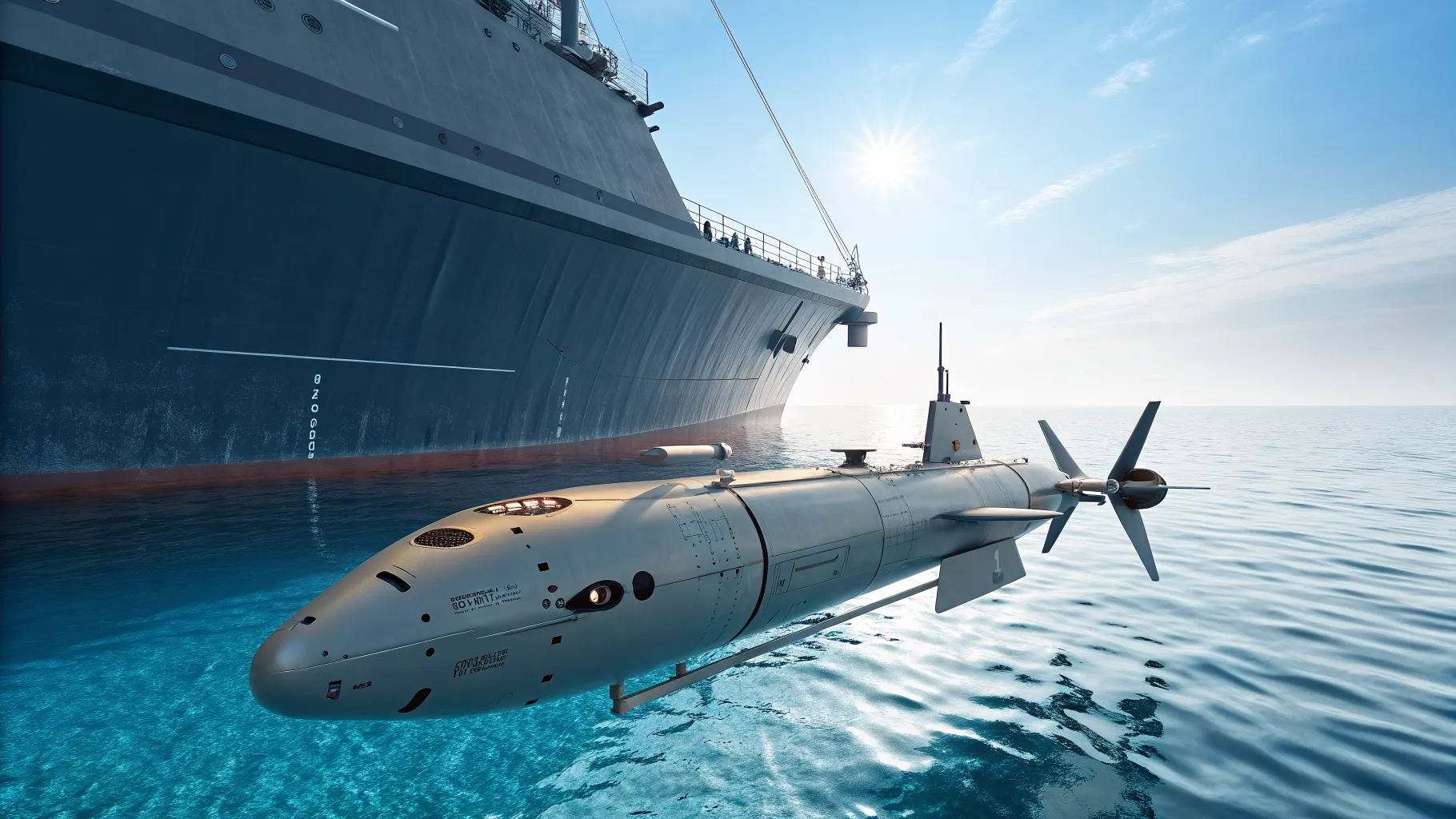
Lockheed Martin has introduced a new undersea drone that can latch onto friendly vessels to save power, a design that could reshape how navies scout, patrol, and defend. The Lamprey Multi-Mission Autonomous Undersea Vehicle, revealed by the defense contractor, promises longer missions by attaching to the hulls of ships or submarines while it recharges or rides along.
The concept could help fleets cover larger areas with fewer crewed assets. It arrives as navies try to stretch resources and reduce risk to sailors in tense waterways. The company says the vehicle can “hitch a ride” and conserve battery life by clinging to host platforms.
Background: A Push for Uncrewed Undersea Systems
Major militaries have increased spending on uncrewed maritime systems in recent years. Undersea drones now support mine countermeasures, intelligence gathering, and seabed surveys. Their value lies in persistence and lower cost compared with submarines or crewed patrols.
Battery limits have held these vehicles back. Most missions are set by how far an AUV can travel before it must surface or return to a tender ship. Docking to a host hull could ease that limit, enabling longer surveillance and fewer recovery cycles at sea.
Defense analysts note a wider trend: small autonomous systems that work with large platforms. Air forces pair drones with fighters. Armies team ground robots with vehicles. The Lamprey reflects a similar approach under water.
How the Lamprey Concept Works
Lockheed Martin describes the system as a multi-mission platform that can attach to friendly vessels, reducing its energy draw when not actively maneuvering. By riding with a host, the vehicle can avoid long transits and then detach closer to its target area.
“Naval warfare goes a bit clingy as Lockheed Martin unveils its robotic Lamprey Multi-Mission Autonomous Undersea Vehicle (MMAUV), which can hitch a ride on friendly ships or submarines by latching onto their hulls to conserve power.”
The approach suggests a modular role. The drone could carry different sensors depending on the task, then cycle between active duty and low-power transit. That mix would extend time on station and open options for slow, quiet monitoring.
Potential Missions and Fleet Impact
Experts say a ride-along feature could support missions that need patience and reach. It may also free crewed vessels from routine patrols, allowing ships to focus on higher-risk tasks.
- Mine detection in shallow or crowded waters
- Seabed mapping and infrastructure inspection
- Anti-submarine screening near chokepoints
- Covert intelligence gathering near coastlines
If the drone can dock reliably at sea, commanders could build a network of host ships that stage and recover units as needed. That would spread coverage without adding more large hulls.
Questions on Safety, Secrecy, and Control
New tactics bring new risks. Engineers will need to prove that the latch mechanism is safe for crews and gear and that it will not damage a host’s sensors or coatings. Quiet operations matter. Any extra noise from attaching or detaching could limit use near adversaries.
Cybersecurity and control links are also key. An attached drone must communicate with its host without exposing ship systems. Autonomy helps, but navies still demand strong safeguards and clear rules for when humans intervene.
Legal issues could arise in crowded seas. Ports and coastal states keep strict rules on what moves under their waters. Operators will need to ensure the system follows maritime law and avoids unintended contact with civilian vessels.
What to Watch Next
Demonstrations at sea will be the real test. Reliability in rough water, repeatable docking, and maintenance demands will decide whether fleets adopt the Lamprey at scale. Costs and training also matter. Crews must learn new procedures for launch, recovery, and data handling.
If trials succeed, the concept could spread. Allied navies may seek common standards so different ships can host shared drones. That would improve logistics and let partners cover more routes together.
Lockheed Martin’s reveal signals growing confidence in undersea autonomy and logistics tricks that stretch battery life. The next phase will show if the drone can meet naval requirements outside the lab and deliver more time on station with less risk to crews.
The debut hints at a future where small undersea helpers work alongside large vessels as routine practice. Watch for early sea trials, software upgrades, and moves to integrate the vehicle with existing ship classes. Those steps will show how soon fleets can put the Lamprey to work.

A seasoned technology executive with a proven record of developing and executing innovative strategies to scale high-growth SaaS platforms and enterprise solutions. As a hands-on CTO and systems architect, he combines technical excellence with visionary leadership to drive organizational success.