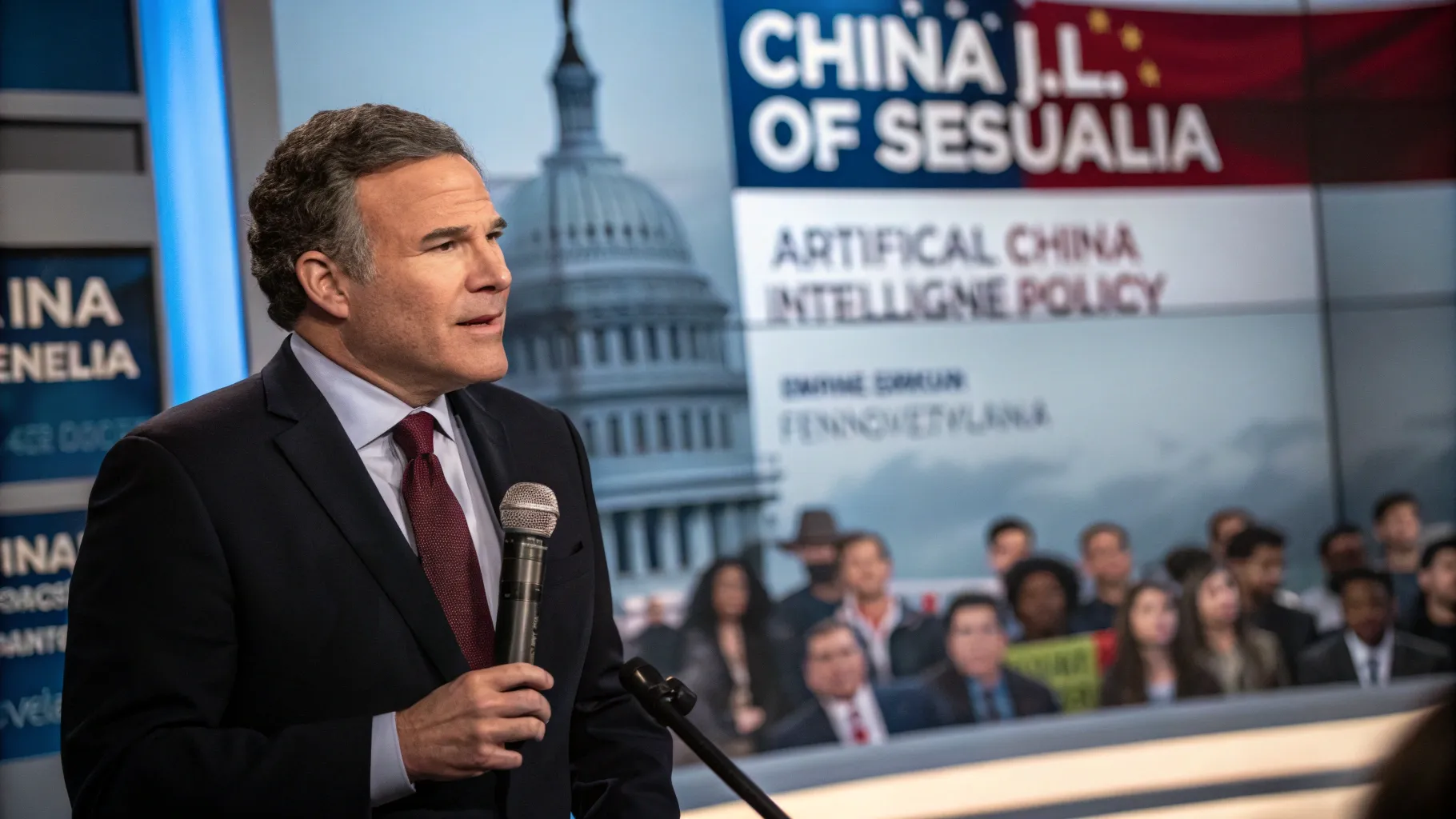
Sen. Dave McCormick, a Pennsylvania Republican, used a Sunday television appearance to frame three pressing issues for Washington: the rapid growth of artificial intelligence, pressure to keep pace with China, and rising military tension between the United States and Venezuela. His remarks highlighted concerns now shaping policy debates on national security and the economy.
The discussion came on Fox News Sunday, where McCormick outlined risks and choices facing lawmakers. He pointed to the speed of AI development, the strategic race with Beijing, and security risks in the Western Hemisphere. Each carries near-term consequences for budgets, alliances, and industry.
Background: Technology, Security, and Strategy
AI has moved from research labs into daily use in business, health care, and defense. Companies are deploying large-scale models, while government agencies evaluate how to manage data and safety. Lawmakers are weighing rules for transparency, privacy, and misuse prevention.
At the same time, U.S.–China competition spans chips, software, and supply chains. Export controls on advanced semiconductors and tools have become a key policy lever. Both countries view AI as central to economic strength and military planning.
In Latin America, friction with Venezuela has grown and often centers on border disputes, sanctions, and regional security concerns. Washington’s posture has shifted between sanctions enforcement and limited diplomatic outreach, while defense leaders watch for escalation risks that could draw in neighbors.
What McCormick Highlighted
“Pressure to stay ahead of China.”
“Growing military tension between US and Venezuela.”
These themes reflect a broader debate in Congress: how to balance economic competitiveness with guardrails, how to deter rivals without triggering conflict, and how to fund priorities amid budget limits.
AI Growth: Rules, Talent, and Chips
Policymakers are focused on three fronts. First, safety and transparency standards for AI models used in sensitive areas. Second, education and visas that support technical talent at home. Third, stable access to advanced chips and the tools needed to build them.
- Setting clear rules for high-risk uses, such as biosecurity and critical infrastructure.
- Investing in STEM training and research funding to support long-term capacity.
- Protecting supply chains for semiconductors and power systems that feed data centers.
Business leaders warn that unclear rules could stall investment. Security officials warn that weak rules could invite misuse. Finding the middle path is now a central task for the next Congress.
Staying Ahead of China
Competition with China is no longer limited to tariffs. It now includes controls on advanced chips, scrutiny of outbound investment, and partnerships with allies on standards. The goal is to protect sensitive know-how while keeping markets open where possible.
McCormick’s focus on staying ahead mirrors calls from both parties for stronger research funding and targeted restrictions. The risk is overreach, which could slow U.S. firms, or underreach, which could expose key technology to strategic rivals.
Allied coordination is key. Shared rules on chips and data can reduce loopholes, while joint research can spread costs. Congress will weigh how to fund these efforts in the next budget cycle.
US–Venezuela Tension
Rising strain with Venezuela raises questions about sanctions, energy flows, and regional stability. Washington’s choices affect migration pressures, relations with neighboring states, and global oil markets.
Defense planners are watching for incidents at sea or along contested borders. Diplomatic channels, support for regional partners, and clear red lines can lower miscalculation risks. Any shift in sanctions could change market dynamics and domestic fuel prices.
Political and Policy Stakes
McCormick’s remarks show how national security and economics are now tightly linked. AI policy affects defense, health, and education. China policy shapes trade and investment. Venezuela policy touches migration and energy.
Lawmakers face trade-offs. Stronger controls may protect security but slow commerce. Looser rules may help growth but widen exposure. The debate now is over pace, scope, and enforcement.
The appearance set a clear agenda: move fast on AI standards, coordinate with allies on China, and reduce risk of conflict with Venezuela while protecting U.S. interests. The next steps will come in committee hearings and budget talks. Watch for concrete timelines on AI rules, alignment with partners on chip controls, and signals from the State and Defense Departments on Latin America. The outcome will shape U.S. security and growth in the year ahead.

Senior Software Engineer with a passion for building practical, user-centric applications. He specializes in full-stack development with a strong focus on crafting elegant, performant interfaces and scalable backend solutions. With experience leading teams and delivering robust, end-to-end products, he thrives on solving complex problems through clean and efficient code.