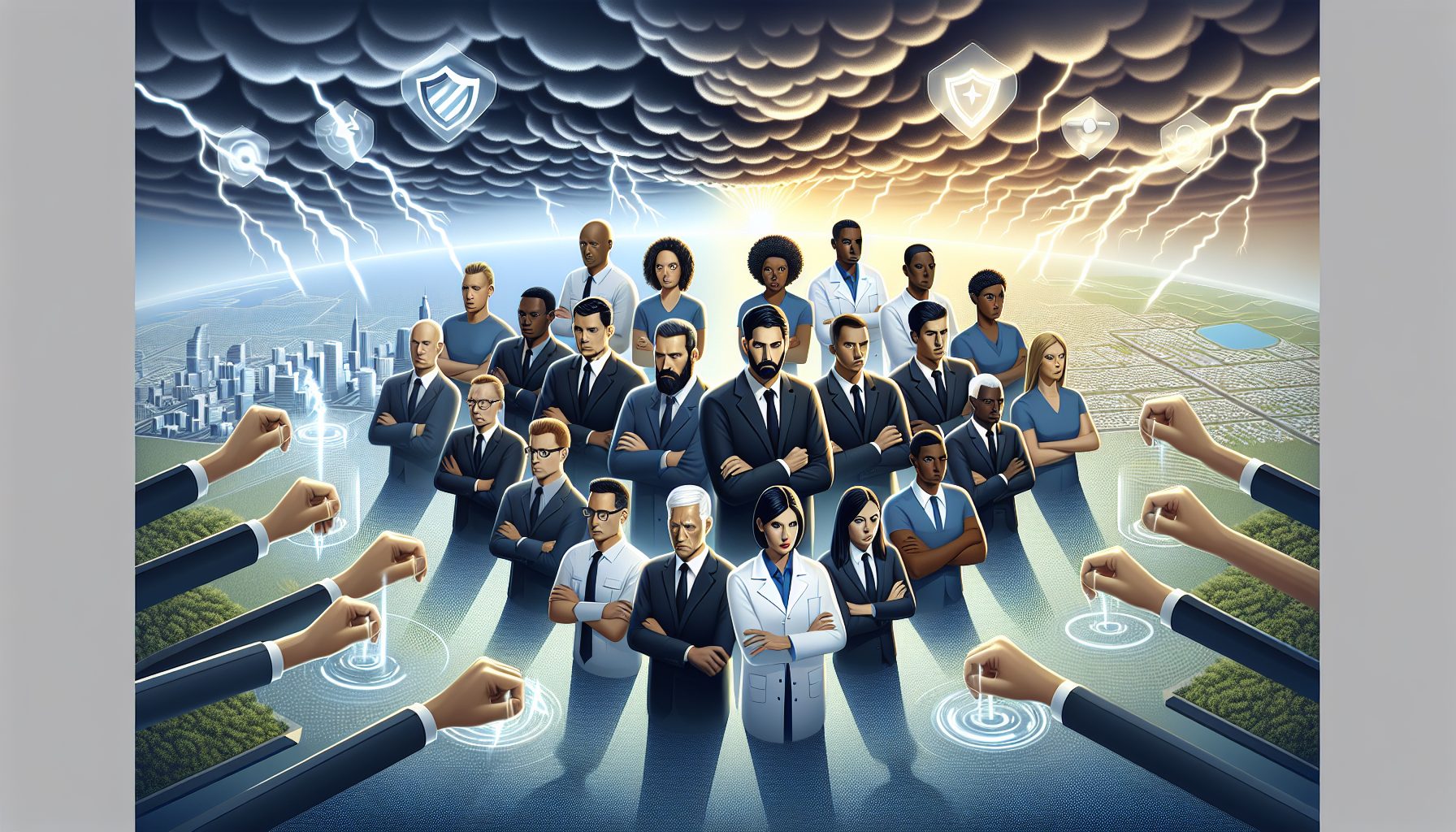
Meteorologists who connect hurricanes to the climate crisis are facing an alarming increase in threats and harassment. The rise in hostility has worsened following Hurricanes Helene and Milton, fueled by conspiracy theories and disinformation. Marshall Shepherd, director of the University of Georgia’s Atmospheric Sciences Program, noted a significant change in the aggression directed towards meteorologists.
As essential communicators bridging the gap between climate scientists and the public, broadcast meteorologists often find themselves in challenging political terrain when addressing myths about government manipulation of storms. The shift in how weather information is disseminated has contributed to this problem. Social media has disrupted the traditional top-down system, allowing non-experts with large followings to share interpretations based on personal experiences rather than scientific evidence.
This diverse information landscape affects the quality and reliability of weather communication, according to the American Meteorological Association. Psychologists suggest that climate conspiracy theories appeal to the human need for security and control. When scientific explanations threaten these perceptions, people may turn to false but comforting narratives.
Effective communication of climate science involves simplifying complex jargon and relating information to the audience’s existing knowledge and values. Repeating key facts, such as the overwhelming scientific consensus on human-caused climate change, helps reinforce these truths and counter misinformation. Despite the challenges posed by misinformation, supporting meteorologists and climate advocates remains crucial.
Their work in educating the public can drive important decarbonization initiatives and promote a more scientifically informed society. Attacks on meteorologists are not new, but the intensity of recent death threats and conspiracy theories is unprecedented. Meteorologist Chris Gloninger emphasizes the mission of weather professionals to provide impact-based decision support services for the protection of life and property.
John Morales, a veteran meteorologist at NBC6 in Miami, experienced backlash firsthand when discussing the role of climate change in Hurricane Milton’s rapid intensification. This sparked a wave of social media attacks accusing him of fear-mongering and promoting false narratives about global warming. Accusations included claims that hurricanes are man-made ploys targeting specific states or the result of government weather control.
These baseless theories led to death threats against meteorologists nationwide. Matthew Cappucci, a senior meteorologist for MyRadar, observed that some people seek comfort in artificial information and craft narratives to convince themselves that external forces are meddling with their lives.
Harassment faced by climate meteorologists
He emphasized the responsibility meteorologists have in providing accurate information and debunking false narratives. The current climate of misinformation exacerbates the situation, with public figures like Georgia Congresswoman Marjorie Taylor Greene spreading false claims about weather control on social media. NBC10 Boston Chief Meteorologist Pete Bouchard attributes this to a distrust in government and science, exacerbated by discussions on cloud seeding, a basic weather modification technique discovered in the 1940s.
Meteorologist Katie Nickolaou has faced terrifying responses to her posts, with one threatening message urging violence against those involved in weather forecasting. Weather conspiracies have a long history, but the recent surge in claims about meteorologists and the government controlling the weather has reached unprecedented levels. Despite facing harassment over missed forecasts, meteorologists emphasize the dramatic improvements in weather prediction accuracy due to advances in computer models and technology.
The field’s advancements are based on science, not weather modification. Storm forecasts have never been more accurate, but meteorologists say they have faced unprecedented skepticism and vitriol. Nearly five days before Hurricane Helene hit Florida, the National Hurricane Center predicted its track within just 12 miles of where it later made landfall.
Similarly, forecasts for Hurricane Milton were called “almost prescient” by meteorologists, demonstrating the increased accuracy in storm tracking. Despite this accuracy, meteorologists report facing false accusations and threats, primarily on social media. Some have been accused of steering hurricanes to specific regions for political reasons.
The emotional toll of increasingly severe hurricanes adds to the stress, with forecasters feeling personally responsible for saving lives. Hurricane forecasts have seen substantial improvements over the past 50 years due to advanced computing power and a better understanding of storm physics. However, misinformation continues to be an issue, with public figures suggesting that scientists can control the weather.
Climate change is also complicating forecasts, with hurricanes now intensifying more rapidly, making it challenging to predict their severity accurately. The increasing frequency and severity of extreme weather events have made meteorologists more alarmed than ever before. Politics have influenced the backlash against meteorologists, with some receiving death threats over their climate change coverage.
Meteorologists suggest new strategies to counter misinformation, emphasizing the need to explain the science behind weather phenomena clearly. In summary, while meteorological forecasts have become more reliable, meteorologists are increasingly dealing with public mistrust and hostility fueled by misinformation and political divisiveness.

April Isaacs is a news contributor for DevX.com She is long-term, self-proclaimed nerd. She loves all things tech and computers and still has her first Dreamcast system. It is lovingly named Joni, after Joni Mitchell.