Mexico halted construction of a major new airport for its capital when the project was roughly half complete, then let the site flood and converted it into wetlands. The shift, made in recent years on the dry lakebed of Texcoco northeast of Mexico City, has altered transport plans for one of the world’s largest cities and reshaped a sensitive landscape once drained for development. The decision still divides engineers, environmentalists, and travelers as the country balances air capacity with water and climate concerns.
How a Mega-Project Became a Park
The New Mexico City International Airport was designed to replace the crowded Benito Juárez International Airport. The site sat on the historic bed of Lake Texcoco, a location long known for soft soils and subsidence. Construction began with grand terminal plans and new runways.
Work stopped after a change in government. Officials cited cost, corruption concerns, and the geotechnical risks of building on saturated, saline clays. The new administration opted instead to open a separate airport at an existing military base to the north and to rehabilitate the Texcoco site as a nature area.
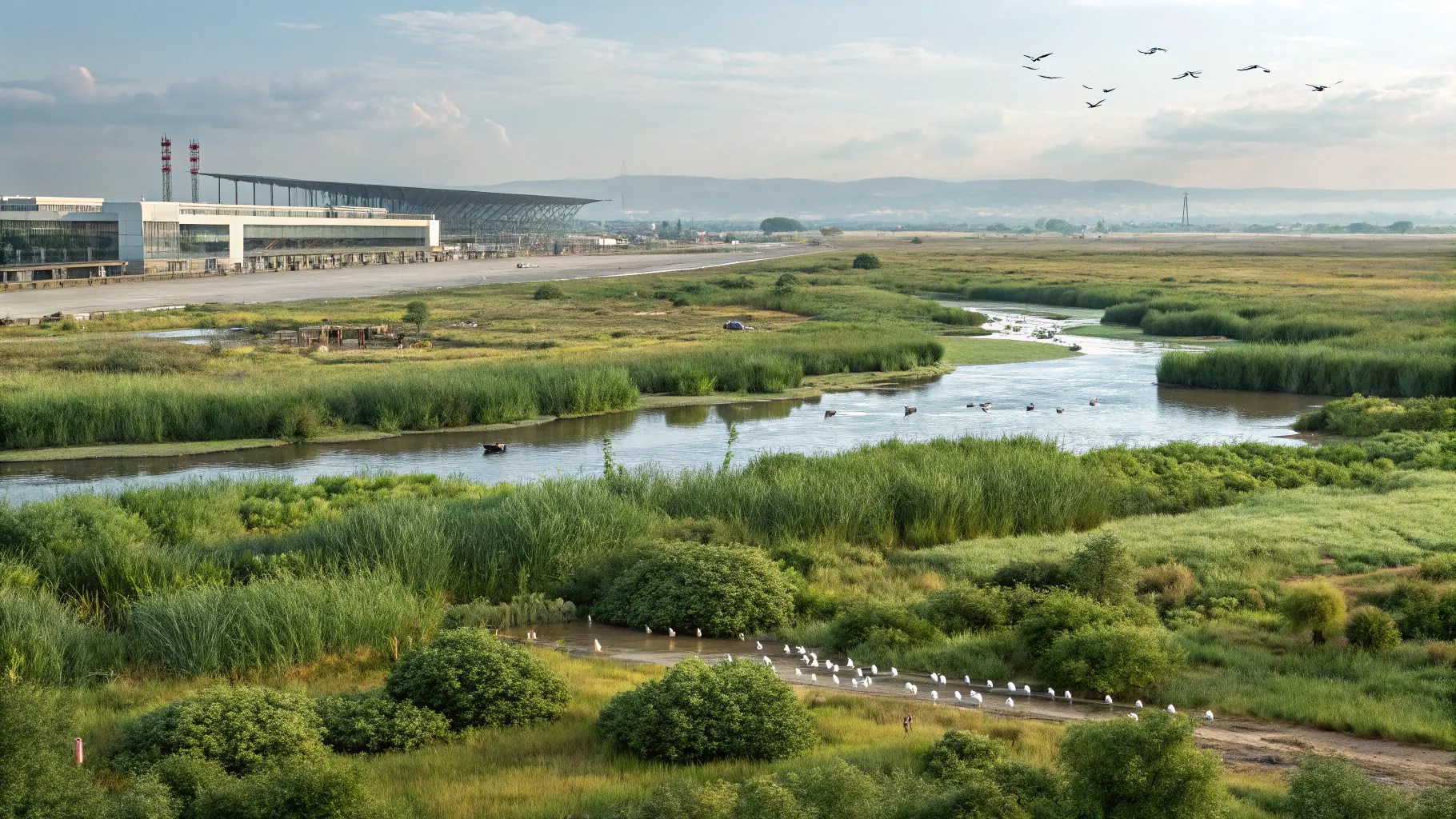
New Mexico City International Airport was canceled when only half built, and has since been flooded and restored into wetlands.
The partially built basements, canals, and excavations filled with water during the rainy seasons. Engineers regraded parts of the site to manage flows, and planners advanced an ecological park vision focused on flood control, bird habitat, and public access.
Environmental Stakes and Urban Water
For decades, Mexico City has fought seasonal flooding and water scarcity at the same time. The Texcoco basin sits at the heart of that puzzle. Restored wetlands can absorb storm surges, filter water, and lower local temperatures.
Ecologists argue that a park at Texcoco supports migratory birds along the Pacific Flyway and rebuilds native vegetation. It also reduces dust storms from exposed lakebed, which have grown worse during drought years. The change offers a climate adaptation tool for a valley with limited drainage outlets.
Capacity, Connectivity, and Costs
Airlines and business groups say the canceled airport delayed a long-needed capacity upgrade. Benito Juárez remains busy, with slot limits and frequent delays. A new facility, Felipe Ángeles International Airport to the north, now handles part of the load, but carriers say split operations raise transfer times and complicate network planning.
Supporters of the shift point to lower upfront risk and the avoidance of heavy maintenance on foundations in unstable soils. Critics argue that sunk construction and cancellation expenses still landed on taxpayers, and the city lost a central hub plan that could have improved connections across the Americas.
What the Wetlands Mean on the Ground
On the Texcoco site, water now moves through a mosaic of shallow lagoons, reed beds, and engineered channels. The area functions as a sponge during summer rains, then releases water slowly into surrounding systems. Bathymetry, salinity, and vegetation are being adjusted to stabilize the terrain.
Local communities report new recreational areas and reduced dust, though some are still waiting for full public amenities. Bird counts have increased during migration seasons, according to park staff, while herons, ducks, and shorebirds have returned to feed in the shallows.
Competing Visions, Shared Stakes
The airport plan represented a bid to keep pace with travel demand and modernize infrastructure. The wetlands plan centers on resilience in a valley that must manage floods, drought, and heat. Both visions aim to serve the same metropolis, though on different timelines and with different trade-offs.
- Travelers face split-airport logistics, with gains in redundancy but added transfers.
- Residents near Texcoco gain flood storage and cleaner air, with gradual park build-out.
- Airlines adjust route maps, while cargo operators seek predictable slots.
What Comes Next
Authorities are expanding services at the northern airport to attract airlines and improve links to the city center. Transit connections, including highways and planned rail, will shape how well multiple airports can function as a system.
At Texcoco, ongoing work will decide how much water the wetlands can store and how durable habitats become in dry years. Monitoring will be key, from soil settlement to bird diversity. The site may also support environmental education and limited recreation if sensitive areas are protected.
The change at Texcoco marks a rare move: retiring a mega-project midstream and replacing it with green infrastructure. The final measure of success will be practical. Can the capital move people and goods efficiently while also managing floods and restoring nature? The answer will depend on steady investment, clear operations across multiple airports, and careful stewardship of the basin that keeps Mexico City afloat.

Kirstie a technology news reporter at DevX. She reports on emerging technologies and startups waiting to skyrocket.