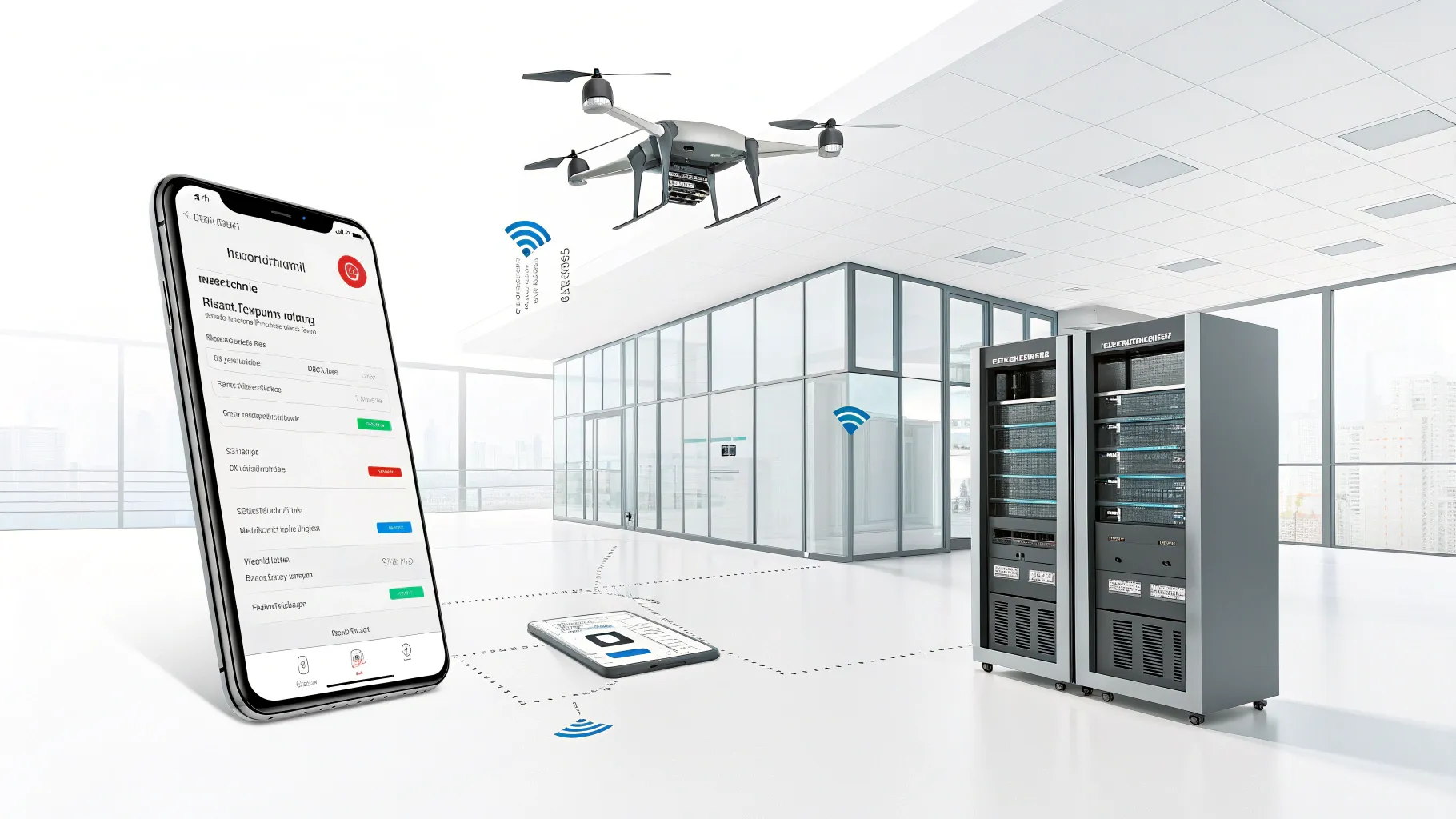
Mistral AI announced the release of 10 open-source artificial intelligence models built to run on smartphones, drones, and enterprise systems. The move signals a faster push by Europe to challenge U.S. and Chinese tech leaders in the global AI race. The Paris-based company framed the rollout as an effort to put capable AI into everyday devices and mission-critical systems.
“Mistral AI releases 10 open-source AI models designed to run on smartphones, drones, and enterprise systems, escalating Europe’s challenge to U.S. tech giants and Chinese competitors in the race for AI dominance.”
The company did not disclose full technical details in the announcement. But the focus on on-device and enterprise deployments points to lower latency, stronger privacy, and more control over how data is handled. It also reflects a broader shift in the industry, where smaller and more efficient models are becoming a priority for phones, robots, and private data centers.
Context: Europe’s Bid for AI Independence
Mistral AI was founded in France in 2023 with a focus on open-source releases and developer access. The company has quickly gained attention for lean models and a pragmatic licensing approach. Its rise coincides with Europe’s push for digital sovereignty and clearer rules for AI under the EU’s AI Act.
Open-source AI has become a strategic tool for European actors. It allows companies and governments to inspect code, test security, and adapt systems without being locked into a single vendor. That stance contrasts with leading U.S. providers that favor closed models and tightly managed APIs. China’s large tech groups are also investing heavily, often with state support.
The timing matters. Device makers and industrial firms are racing to deploy AI closer to where data is produced. Drones need real-time processing. Smartphones need quick responses with less reliance on the cloud. Enterprises want models they can run under strict compliance rules.
What On-Device Models Could Change
Running AI on phones or drones can cut response times and reduce cloud costs. It can also keep sensitive data on the device. That is important for health apps, field operations, and defense-related tasks. In the enterprise, on-premises models let IT teams enforce security policies and meet local regulations.
There are trade-offs. Smaller models can be fast and private, but they may lag on very complex tasks. Companies often use a mix: lightweight models on the edge and larger models in the cloud. Mistral’s batch release suggests customers could pick models by size, speed, and memory needs instead of relying on one general model for every task.
Competition and Industry Stakes
Mistral’s move adds pressure on open-source rivals, including Meta’s Llama family and several compact models from other labs. For closed-model leaders, it tests whether proprietary systems can justify higher costs for certain workloads. For China’s firms, it increases the need to show strong results outside their home market.
Analysts say the key questions are accuracy, efficiency, and safety. Enterprises will look for transparent licenses, strong tooling, and clear support paths. Developers will care about easy deployment on common chips used in phones and drones. Government buyers will scrutinize security and supply chains.
- Edge benefits: lower latency, better privacy, cost control
- Risks: uneven quality, fragmented tooling, security gaps
- Adoption drivers: clear licenses, benchmarks, hardware support
Signals To Watch
Benchmarks will be central. If Mistral’s models match or beat peers on standard tests while running on modest hardware, adoption could accelerate. Hardware partnerships also matter. Support for popular mobile and embedded processors will influence developer interest.
Licensing will shape uptake. Open terms can speed pilots in industry, but enterprises often seek commercial options for support and warranties. Mistral’s ability to pair open models with paid services could define its revenue path. Cloud and on-prem integrations will show whether the models fit into existing IT stacks without heavy rewrites.
Public-sector interest is another marker. European institutions and national agencies have signaled demand for auditable AI systems that can be deployed under strict rules. If these models meet those needs, procurement programs could follow.
The release of 10 models gives Mistral a wider toolkit for customers who want AI close to their data. The next phase is proof in the field: real workloads on real devices. Results from early pilots, energy use on mobile chips, and security reviews will determine whether this marks a turning point for on-device AI in Europe—and how much pressure it places on U.S. and Chinese competitors.

Senior Software Engineer with a passion for building practical, user-centric applications. He specializes in full-stack development with a strong focus on crafting elegant, performant interfaces and scalable backend solutions. With experience leading teams and delivering robust, end-to-end products, he thrives on solving complex problems through clean and efficient code.