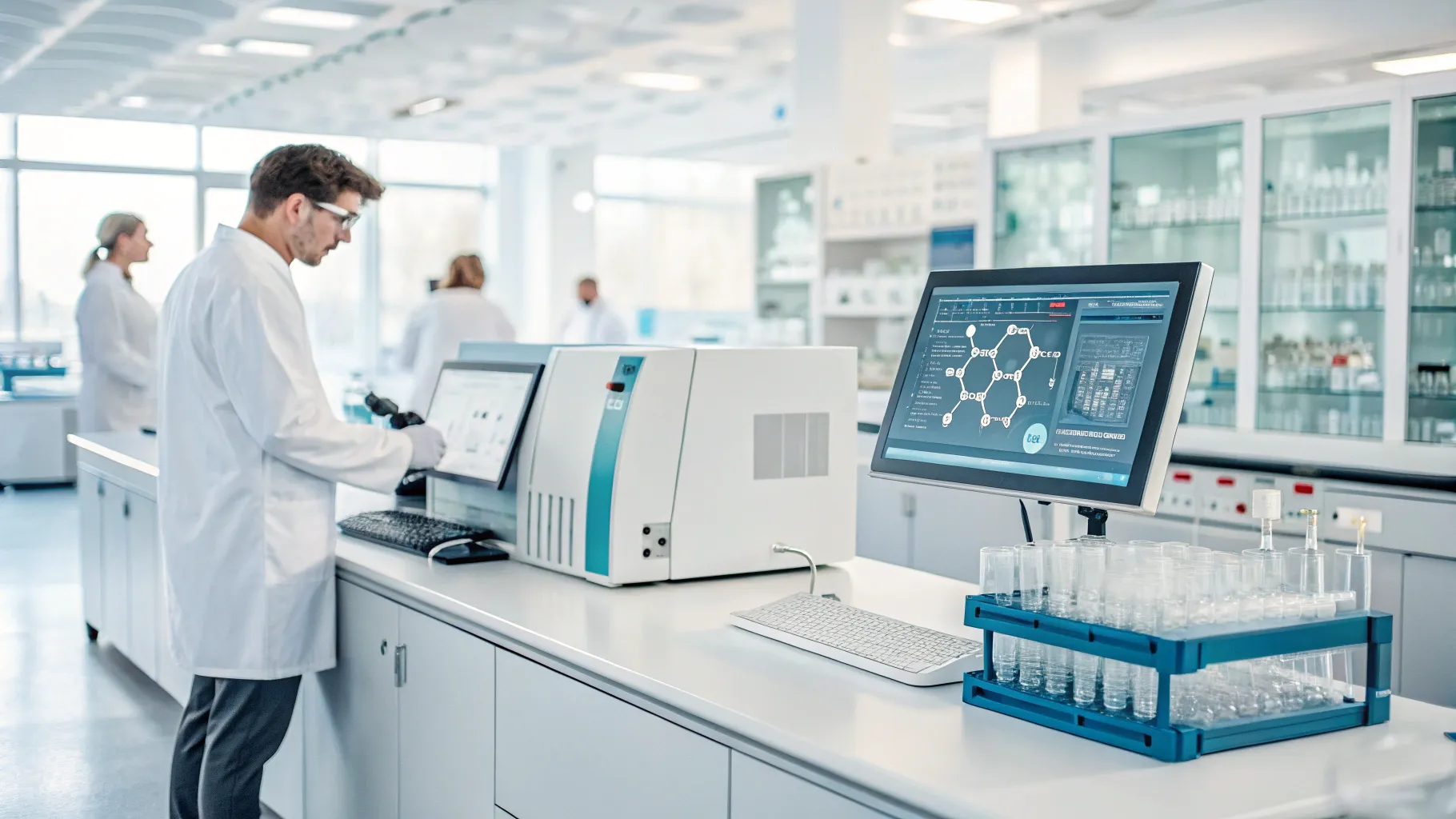
MIT chemical engineers have developed a machine-learning model that predicts how well a molecule will dissolve in an organic solvent, a step that could speed up drug production and chemical manufacturing. The work, carried out in Cambridge, aims to streamline solvent selection and reduce trial-and-error in the lab, addressing a common bottleneck in making new medicines.
Solubility drives key choices in pharmaceutical development, from reaction design to purification and formulation. Today, chemists often rely on experience, literature estimates, or costly screening to find a solvent that dissolves a target molecule at the right level. A reliable computational model promises faster decisions, less waste, and lower costs during scale-up.
“Using machine learning, MIT chemical engineers created a computational model that can predict how well a given molecule will dissolve in an organic solvent. This type of prediction could make it much easier to develop new ways to produce pharmaceuticals and other useful molecules.”
Why Solubility Matters in Drug Development
Choosing the right solvent affects reaction rates, selectivity, yield, and safety. In later stages, solubility influences crystallization, impurity removal, and tablet performance. Poor solvent choices can trigger long delays as teams repeat experiments or change routes. Predictive tools help chemists narrow choices before mixing chemicals, saving time on the bench.
Industry groups spend significant resources on solvent screening and reformulation. While experimental measurements remain the gold standard, the ability to triage dozens of options on a computer can reduce dead ends. This is especially useful for complex molecules with limited prior data.
How a Machine-Learning Model Can Help
The new model uses patterns in molecular structure to estimate solubility across organic solvents. Instead of single-parameter rules, it evaluates the full molecular context, which can capture interactions that simple heuristics miss. It can be applied early in route scouting and again during process optimization.
- Screen solvents for reaction and extraction steps.
- Guide crystallization and purification strategies.
- Identify greener alternatives with similar performance.
By ranking candidates, the tool can focus lab work on the most promising options. Teams can then confirm the top picks with targeted experiments, rather than running wide, unguided screens.
Balancing Promise with Practical Limits
Machine learning does not replace experiments. Predictions depend on the quality and diversity of training data. When a molecule or solvent sits outside the model’s experience, accuracy may drop. Experienced chemists will still validate results, stress-test edge cases, and adjust conditions.
Experts also point out that solubility is sensitive to temperature, impurities, and subtle structural changes. A good model should report uncertainty and allow quick updates as new data arrive. In that way, it becomes a living tool rather than a one-time calculator.
Industry Impact and the Road Ahead
Pharmaceutical companies are under pressure to shorten development timelines and reduce waste. Better solvent prediction can support those goals. It may help teams adopt safer, lower-impact solvents while meeting yield and quality targets. The approach is also relevant to specialty chemicals, materials science, and battery electrolyte design, where solvent choice is central.
Several trends point to wider use of such models:
- Growing internal datasets from past programs that can train models.
- Integration with electronic lab notebooks and process software.
- Automation that closes the loop between prediction and experiment.
Comparisons with traditional methods are expected. Rule-of-thumb estimates and group contribution models are fast but can miss complex interactions. Physics-based simulations offer insight but are often slow. A data-driven predictor can strike a practical balance—fast enough for early screening, accurate enough to cut down on failed trials.
Case studies will be key. If the model consistently narrows solvent sets and reduces rework across different molecule classes, adoption will accelerate. Clear reporting on where it performs well—and where it does not—will build trust among process chemists.
MIT’s effort highlights a steady shift in chemical R&D toward data-guided decision-making. As more measurements are captured and standardized, models should improve and adapt to new chemical space. For now, the message is measured but optimistic: smarter screening can remove friction from drug development without sacrificing scientific rigor.
The next steps include broader validation, user-friendly interfaces, and links to sustainability metrics. Watch for pilot programs that track cycle time, solvent usage, and cost savings. If the early signals hold, computational solubility prediction may become a standard tool on every process chemist’s desktop.

A seasoned technology executive with a proven record of developing and executing innovative strategies to scale high-growth SaaS platforms and enterprise solutions. As a hands-on CTO and systems architect, he combines technical excellence with visionary leadership to drive organizational success.