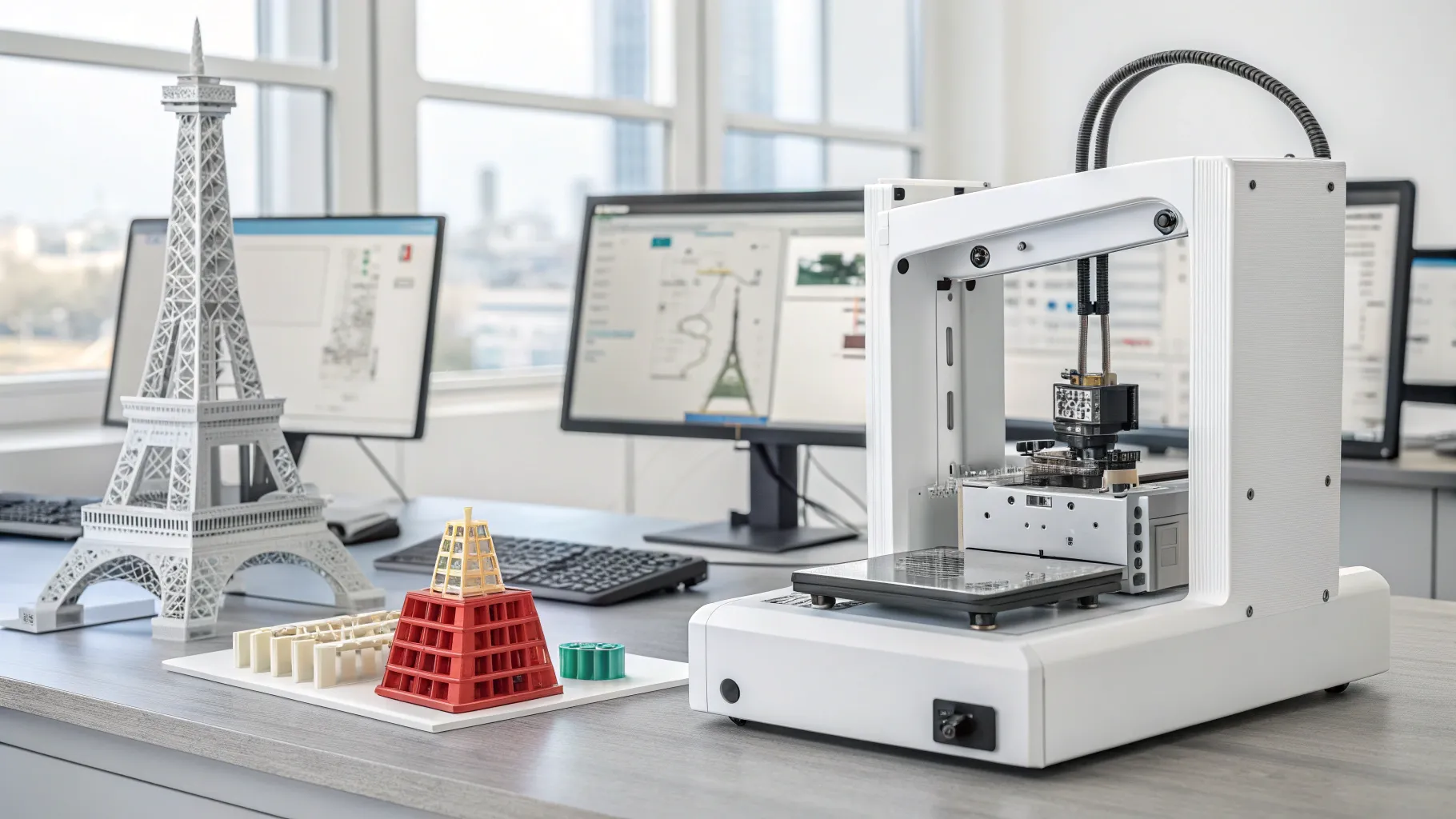
MIT’s Computer Science and Artificial Intelligence Laboratory has introduced “SustainaPrint,” a software-and-hardware toolkit designed to make 3D printing greener without sacrificing strength where it matters most. The system analyzes digital models to find stress hot spots, reinforces only those sections, and lets the rest of a part be made from lower-impact, weaker materials.
The approach aims to answer a long-standing problem in additive manufacturing: stronger plastics deliver dependable parts but carry a higher environmental cost, while eco-friendlier filaments can fail under load. With SustainaPrint, researchers say the trade-off can be reduced by targeting reinforcement to high-stress regions.
How the Toolkit Works
The research team describes a two-part system. First, software studies a model to predict where mechanical stress will concentrate during use. Second, a hardware add-on switches material or modifies internal structure at those points, adding strength only where required. The rest of the print uses lighter, greener filament.
“The ‘SustainaPrint’ software and hardware toolkit from MIT CSAIL strengthens only the weakest parts of eco-friendly objects. It analyzes a model to predict stress areas, supporting them while the rest of the part can be printed using greener, weaker filament.”
That method reflects a broader trend in engineering: use material where it delivers the most mechanical benefit and save it elsewhere. In this case, the savings are environmental. By confining dense infill or stronger polymer to small zones, the total use of high-impact plastics drops.
Why It Matters for 3D Printing
Consumer and industrial 3D printers often rely on materials such as ABS or nylon for strength. These can be durable but carry higher production footprints. Bio-based or recycled filaments, such as recycled PETG or PLA blends, tend to be less strong and more brittle, limiting their use in functional parts.
Supporters of the MIT approach say targeted reinforcement could widen the use of greener materials in jigs, fixtures, and everyday products. If a hinge, clip, or bracket fails at a specific point, reinforcing that small area may be enough to meet performance needs without switching the entire part to a tougher plastic.
Early Use Cases and Industry Impact
Designers of consumer devices, medical aids, and automotive prototypes often iterate quickly and discard many prints. Reducing the material impact of those cycles could cut waste. For small manufacturers, the ability to keep most of a part in a low-impact filament while addressing known weak points could mean cost and emissions savings.
- Targeted strength: Reinforce only high-stress regions.
- Material flexibility: Use greener filaments for most of the part.
- Cost control: Reserve premium materials for critical zones.
Educators and makers may also benefit. Using eco-friendlier rolls for classroom projects while reinforcing testable features can make learning builds more sustainable.
Technical and Practical Questions
The approach depends on accurate stress prediction. If a part is used in unexpected ways, weak points can shift. That raises questions about how users define loads and boundary conditions, and how the software guides them through those choices.
There are hardware considerations too. Switching materials mid-print often requires multi-material or tool-changing printers, or a mechanism to alter infill on the fly. Print times can increase when pausing, purging, or changing settings. Shops with single-nozzle machines may need an upgrade or accept slower workflows.
Standardization will also matter. If the toolkit relies on specific file formats or printer firmware, adoption could lag. Open profiles for popular printers and slicers would help more users test the method at low risk.
What Experts Will Watch Next
Engineers will look for controlled tests comparing parts made entirely from tougher polymers against SustainaPrint versions that blend greener filaments with localized reinforcement. Key metrics include tensile strength at failure, fatigue life, and environmental impact per part.
Clear guidance could speed adoption. Templates for common parts—like brackets, phone mounts, or prosthetic components—would help users map real loads to reinforcement plans. Integration with popular slicers could bring the feature to more desktops.
SustainaPrint’s targeted strategy offers a practical path to more responsible 3D printing. By focusing strength where it counts, it could expand the use of eco-friendlier materials in functional parts. The next phase will hinge on validation, ease of use, and compatibility with common printers. If those pieces come together, greener prints may not require a strength compromise.

Senior Software Engineer with a passion for building practical, user-centric applications. He specializes in full-stack development with a strong focus on crafting elegant, performant interfaces and scalable backend solutions. With experience leading teams and delivering robust, end-to-end products, he thrives on solving complex problems through clean and efficient code.