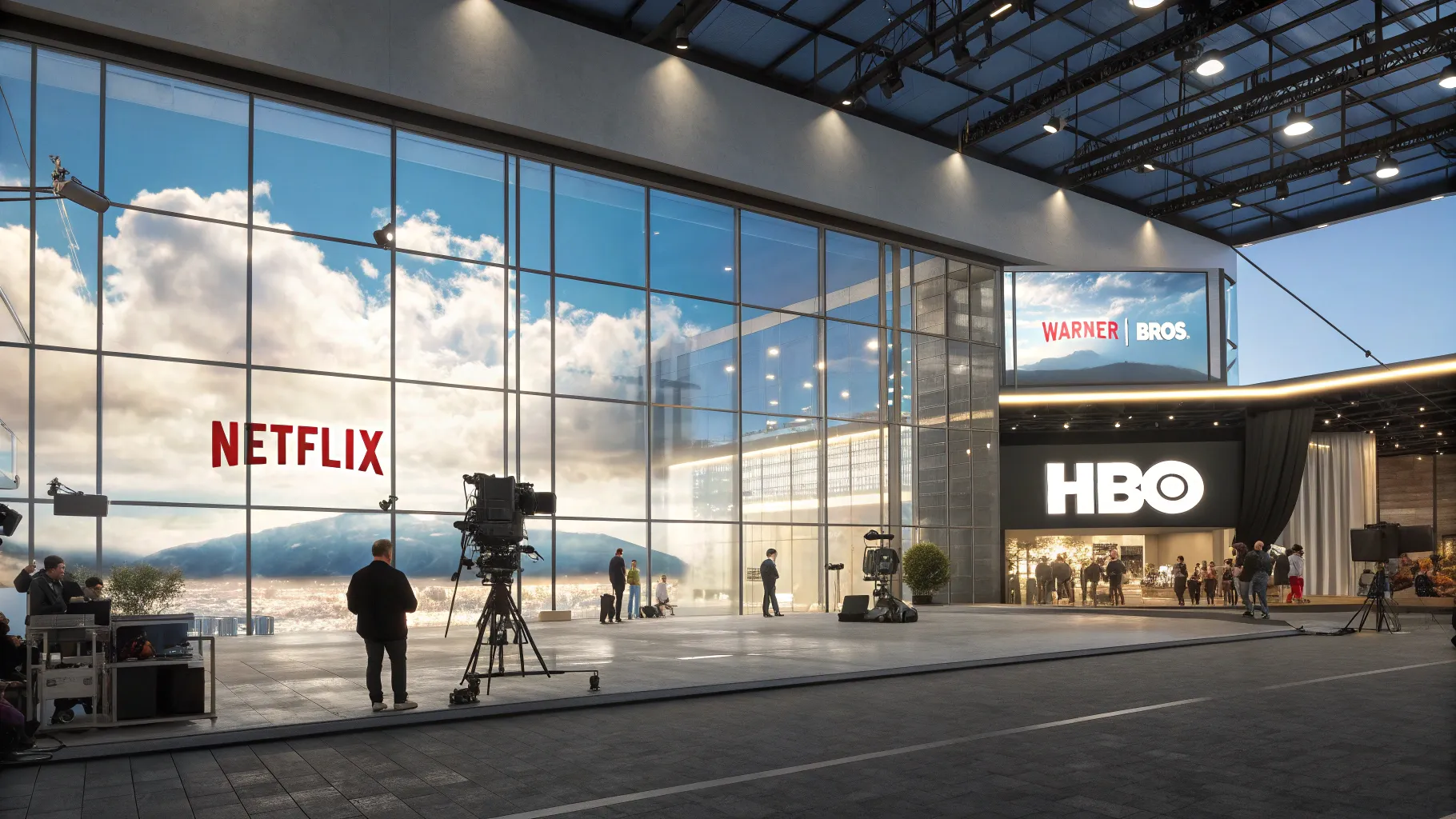
Netflix plans to acquire major Warner Bros. assets, including Warner Bros. Studio and HBO, in a deal valued at nearly $83 billion. The company intends to separate the linear cable channels into a new entity before the acquisition. The move would unite a leading streaming platform with one of Hollywood’s most storied studios and its prestige pay-TV brand. Labor groups signaled antitrust concerns, and regulators are expected to scrutinize the plan.
“In a deal worth nearly $83 billion, Netflix says it will acquire key assets like Warner Bros. Studio and HBO after linear cable channels are spun off into a separate company.”
“Top Hollywood associations like the Writers Guild are raising antitrust concerns as there are likely to be regulatory hurdles to the deal going through,” NBC News’ Chloe Melas reports.
What the Deal Includes
Netflix targets Warner Bros. Studio, a powerhouse behind global franchises, and HBO, known for high-end series. By leaving cable networks in a separate company, Netflix would focus on film, premium television, and the Max streaming library tied to HBO content. The company has not detailed integration timelines, but the structure suggests an emphasis on direct-to-consumer services rather than traditional TV.
- Purchase price: nearly $83 billion
- Assets: Warner Bros. Studio and HBO
- Excluded: linear cable channels, to be spun off
Why Regulators Will Look Closely
The Department of Justice and the Federal Trade Commission have increased scrutiny of large tech and media deals. Past reviews of media consolidation, including the AT&T-Time Warner case and the formation of Warner Bros. Discovery, show how courts and regulators weigh consumer choice and market power. This plan would bring together the world’s largest streamer by subscribers with a major content library and production engine.
Antitrust experts will examine whether the combination could limit competition for premium content, raise licensing costs for rivals, or disadvantage smaller streamers. They will also consider if a spin-off of cable assets reduces overlapping business lines, making approval more feasible. Any review could involve months of filings, data requests, and potential concessions.
Labor Groups and Creative Concerns
Writers and other creative workers worry about fewer buyers for their work. The Writers Guild has warned that consolidation can depress wages, reduce episode orders, and shrink residuals. After strikes in 2023 secured gains on pay and streaming transparency, many fear a new wave of cost controls if large platforms and studios combine.
Some producers see the other side. A stronger balance sheet and a broader library can support riskier shows and films. A single pipeline can speed greenlights and marketing. Yet the record of recent mergers shows mixed results, with content cuts and cancellations following integration as companies manage debt and redundancy.
What It Means for Viewers
For subscribers, the deal could bring more franchises and HBO series under one roof. It might also change release windows and licensing to other platforms. If Netflix absorbs HBO’s originals, it could consolidate prestige television and big-budget films in one service. But the price of a unified offering, and whether bundles emerge, remains open.
Consumer groups will watch for fewer choices and higher monthly fees. Regulators may ask for conditions to protect competition in licensing, advertising technology, or device distribution.
Market Impact and Next Steps
Netflix has more than 270 million global subscribers and has expanded advertising and paid sharing crackdowns to drive revenue. Adding Warner Bros. and HBO would strengthen its film slate and deepen its library, while giving it valuable franchises and long-tail viewing that keeps churn low.
Analysts expect a long approval process and possible divestitures. Key questions include how talent contracts migrate, whether existing international licensing deals must be honored, and how the spin-off handles cable carriage agreements.
What to watch:
- Regulatory timeline at the DOJ or FTC
- Any required asset sales or behavioral conditions
- Impact on content budgets and release strategies
- Changes to pricing or bundle options for subscribers
The announcement signals a new phase of streaming consolidation. It aligns production, library assets, and premium brands with a dominant platform. If approved, the move could reset how studios finance projects and how audiences find marquee shows. If blocked or reshaped, it would mark a rare check on media scale. Either way, Hollywood’s next chapter will hinge on the regulators’ decision and how creators and consumers respond.

Deanna Ritchie is a managing editor at DevX. She has a degree in English Literature. She has written 2000+ articles on getting out of debt and mastering your finances. She has edited over 60,000 articles in her life. She has a passion for helping writers inspire others through their words. Deanna has also been an editor at Entrepreneur Magazine and ReadWrite.