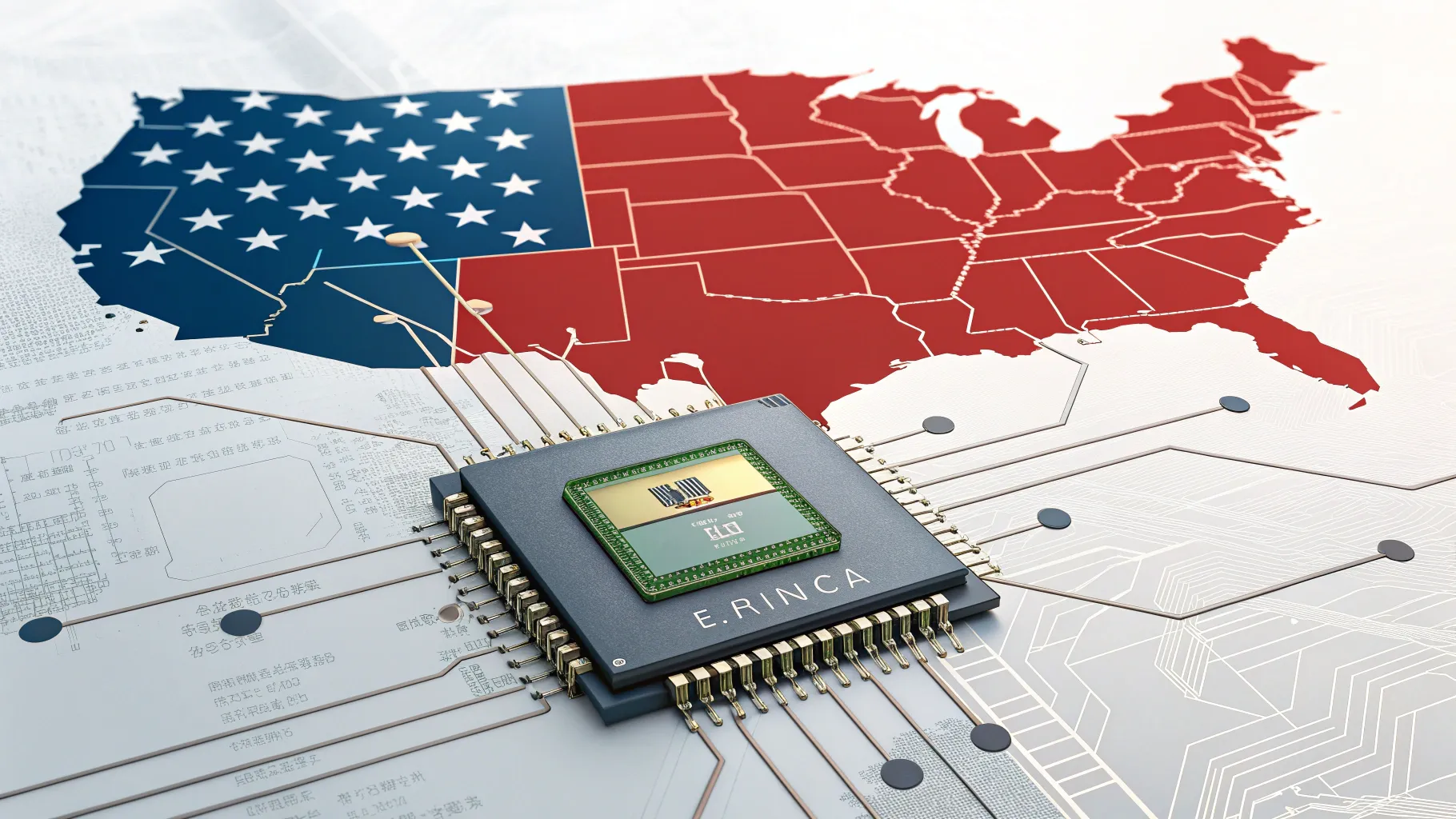
Nvidia sits at the center of a high-stakes contest between Washington and Beijing, as the United States tightens controls on advanced chips and China races to secure computing power. The struggle has intensified in recent months, reshaping supply chains, raising costs, and testing how far both countries will go to secure an edge in artificial intelligence.
At the core is whether Chinese firms can buy Nvidia’s most advanced chips, and whether U.S. policy can slow sensitive technologies from reaching China’s military and surveillance sectors. The outcome will influence who builds the next generation of AI models, and where the profits and talent flow.
“Nvidia had been at the centre of a geopolitical tug-of-war between the US and China in recent months.”
Why Nvidia Matters
Nvidia’s graphics processing units power many of the world’s AI systems. Companies use them to train and run large models for search, automation, and cloud services. That makes the company’s hardware a strategic asset, not just a business product.
For AI researchers and start-ups, access to Nvidia chips often dictates project speed and cost. For governments, control over that access is now a security question. That is why policy debates about Nvidia spill into trade, defense, and industrial planning.
Washington’s Security Case
U.S. officials argue that restricting the most advanced chips to China can slow military applications, including surveillance, cyber operations, and autonomous systems. The Commerce Department has tightened rules since 2022, targeting performance thresholds that define which GPUs can ship.
When Nvidia designed lower-spec models for China to comply with earlier rules, regulators later tightened again. The intent is to close gaps that let high-end performance slip into restricted markets. U.S. allies have also weighed similar steps for chipmaking tools and software.
Beijing’s Response and Domestic Push
Chinese tech groups have sought alternatives. Large firms have bought older or modified chips, pooled compute across data centers, and turned to domestic suppliers where possible. State-backed funding has pushed chip design and manufacturing, aiming to reduce reliance on U.S. technology.
Yet many Chinese developers still favor Nvidia’s software ecosystem and hardware reliability. Migrating code and retraining teams on new platforms is costly. That friction keeps demand strong, even under tighter rules.
Market Impact and Workarounds
Export controls have several visible effects:
- Higher prices and longer wait times for approved chips.
- More cloud-based “compute leasing” to route around hardware shortages.
- Splintered supply chains as firms reconfigure data center plans.
Investors have treated Nvidia as a barometer for AI demand and policy risk. The company’s share price has reflected both surging orders from U.S. cloud providers and uncertainty about China sales. In parallel, rival chipmakers and Chinese vendors have tried to close performance gaps.
Global AI Race and Industry Choices
AI builders outside the U.S. and China are also adapting. European and Middle Eastern data center projects have stepped up purchases, hedging against future export limits. Start-ups are rewriting training plans to fit available chips and energy budgets, and to avoid rule changes that could disrupt model scaling.
Software choices now carry geopolitical weight. Firms must decide whether to bet on Nvidia’s dominant ecosystem or diversify into alternative hardware and frameworks. Many select a hybrid approach to reduce risk from sudden policy shifts.
What to Watch Next
Several questions will shape the next phase. Will Washington issue new thresholds or rules on cloud access for restricted users? Can Chinese chipmakers deliver competitive performance at scale? How will global partners apply their own controls on tooling, packaging, and AI services?
Industry leaders are also preparing for tighter reporting and compliance. That includes tracking who uses which data centers, how capacity is allocated, and whether reseller channels meet legal standards.
For now, Nvidia remains central to the contest. The company’s hardware is a gatekeeper for advanced AI, and policy choices around it ripple through research labs and boardrooms alike. The short-term result is fragmentation and higher costs. The long-term result could be two parallel AI supply chains with different standards and speed.
The balance of power will depend on how quickly domestic alternatives rise and how strict future rules become. Watch for fresh export guidance, new chip launches from Chinese firms, and shifts in cloud capacity. Those signals will show whether this tug-of-war tightens or eases in the months ahead.

Deanna Ritchie is a managing editor at DevX. She has a degree in English Literature. She has written 2000+ articles on getting out of debt and mastering your finances. She has edited over 60,000 articles in her life. She has a passion for helping writers inspire others through their words. Deanna has also been an editor at Entrepreneur Magazine and ReadWrite.