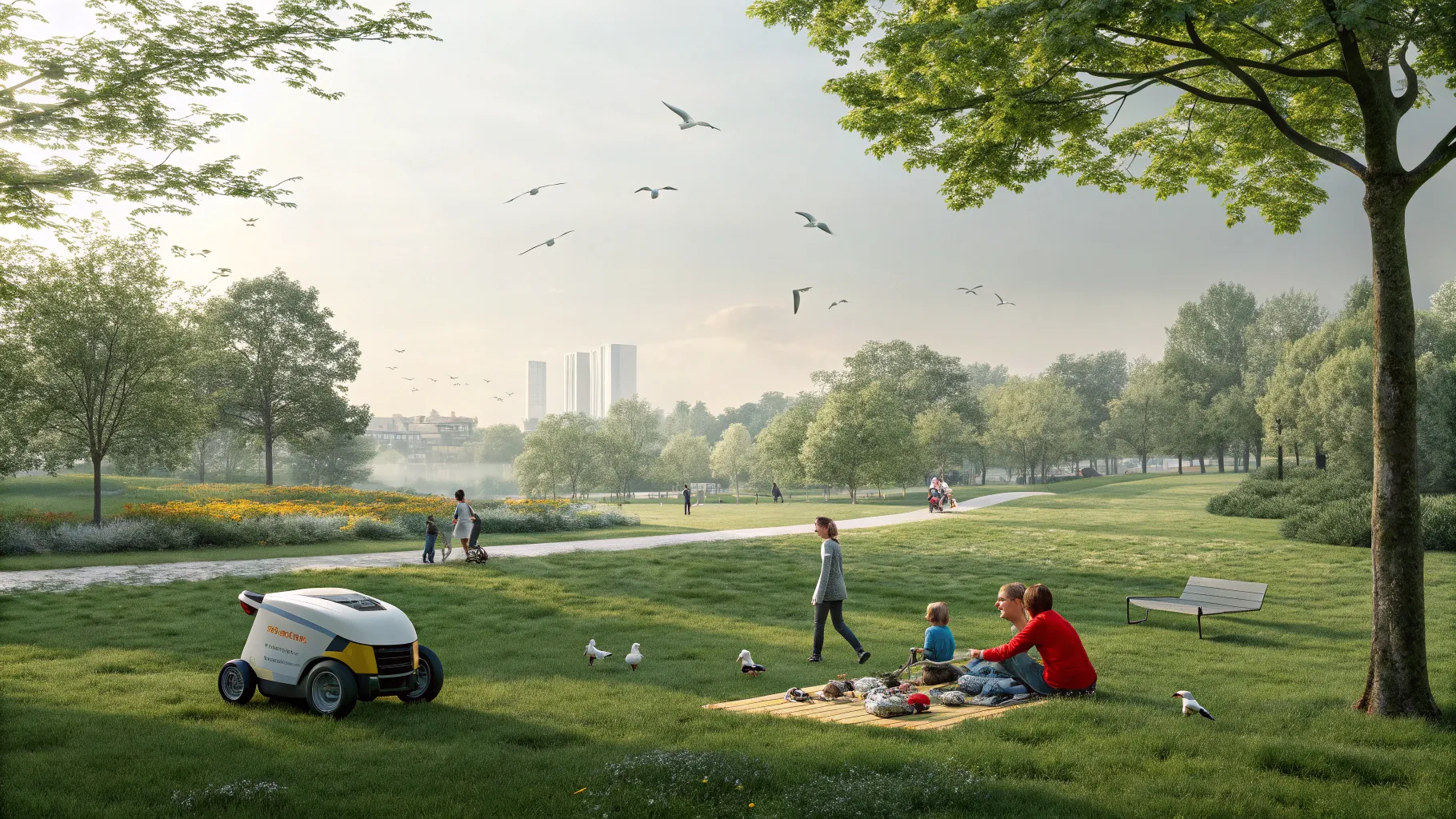
A silent, self-guided mower is sharing turf with migrating birds and weekend revelers, raising fresh questions about safety, stewardship, and city park design.
Across popular parks, managers are testing autonomous grass cutters to reduce noise and pollution while keeping fields neat. The push comes as warm weather draws larger crowds and as birds use open lawns and edges for rest and nesting. The mix is a test of how new tools work in busy public spaces and delicate habitats.
A New Tool Meets Old Habits
Electric, GPS-guided mowers promise fewer emissions than gas machines and can trim grass during off-peak hours. They move slowly and use sensors to avoid obstacles. But crowded lawns and unpredictable behavior from people and wildlife can strain those safeguards.
“Rowdy tourists and migrating birds share a park with a Roomba-like grass clipper. What could possibly go wrong?”
The rhetorical question reflects a core tension. Parks aim to keep grass short and safe for play, yet must protect visitors and animals. Public spaces often host picnics, sports, and photo shoots. Loose dogs and scooters add variables the mower must detect and avoid.
Wildlife Risks In Mowing Season
Fall and Spring migration bring ground-feeding birds that rest in low grass and nest along shrub lines. Conservation groups have warned that small animals, including hedgehogs and amphibians in some regions, can be injured by blades if devices run at dusk or night. Similar risks apply to birds that hide in cover.
Park ecologists say timing and routing matter. Shorter passes during daylight improve visibility. Buffer zones around known nesting spots reduce harm. The mower’s quiet operation is an advantage for parkgoers, but it can also startle animals less than loud engines, making them less likely to flee. That places a premium on human oversight in sensitive windows.
Managing Crowds And Machines
Weekend afternoons are crunch time in busy parks. Alcohol, music, and games spread across lawns, and litter can obscure the mower’s sensors. Officials who have tested autonomous units say scheduling is key. Early morning or weekday mowing reduces conflict with large groups. Clear signage helps set expectations and keeps people from chasing or riding the machines.
Insurance and liability questions also loom. If a device bumps a child or a pet, managers must demonstrate that they have implemented reasonable safeguards. That includes geofencing, staff supervision during peak use, and quick shut-off protocols.
What The Data Suggests
Small gasoline engines are a significant source of urban pollution, according to environmental agencies. Electric mowers avoid tailpipe emissions and cut noise. They also allow more frequent, lighter trims that can improve turf health. Yet, any mower can harm wildlife if used at the wrong time or in the wrong place.
Studies on autonomous units in public settings remain limited. Early trials show fewer worker injuries from repetitive tasks and lower fuel costs—the trade-off shifts to planning and monitoring. Sensors and software help, but they do not replace staff judgment when the field is full or birds are nesting.
Steps Parks Are Testing
- Time windows: Daylight runs, with pauses during peak visitor hours.
- Wildlife buffers: No-mow zones near nests and seasonal habitat signs.
- Geofencing: Virtual boundaries to keep units off busy paths and play areas.
- Human oversight: Staff on call with remote stop controls.
- Public guidance: Clear notices asking visitors not to touch or move the machines.
Balancing Benefits And Risks
The promise is cleaner air, less noise, and steadier grass care. The risk is injury to wildlife or visitors if plans fail. Parks that succeed combine tech with simple fieldcraft. They map sensitive areas, watch bird calendars, and shift mowing when crowds swell.
Tourists will continue to come, and birds will continue to fly. Automated tools are likely to expand as budgets tighten and climate policies become more advanced. The test is whether managers can set rules that keep people safe and protect habitats while meeting basic maintenance needs.
For now, the safest path is measured adoption. Set clear schedules, train staff, and treat wildlife seasons as non-negotiable. Watch early data, listen to users, and revise routes. If that happens, the quiet hum of a smart mower could blend into park life without compromising what makes these places special.

A seasoned technology executive with a proven record of developing and executing innovative strategies to scale high-growth SaaS platforms and enterprise solutions. As a hands-on CTO and systems architect, he combines technical excellence with visionary leadership to drive organizational success.