Scientists have made a remarkable discovery using the James Webb Space Telescope. They believe they have witnessed a planet’s self-destruction for the first time. The planet, about the size of Jupiter, appears to have spiraled into its host star, causing a bright flash known as a nova.
The event was first observed in 2020 by the Gemini South observatory. At the time, astronomers thought the star had expanded into a red giant and consumed one of its planets. However, new observations from the James Webb Space Telescope suggest a different story.
The telescope’s infrared instrument revealed that the star was still in its main sequence phase, fusing hydrogen. This means the star had not aged and expanded as previously thought. Instead, the evidence suggests that a Jupiter-sized planet gradually approached the star until it was destroyed by the star’s outer layers.
Scientists believe the process may have been triggered by the gravitational pull of other nearby celestial bodies. Over millions of years, these forces would have pulled the planet out of its stable orbit and towards the star.
Discovery of planetary self-destruction
Eventually, the planet orbited too close to maintain its structure. The James Webb Space Telescope detected a hot gas ring and dust cloud surrounding the star, which is evidence of the planet’s violent end. As the planet approached the star, it likely grazed the star’s atmosphere before plunging deeper, stripping away its gaseous layers.
This discovery challenges previous assumptions about how planets and stars interact over their lifespans. It shows that planetary destruction can occur through complex gravitational interactions rather than simple stellar expansion. However, not all scientists are convinced by this explanation.
Some suggest that the star may only appear young because it is surrounded by a dense cloud of stellar dust, which could dampen its luminosity. More measurements with powerful telescopes will be needed to provide additional evidence. The destroyed planet was likely a massive gas giant several times the size of Jupiter.
Its high temperature and gaseous composition made it vulnerable to the gravitational forces that led to its demise. As scientists continue to analyze the data, this planetary destruction event will inform models of stellar and planetary evolution. Astronomers anticipate discovering more instances of these fascinating celestial interactions that reshape our understanding of the universe.
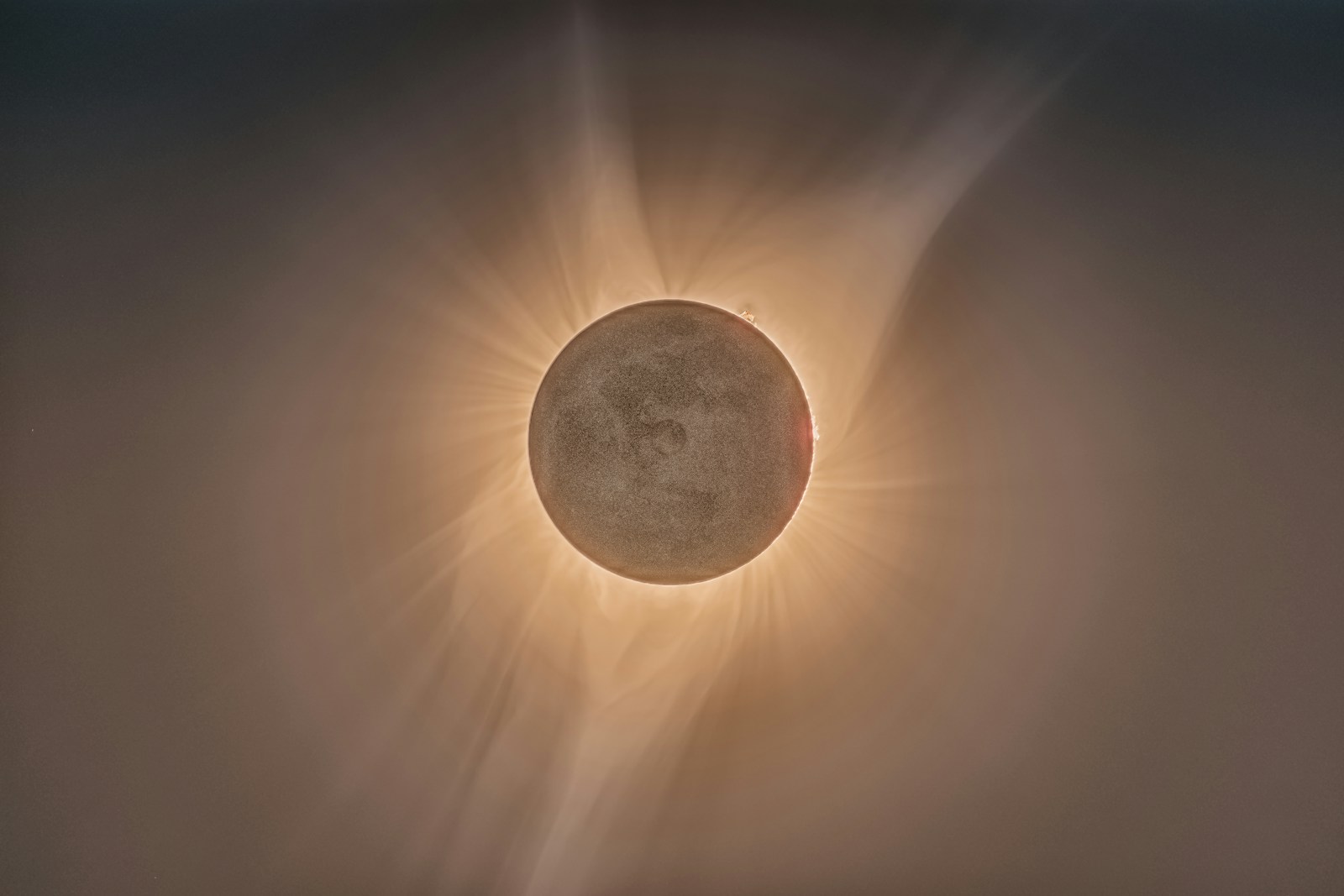
Image Credits: Photo by Bryan Goff on Unsplash

Cameron is a highly regarded contributor in the rapidly evolving fields of artificial intelligence (AI) and machine learning. His articles delve into the theoretical underpinnings of AI, the practical applications of machine learning across industries, ethical considerations of autonomous systems, and the societal impacts of these disruptive technologies.