Scientists at Lawrence Berkeley National Laboratory have developed a new fabrication technique that could significantly reduce noise in superconducting qubits. This breakthrough is a critical step toward building large-scale quantum computers. Superconducting qubits are susceptible to errors caused by environmental disturbances such as unwanted electric charges from materials in the device.
The new technique aims to minimize noise caused by material imperfections by lifting a circuit component called a “superinductor” from the silicon substrate. David I. Santiago, who leads the Quantum Information Science & Technology group at Berkeley Lab, said, “Reducing noise induced by defects in qubits is a goal that scientists around the world have been chasing for decades.
It’s a challenging problem to solve.
Advancing noise-resistant superconducting qubits
But we think that our fabrication technique – a simple chemical etching approach – could be the missing ingredient for anyone who makes superconducting microchips or components for qubits.”
The team, led by senior author Irfan Siddiqi, a faculty scientist at Berkeley Lab and senior advisor of QSA, fabricated aluminum-based superconducting devices with partially suspended superinductors on a 6-inch silicon wafer.
They found that this etching technique resulted in an 87% increase in inductance compared to conventional methods. Santiago said, “It’s a fabrication technique that could enable us to make superinductors in both cleaner and more directed ways. It gives us a lot of flexibility to build devices.
In future work, Santiago, Siddiqi, and their team aim to use the new technique to fabricate qubits as part of the 3D Integration project.
This approach could enable the engineering and fabrication of superconducting qubits that are more capable of handling complex computations and scientific problems. Bert de Jong, Quantum Systems Accelerator director, said, “This pioneering approach could enable new pathways to the engineering and fabrication of superconducting qubits that are much less prone to noise. Knowing how to make noise-resistant qubits will allow us to advance more efficient quantum computers directed at solving the scientific problems that are key to the Department of Energy’s mission.
As breakthroughs like this show the rapid progress in quantum technology, Berkeley Lab continues to work towards more powerful and reliable quantum computers.
This work was supported by the DOE Office of Science, with additional support from the U.S. Army Research Office.
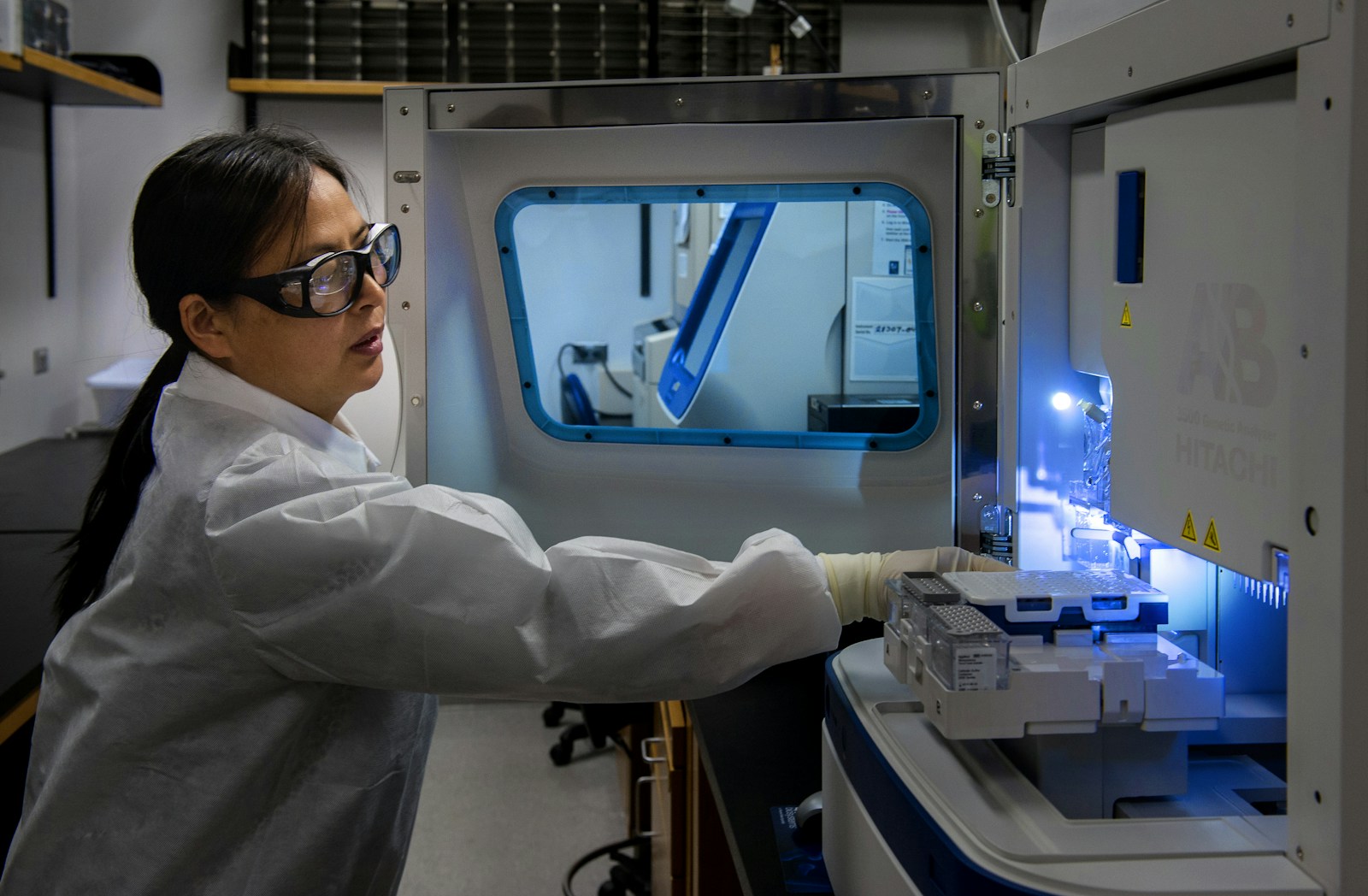
Image Credits: Photo by CDC on Unsplash

Cameron is a highly regarded contributor in the rapidly evolving fields of artificial intelligence (AI) and machine learning. His articles delve into the theoretical underpinnings of AI, the practical applications of machine learning across industries, ethical considerations of autonomous systems, and the societal impacts of these disruptive technologies.