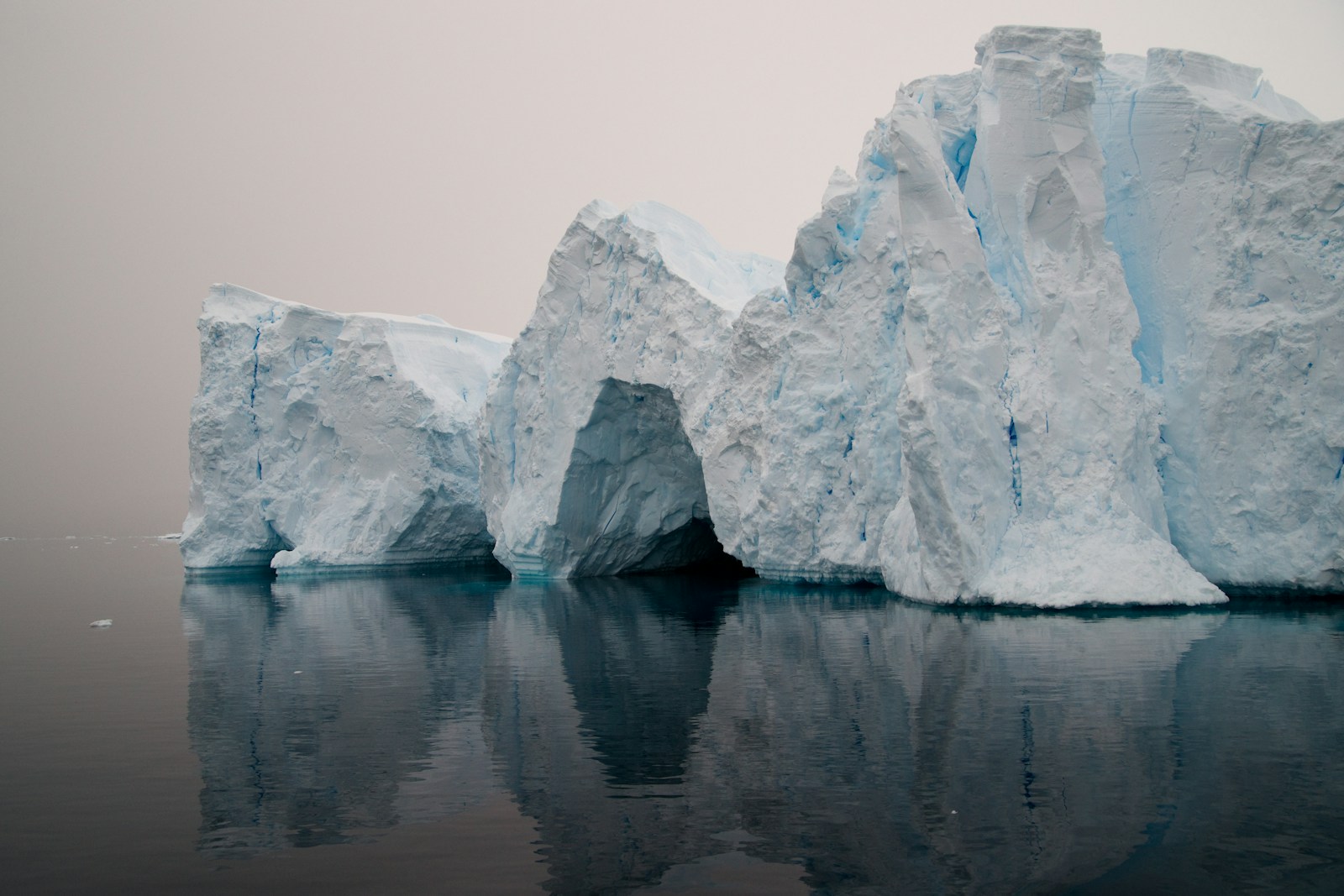
Scientists have made an astonishing discovery beneath 2 kilometers of ice in Antarctica. They have uncovered a hidden river world that dates back 34 million years, revealing a previously unknown subglacial landscape. The discovery sheds light on Antarctica’s transition from being part of the ancient supercontinent Gondwana to its current state of glaciation.
Researchers used advanced technology to map out this river world, providing new insights into the continent’s geological past. Understanding this hidden landscape is crucial as it may offer clues about historic climate conditions and help predict future changes in Earth’s climate. The discovery highlights the importance of ongoing exploration and technological advancements in uncovering the secrets hidden in the planet’s most remote areas.
A team led by Stewart Jamieson made the extraordinary discovery with the help of RADARSAT, a Canadian satellite system. The technology detected small changes in the ice surface, revealing the shape of the land buried below. They discovered an ancient river-carved terrain, approximately the size of Wales, hidden beneath nearly two kilometers of ice.
“It’s like uncovering a time capsule,” Jamieson said. The untouched condition of the landscape points to its extreme age, preserved since long before glaciation began. Back then, the continent was part of Gondwana—a supercontinent that also included Africa, South America, and Australia.
Instead of ice, Antarctica featured flowing rivers, forests, and roaming dinosaurs. About 20 million years ago, however, glaciers began to take hold, freezing the region’s history beneath a growing sheet of ice. This hidden landscape is more than a prehistoric curiosity.
It helps scientists understand how Antarctica has changed over millions of years. These findings could also shed light on how the ice sheet might respond to rising global temperatures in the future.
Ancient rivers beneath Antarctic ice
The survival of these features helps scientists map how the Earth’s surface responds to extreme climate changes. The RADARSAT constellation has played a crucial role in revealing these previously hidden features. By analyzing changes in ice surface slope, researchers can infer the large-scale subglacial topography.
Jamieson’s team complemented this data with radio-echo sounding (RES) surveys conducted as part of the International Collaborative Exploration of the Cryosphere through Airborne Profiling (ICECAP) project. These advanced techniques revealed a detailed picture of valleys, ridges, and channels below the ice. Understanding the history of the East Antarctic Ice Sheet (EAIS) has profound implications for predicting its future behavior in a warming world.
The ice sheet’s sensitivity to climatic changes makes it a critical indicator of how rising temperatures might reshape the polar regions. Jamieson’s research highlights the significance of examining subglacial landscapes in reconstructing the past dynamics of the ice sheet. The discovery of Antarctica’s ancient river networks highlights the power of modern technology to illuminate Earth’s distant past.
By piecing together clues from subglacial topography and other advanced surveys, scientists connect prehistoric landscapes with today’s climate dynamics. This research highlights the interconnectedness of Earth’s past, present, and future, providing valuable insights into understanding current environmental changes and predicting the global impact of human-driven climate change. As humanity grapples with the challenges of a warming world, the knowledge embedded in these ancient landscapes will play a crucial role in guiding efforts to sustain the planet’s delicate ecosystems.
By studying the buried landscapes of Antarctica, researchers are constructing a clearer picture of our planet’s climatic future and the pathways needed to adapt to a rapidly changing environment. “We’ve had a longtime interest in the shape of the land beneath the ice sheet,” Jamieson said. “The implication is that this must be a landscape carved by rivers before the ice sheet itself grew.”
The research team has also mapped out hidden mountain ranges, canyon systems, and lakes beneath the ice in Antarctica.
This discovery is a poignant reminder of Earth’s dynamism and the transformative processes that have shaped it over millions of years. By studying the buried landscapes of Antarctica, researchers are constructing a clearer picture of our planet’s climatic future and the pathways needed to adapt to a rapidly changing environment.

Senior Software Engineer with a passion for building practical, user-centric applications. He specializes in full-stack development with a strong focus on crafting elegant, performant interfaces and scalable backend solutions. With experience leading teams and delivering robust, end-to-end products, he thrives on solving complex problems through clean and efficient code.