In a groundbreaking discovery, scientists have identified naturally occurring “death traps” in the Red Sea, nearly 4,000 feet below the surface in the Gulf of Aqaba. These brine pools, named the NEOM Brine Pools, are up to ten times saltier than normal seawater and lack oxygen, creating an environment lethal to most forms of life. Despite these harsh conditions, the research team noted the presence of extremophile prokaryotes, single-celled organisms that thrive in extreme environments.
These organisms can survive in conditions with high temperature, pressure, salinity, acidity, or radiation levels. Professor Sam Purkis, chair of the Department of Marine Geosciences at the University of Miami, led the team that made the discovery using remotely operated submersibles and deep-sea probes. “Studying this community gives us a glimpse into the conditions where life first appeared on our planet and might guide the search for life on other ‘water worlds’ in our solar system and beyond,” said Purkis.
The brine pools preserve geological records and host extraordinary life forms. Sediment layers remain undisturbed, providing an archive of past climate changes and geological events. Core samples extracted from the brine pools have revealed an unbroken record of regional history spanning more than 1,000 years, documenting past rainfall patterns, earthquakes, and tsunamis in unprecedented detail.
Scientists believe that life on Earth may have first appeared in deep-sea conditions similar to those of these brine pools.
Brine pools reveal ancient climate data
Researchers suggest that similar saline-rich environments could exist beneath the icy surfaces of Jupiter’s moon Europa, Saturn’s moon Enceladus, and even on exoplanets in distant star systems.
The study revealed that larger predators lurk near the edges of the brine pools, waiting to snatch helpless prey that accidentally enter them, as these creatures are stunned or killed immediately. “Ordinarily, these animals churn up the seabed, disturbing the sediments that accumulate there. Not so with the brine pools.
Here, any sedimentary layers that settle to the bed of the brine pool remain exquisitely intact,” explained Purkis. Only about 40 such brine pools have been documented across the Red Sea, Mediterranean, and Gulf of Mexico. The NEOM Brine Pools represent an addition to scientific understanding, offering a unique preservation environment for regional climatic and tectonic events.
The findings show that major floods from rainfall occur approximately every 25 years in the region of the brine pools, while tsunami events take place roughly once every century. “Our current understanding is that life originated on Earth in the deep sea, almost certainly in anoxic—without oxygen—conditions,” said Purkis. These saltwater reservoirs form some of the most hostile environments on Earth, filled with a community of extremophile microbes that have adapted to the harsh conditions.
The unique geological features of the Gulf of Aqaba, including extreme depth, volcanic activity, and unusual temperature variations at depths, make it a mysterious area that has captivated scientists and historians alike.
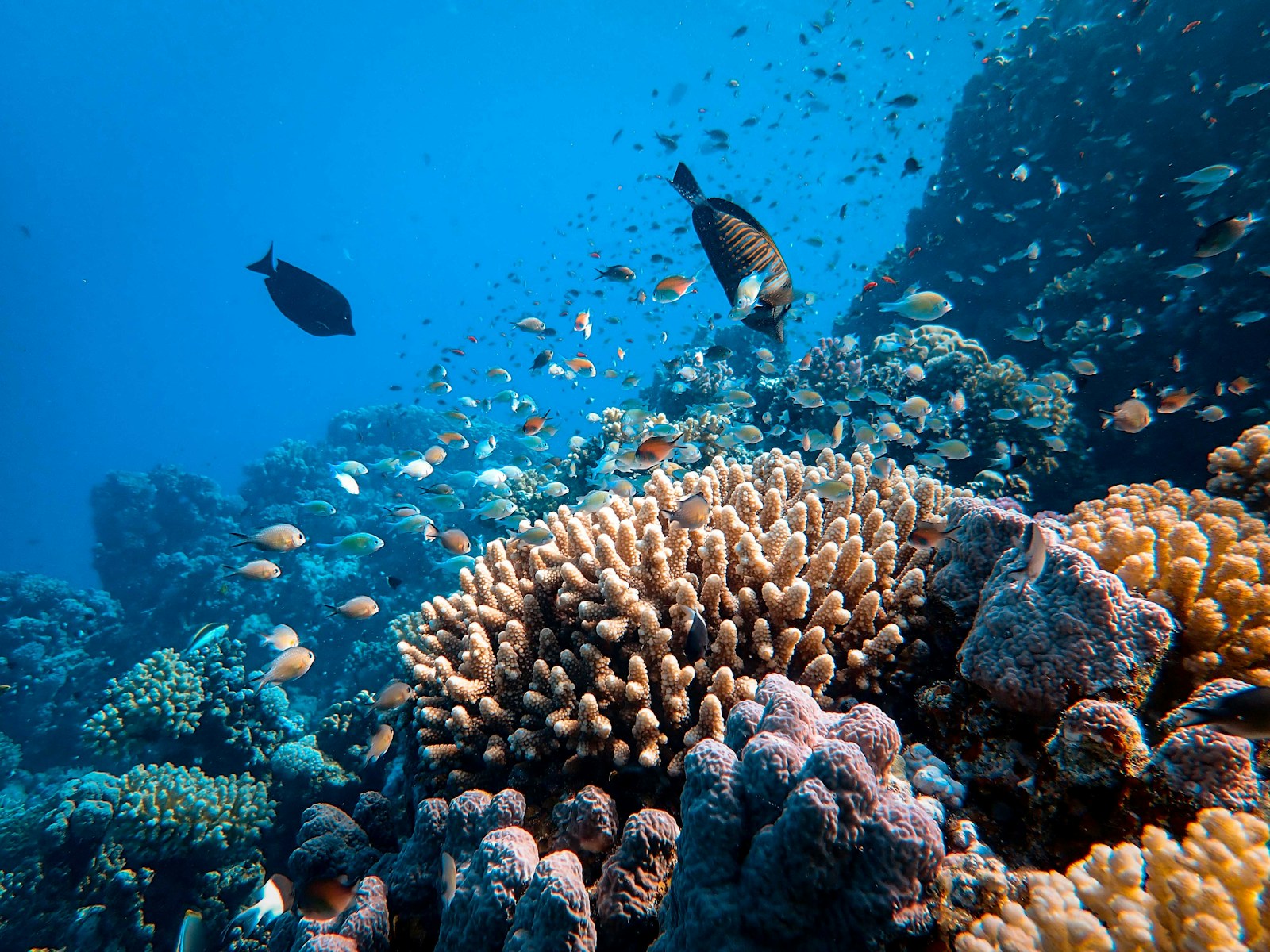
Image Credits: Photo by Francesco Ungaro on Unsplash

April Isaacs is a news contributor for DevX.com She is long-term, self-proclaimed nerd. She loves all things tech and computers and still has her first Dreamcast system. It is lovingly named Joni, after Joni Mitchell.