NASA’s James Webb Space Telescope has captured new details of the auroras on our solar system’s largest planet. The dancing lights observed on Jupiter are hundreds of times brighter than those seen on Earth. Webb’s incredible sensitivity allows astronomers to study these lights in greater detail to better understand Jupiter’s powerful magnetic environment.
https://x.com/NASAWebb/status/1922373658728673305
https://x.com/NASA/status/1921943067805802762
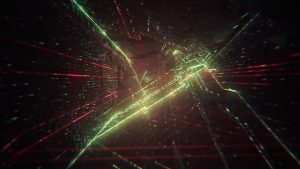
Auroras occur when streams of high-energy particles crash into a planet’s atmosphere near its magnetic poles, causing gases to glow. On Earth, we know them as the Northern and Southern Lights. Jupiter’s auroras are far more intense and energetic, fueled by additional cosmic forces.
Jupiter doesn’t just rely on the Sun for its auroras.
https://x.com/csa_asc/status/1922674733780230234
Its massive magnetic field also pulls in charged particles from its surroundings, including material thrown into space by its moon Io. Known for its explosive volcanoes, Io blasts out particles that escape the moon’s gravity and form a ring around Jupiter.
When these and other solar particles are swept up by Jupiter’s magnetic field, they’re accelerated to extreme speeds and collide with the planet’s atmosphere, creating bursts of glowing light. Webb is now offering an unprecedented look at these events. Using its Near-Infrared Camera, the telescope captured new data.
Led by Jonathan Nichols at the University of Leicester in the UK, the research team discovered rapidly changing features in Jupiter’s auroras, revealing a level of activity that’s far more dynamic than scientists expected. “What a Christmas present it was – it just blew me away!” shared Nichols.
New details in Jupiter’s auroras
“We wanted to see how quickly the auroras change, expecting them to fade in and out ponderously, perhaps over a quarter of an hour or so. Instead, we observed the whole auroral region fizzing and popping with light, sometimes varying by the second.”
In particular, the team studied emission from the trihydrogen cation (H₃⁺), which can be created in auroras. They found that this emission is far more variable than previously believed.
The observations will help develop scientists’ understanding of how Jupiter’s upper atmosphere is heated and cooled. The team also uncovered some unexplained observations in their data. “What made these observations even more special is that we also took pictures simultaneously in the ultraviolet with the Hubble Space Telescope,” added Nichols.
“Bizarrely, the brightest light observed by Webb had no real counterpart in Hubble’s pictures. This has left us scratching our heads. In order to cause the combination of brightness seen by both Webb and Hubble, we need to have a combination of high quantities of very low-energy particles hitting the atmosphere, which was previously thought to be impossible.
We still don’t understand how this happens.”
The team now plans to study this discrepancy between the Hubble and Webb data and to explore the wider implications for Jupiter’s atmosphere and space environment. They also intend to follow up this research with more Webb observations to better explore the cause of the enigmatic bright emission. These results were published today in the journal *Nature Communications*.
The James Webb Space Telescope is the most advanced space science observatory ever built. Designed to explore the universe in unprecedented detail, Webb is helping scientists unravel mysteries within our own solar system, study planets orbiting distant stars, and investigate the origins of galaxies, stars, and cosmic structures. As a global collaboration between NASA, the European Space Agency (ESA), and the Canadian Space Agency (CSA), Webb is transforming our understanding of the universe and our place within it.

April Isaacs is a news contributor for DevX.com She is long-term, self-proclaimed nerd. She loves all things tech and computers and still has her first Dreamcast system. It is lovingly named Joni, after Joni Mitchell.