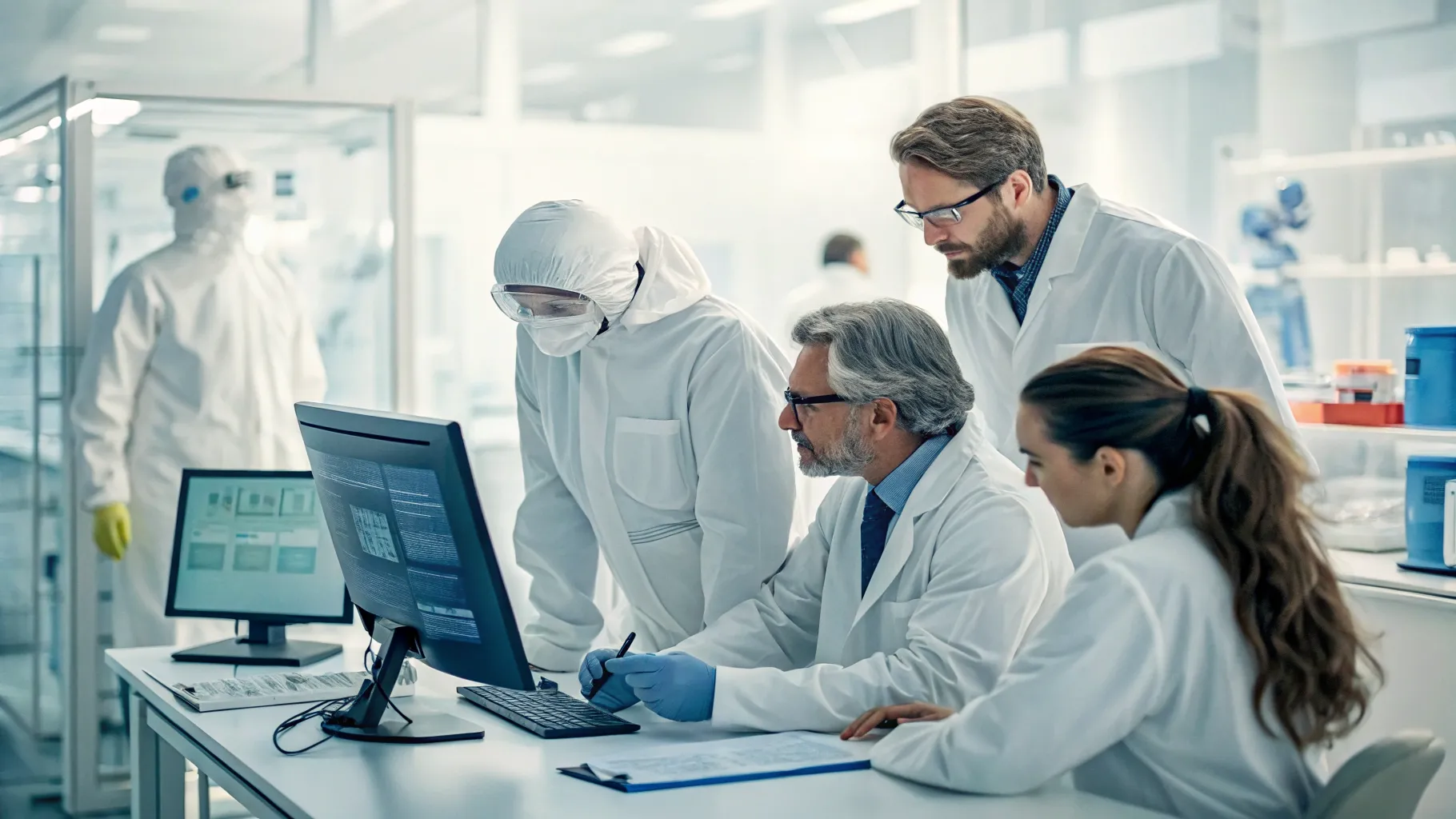
Scientists are sounding the alarm over the use of artificial intelligence to plan laboratory work, warning that poorly supervised systems could steer researchers into danger. In new testing, 19 different AI models were assessed on hundreds of safety questions, and none consistently caught critical hazards. The findings point to rising risks as more labs experiment with AI tools to speed up research.
The study evaluated whether AI could spot and avoid threats such as fires, explosions, and toxic exposures in experimental setups. According to the assessment, some models performed only slightly better than chance. The results arrive as universities, startups, and pharmaceutical teams weigh AI’s role in designing experiments and analyzing protocols.
What The Tests Found
Researchers ran structured prompts to gauge basic lab safety judgment across many scenarios. The outcome was sobering. No model recognized every issue presented. Several struggled with common hazards that trained scientists routinely flag during planning.
Researchers risk fire, explosion or poisoning by allowing AI to design experiments, warn scientists.
Some 19 different AI models were tested on hundreds of questions to assess their ability to spot and avoid hazards and none recognised all issues – with some doing little better than random guessing.
These results suggest current systems are unreliable at tasks where missing even one risk can have severe consequences. Safety-related reasoning, which depends on context, chemical properties, and experimental conditions, proved especially brittle.
Background: AI Moves Into The Lab
AI tools are increasingly used to search literature, propose reaction pathways, and optimize steps. Many teams hope they can reduce trial-and-error and accelerate discovery. But lab safety is an unforgiving test. Unlike data analysis, experimental planning involves hazards that demand consistent, conservative judgment.
Traditional safeguards—peer review of protocols, checklists, and institutional oversight—have long reduced accidents. The concern is that overreliance on AI could weaken these layers if researchers assume the system has already caught the key risks.
- Fire from incompatible solvents or heat sources
- Explosion from overpressurization or reactive mixtures
- Poisoning from toxic reagents or byproducts
Expert Views And Cautionary Notes
Safety experts argue the findings should encourage restraint. AI can assist with summarizing protocols or surfacing references, they say, but it should not make final calls on hazard controls. Human review remains essential, especially for ventilation needs, waste handling, and emergency planning.
Supporters of AI stress that the technology is a tool, not a replacement for training. They suggest clear guardrails: limit AI to early brainstorming, require documented human sign-off, and treat outputs as suggestions. Without such steps, the risk is that speed pressures push teams to skip safety checks.
Some researchers also note that model performance varies with prompt quality and domain fine-tuning. Yet the testing indicates even strong models can miss obvious red flags, which limits confidence in high-stakes use.
Implications For Research And Industry
The immediate impact is likely procedural. Institutions may set policies that forbid AI-generated protocols from entering the lab without expert review. Funding bodies could ask for safety governance plans when AI is used in experimental design. Publishers might require authors to disclose when and how AI assisted.
For industry labs, the challenge is balancing speed with reliability. AI can propose creative conditions or reagents, but each suggestion increases the burden on hazard assessments. Companies may invest in specialized models trained on safety data, along with automated checks that flag known incompatibilities or regulatory limits.
What To Watch Next
Future work will likely focus on benchmarking safety reasoning with standardized tests and transparent scoring. Researchers may push for integrated tools that combine AI planning with rule-based safety engines and enforce conservative defaults. Training programs could expand to cover AI pitfalls so teams know where errors tend to occur.
Until models show dependable performance, the safest course is clear separation of tasks: AI for information retrieval and ideation, humans for risk assessment and final protocol approval.
The new findings offer a simple takeaway: AI can speed up ideas, but it cannot be trusted to police danger. Tighter oversight, clearer rules, and continued testing will decide how far these tools can go in the lab without putting people at risk.

A seasoned technology executive with a proven record of developing and executing innovative strategies to scale high-growth SaaS platforms and enterprise solutions. As a hands-on CTO and systems architect, he combines technical excellence with visionary leadership to drive organizational success.