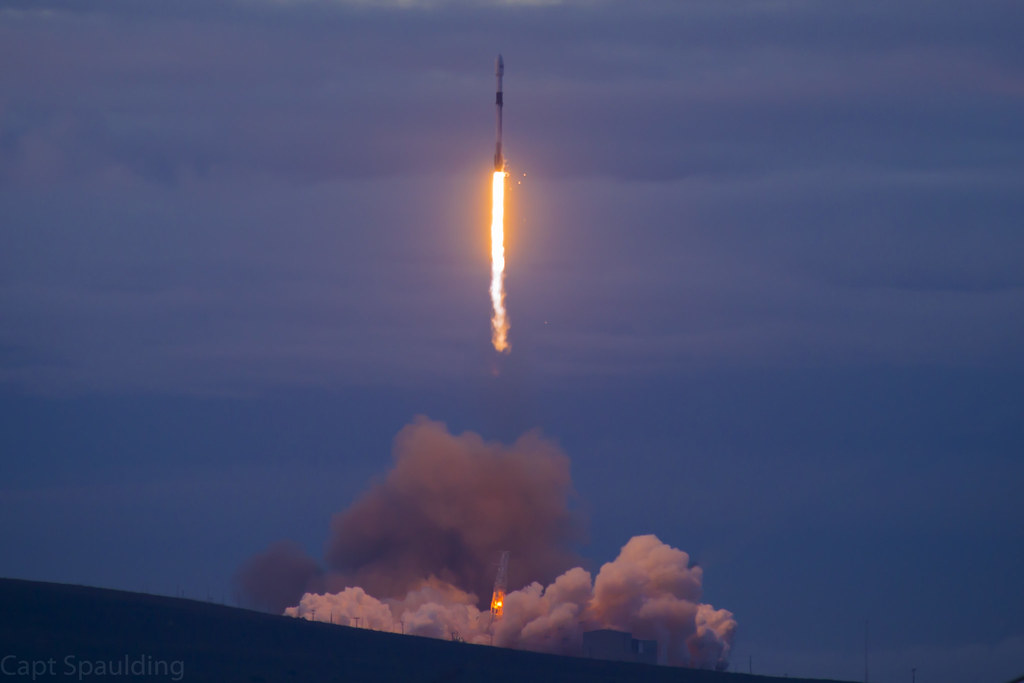
SpaceX called off the launch of four “MicroGEO” satellites just as the countdown reached zero on Saturday.
After further inspections of the launch vehicle and data review, teams are standing down from the launch of the @Astranis: From One to Many mission. A new target launch date will be shared once confirmed
— SpaceX (@SpaceX) December 22, 2024
The liftoff from Cape Canaveral Space Force Station in Florida was halted due to an issue that arose as the Falcon 9’s engines were igniting. “Standing down from tonight’s Falcon 9 launch,” SpaceX announced on X.
The company initially targeted Sunday morning for the next launch opportunity. However, after further inspection, the attempt was postponed with no new target date announced yet. Christian Keil, Astranis’ vice president, expressed optimism despite the setback.
Falcon 9 launches 30 payloads on our second dedicated rideshare mission to mid-inclination orbit pic.twitter.com/SOM1fnVaCT
— SpaceX (@SpaceX) December 21, 2024
“Scrubs happen! We’ve seen worse and will try again soon,” he stated on X. The four satellites were built by San Francisco-based company Astranis. This launch, dubbed “Astranis: From One to Many,” marks a significant step for the company.
We’ve been the sole launch provider for @Synspective since we launched their 1st StriX spacecraft in 2020.
Today's launch will be our 6th of a total of 16 launches booked with the team at Synspective.
Webcast live from T-20 mins: https://t.co/cq6trzzYgr pic.twitter.com/70Jh3xroVU
— Rocket Lab (@RocketLab) December 21, 2024
Only a single Astranis satellite has successfully reached orbit so far.
Spacex postpones cape canaveral launch
Two of the satellites are set to be used by Anuvu for providing in-flight connectivity to travelers.
Another satellite will extend services to customers in the Philippines, while the fourth, UtilitySat, is designed to cater to various customers throughout its operational life. “This is a huge milestone for Astranis. We’re going from one to many satellites, and this is the first time anyone has ever launched four satellites together like this,” Astranis CEO John Gedmark said in a statement prior to the launch attempt.
He added that these advanced satellites feature numerous improvements to increase both capacity and affordability. Upon successful launch, the Falcon 9’s upper stage was to deploy the satellites into geosynchronous transfer orbit about 35 minutes after liftoff. From there, the satellites would make their way to geosynchronous orbit, approximately 22,236 miles above Earth.
At this altitude, they can maintain a constant position relative to the planet’s surface. The Falcon 9’s first stage was planned to return to Earth for a touchdown on the droneship “A Shortfall of Gravitas” approximately 8.5 minutes after launch. This mission would have marked the 17th flight for this particular booster.
As the spaceflight community waits for the new launch date, the anticipation for realizing Astranis’ milestone mission continues to build.

April Isaacs is a news contributor for DevX.com She is long-term, self-proclaimed nerd. She loves all things tech and computers and still has her first Dreamcast system. It is lovingly named Joni, after Joni Mitchell.