SpaceX is warning that retired Starlink satellites might not always fully disintegrate upon re-entry into the Earth’s atmosphere. Small remnants may survive and land on the ground. The company made the announcement on Thursday as SpaceX has been de-orbiting and retiring hundreds of older Starlink satellites by plunging them back into the Earth’s atmosphere, which should incinerate the hardware.
All Starlink satellites were designed to orbit for about five years. SpaceX has previously said that Starlink satellites have been engineered to incinerate during atmospheric re-entry, thus posing no threat to the public. But in Thursday’s statement, the company said small fragments from the burning debris can continue to fly toward Earth.
Still, the company maintains that satellite debris poses no danger. For example, the chance of the company’s newest Starlink satellites causing human harm has been rated at “less than 1 in 100 million, significantly more conservative than the current industry standard.”
It’s unclear if the risk is higher for older Starlink satellites launched five years ago. But SpaceX says it has adopted a “more conservative approach” than current US regulations, which require operators to keep the risk levels of falling space debris causing a human casualty to under 1 in 10,000.
Although the company’s newest V2 mini Starlink satellites should disintegrate if they’re sent burning through the atmosphere, SpaceX also noted: “We predict that approximately 5% of the mass of the entire satellite could survive reentry.”
“The biggest contributor (~90% of the surviving mass) is silicon from the solar cells, which has a high melting point and a very low ballistic coefficient, which could survive reentry in extremely small fragments,” the company added. That said, if any silicon fragments survive, they will end up landing on Earth with less than one joule of energy. While the falling silicon debris should be harmless, SpaceX noted that the magnetic ceramic materials in “the core of inductors and transformers” of a Starlink satellite can also survive re-entry.
SpaceX outlines satellite debris risks
As a result, the company says it is “limiting the size and the mass of each inductor core, even at the cost of reducing their efficiency and increasing the complexity of the system design.”
In one rare instance, the company also revealed that “a 2.5 kg piece of aluminum” found on farm grounds in Saskatchewan, Canada, was traced to a Starlink satellite. Specifically, the surviving aluminum came from “a modem enclosure lid of the backhaul antenna on a Starlink direct-to-cell satellite,” SpaceX said.
The aluminum part likely survived because the satellite had failed to properly de-orbit. SpaceX also says its approach to safety includes ensuring that any debris fragments land with less than 3 joules of energy—well below the US regulatory threshold, which considers objects exceeding 15 joules a potential human casualty risk. “For reference, 15 joules of energy corresponds to roughly that of a 1.7″ piece of hail,” the company said.
In the same report, SpaceX points out it’s preparing to de-orbit 329 Starlink satellites. The company also says it’s already de-orbited 865. The increasing number of disposals might spark concerns about Starlink debris landing over populated areas.
But SpaceX says it always tries to retire the satellites “over the open ocean, away from populated islands and heavily trafficked airline and maritime routes.”
That didn’t occur in January when one five-year-old Starlink satellite was blazing through the night skies over northern Illinois. Michael Nicolls, VP of Starlink Engineering, attributed the botched re-entry to “degraded attitude control.”
SpaceX added that this requires controlling the satellite at very low altitudes, under 125 kilometers, or “far below the design requirement of these early Starlink vehicles.” Since then, the company has improved the altitude control systems for its newer V2 and upcoming V3 satellites. In addition, SpaceX has been conducting experimental tests simulating atmospheric re-entry conditions and evaluating whether the printed circuit boards used in the satellites will disintegrate.
The company currently has over 7,000 satellites in orbit and plans to launch thousands more. The growing scale of the constellation promises to improve the speeds and internet quality of Starlink, which is already serving over 4.6 million users.
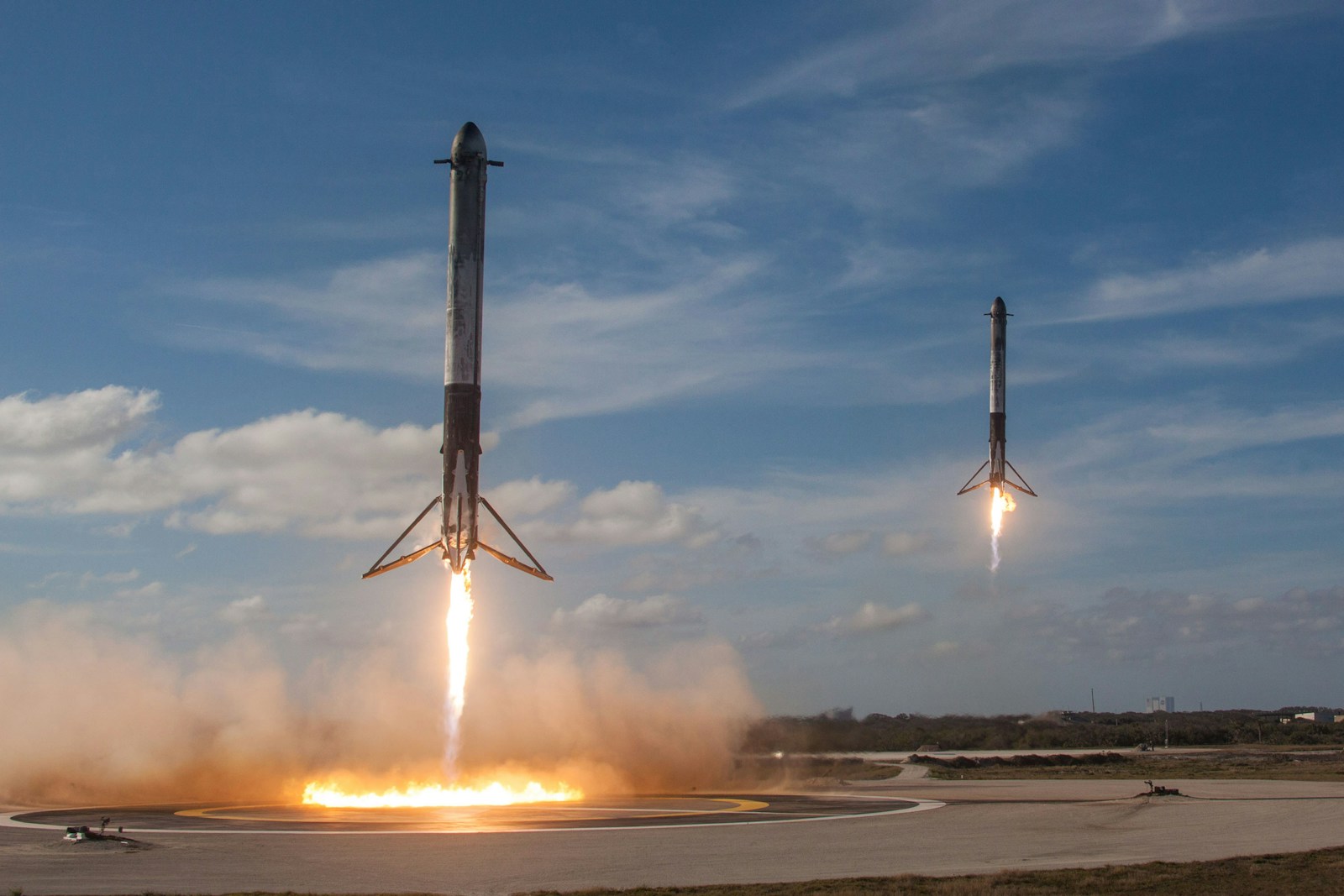
Image Credits: Photo by SpaceX on Unsplash

Noah Nguyen is a multi-talented developer who brings a unique perspective to his craft. Initially a creative writing professor, he turned to Dev work for the ability to work remotely. He now lives in Seattle, spending time hiking and drinking craft beer with his fiancee.