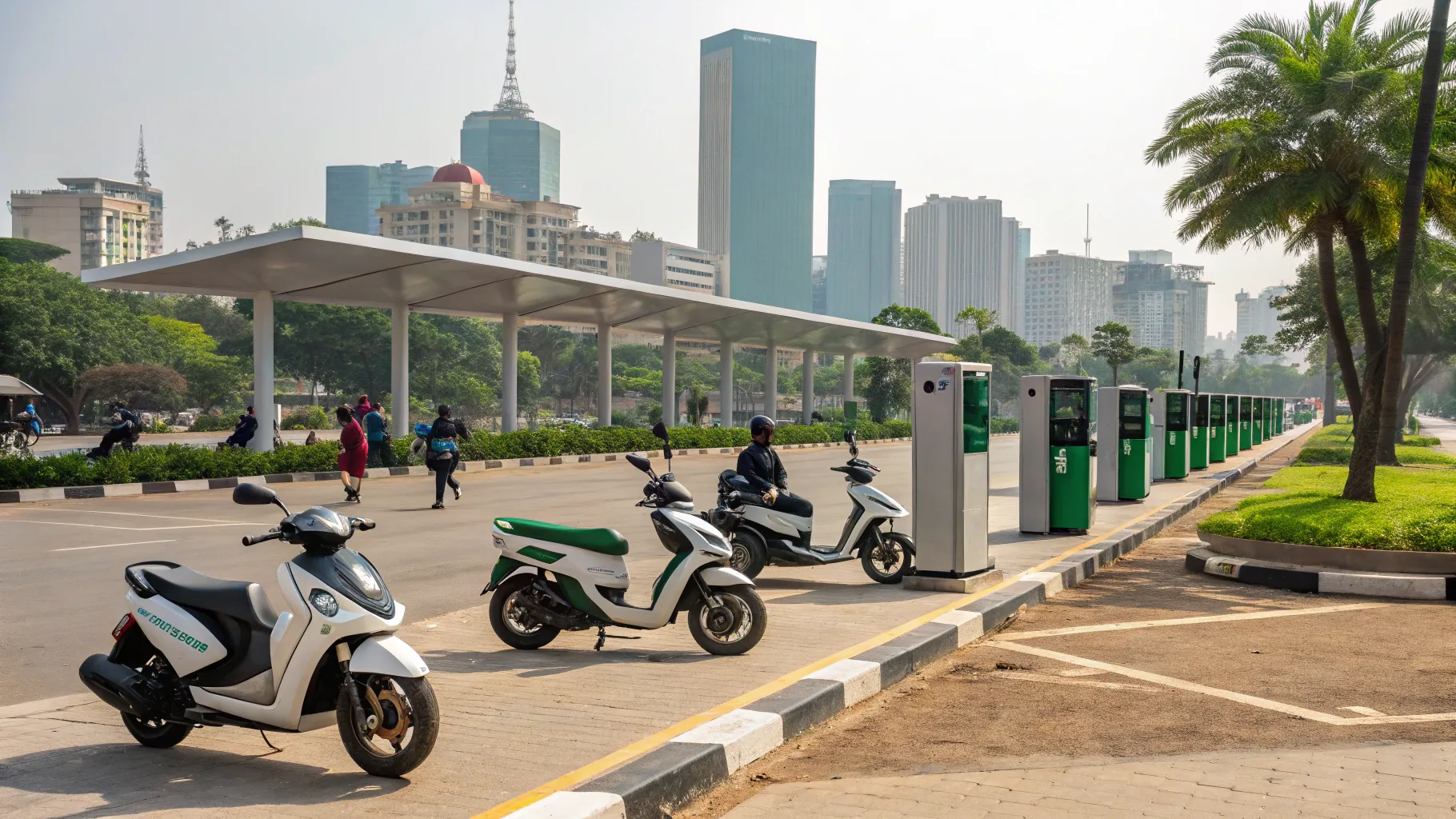
Dubai-based Spiro is stepping up its push into Africa, betting that electric motorbikes paired with battery swapping can cut costs for riders and reduce urban air pollution. The company says its model is built for local conditions, with a growing network of stations designed to keep bikes on the road without long charging stops.
The expansion highlights a race to electrify two-wheel transport across African cities where motorbike taxis serve millions of daily trips. With fuel prices rising and city leaders seeking cleaner streets, companies are testing new ways to make electric transport practical and affordable.
“Dubai-headquartered Spiro is growing quickly with e-motorbikes and a battery swapping network designed for Africa’s needs.”
Why Two-Wheelers Are Central to Urban Transport
Motorbike taxis and delivery bikes are a common sight from West to East Africa. They offer fast trips on crowded roads and create steady income for riders. But fuel costs, maintenance, and emissions are persistent problems.
Electric bikes promise lower running costs and less noise. Battery swapping aims to address one of the biggest hurdles: charging downtime. Instead of waiting for a battery to charge, riders stop at a station, swap for a full battery, and continue their trips.
Experts say this approach can help in cities where grid power is uneven and parking time is limited. It also spreads infrastructure costs across many users, which can reduce the price per ride.
Spiros’s Pitch: Speed and Local Fit
Spiro positions its approach as practical for riders who earn money by the trip. A swap can be done in minutes, so bikes can stay in service during peak demand.
The company highlights three priorities for Africa’s market:
- Uptime: Fast swaps to keep riders moving.
- Affordability: Lower per-kilometer energy costs than fuel.
- Adaptation: Hardware and software suited to local roads and weather.
Company representatives point to rider training and service support as part of the package. The goal is to ease the switch from fuel bikes while keeping earnings steady.
Policy, Finance, and the Competition
City and national policies will shape the pace of adoption. Some governments are testing incentives for switching fleets, pilot projects, or reduced fees for electric vehicles. Clear rules on charging and safety can reduce risks for investors and riders.
Financing also matters. Many riders acquire bikes through loans or lease-to-own plans. For electric models, the battery is often separated from the bike’s price and provided on a subscription. That can lower upfront costs, but riders need predictable swap fees and station availability.
Spiro is one player in a growing field that includes local startups and international firms. Competition is pushing improvements in battery life, station locations, and service quality. It is also pushing companies to show how their models work at scale, not just in pilots.
Grid Limits and Supply Chains
Electric fleets depend on reliable energy. In some cities, frequent outages make charging and swap logistics a daily challenge. Operators try to solve this with backup power, on-site storage, or smart scheduling to fill batteries during off-peak hours.
Supply chains are another pressure point. Spare parts, trained technicians, and steady battery supplies are essential. Delays can ground bikes and frustrate riders. Companies that build local assembly and training programs may have an edge in keeping service consistent.
What the Shift Could Change
If electric motorbikes take hold, the impact could be felt across public health and household budgets. Lower exhaust levels can improve air quality on busy routes. Reduced fuel spending can raise net earnings for riders, if fee structures hold.
Logistics firms are also watching. Last-mile delivery is a major use for bikes in many cities. Electric fleets could offer quieter operations and predictable energy costs, especially if swap stations are placed near markets and warehouses.
Spiro’s expansion signals confidence that battery swapping can fit African streets, riders, and energy systems. The next test is scale: denser station networks, reliable parts, and clear policies. Watch for partnerships with city authorities, delivery platforms, and financing groups. Those deals will show whether this model can move from promising trials to everyday transport across the continent.

Senior Software Engineer with a passion for building practical, user-centric applications. He specializes in full-stack development with a strong focus on crafting elegant, performant interfaces and scalable backend solutions. With experience leading teams and delivering robust, end-to-end products, he thrives on solving complex problems through clean and efficient code.