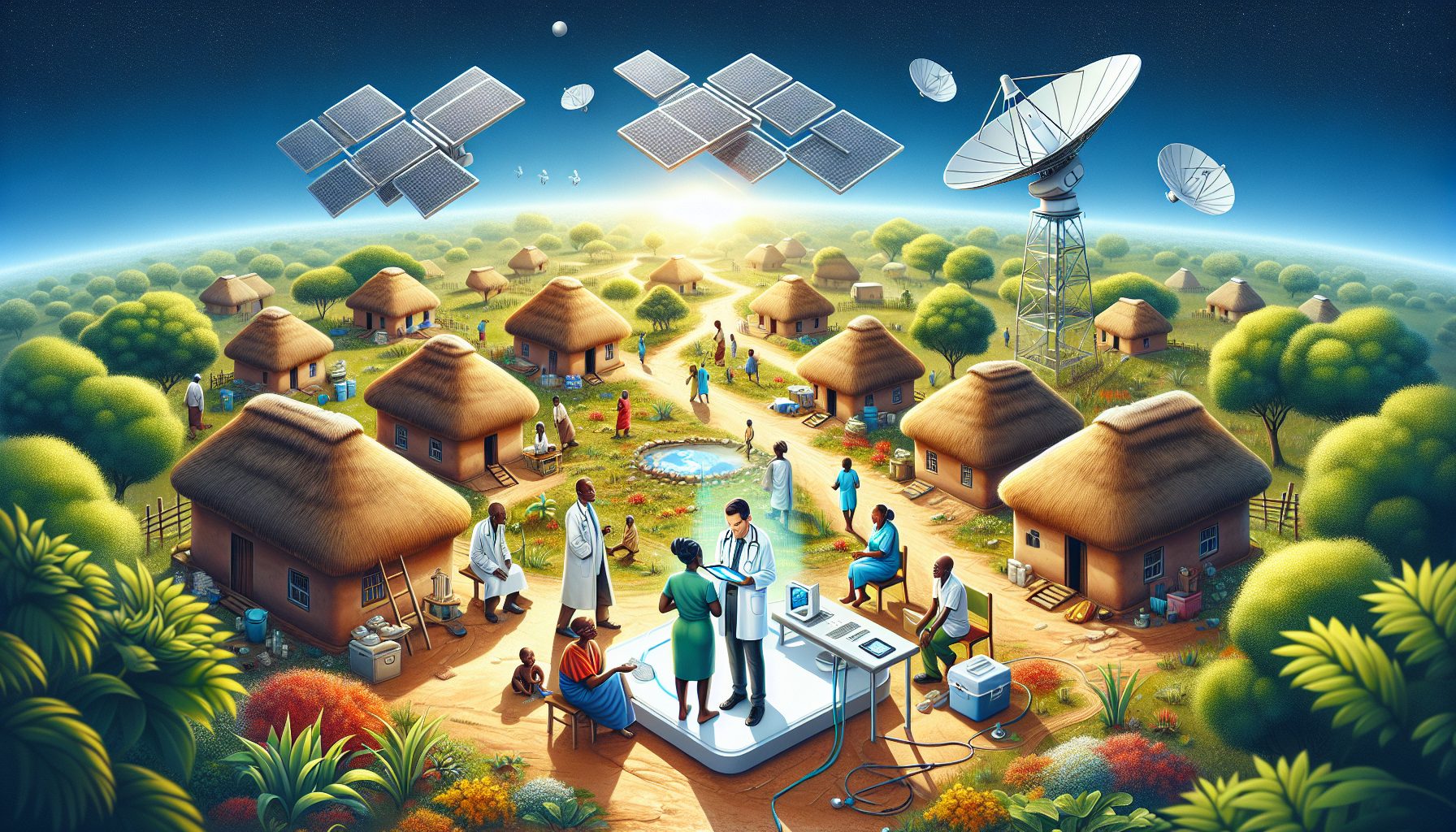
In Zimbabwe, Starlink’s fast internet is revolutionizing telehealth services, bringing much-needed healthcare advancements to the nation. Telehealth, using technology to provide and access healthcare services remotely, has been growing worldwide but is relatively new in Zimbabwe. In early November, Precious Chinonzura visited a telehealth booth in the local shopping center of her village in Nhedziwa to seek relief from bladder pains that had been troubling her for a month.
The 30-year-old consulted a doctor online, and by evening, the medication he prescribed had been delivered to her village from a telehealth booth in Chakohwa, approximately 22 kilometers away. “The doctor told me I had a bladder infection and needed treatment. I had privacy and I spoke freely to the doctor,” said Chinonzura, who runs a small business at the shopping center.
The successful integration of telehealth in Zimbabwe, facilitated by reliable internet connectivity from Starlink, addresses significant healthcare challenges. It is especially beneficial in rural areas, where access to medical professionals and facilities is limited. ZimSmart Villages, an organization establishing telehealth services throughout the country since February, has already connected two of its 16 e-health centers to the advanced internet service and plans to connect five more by the end of November.
Tawanda Njerere, co-founder and chief operations officer of ZimSmart Villages, highlighted the impact of the fast, low-latency connectivity on their online health platform, BatsiHealth. Advanced internet provides the fast, low-latency connectivity that virtual consultations need for real-time telepresence on BatsiHealth,” Njerere said. “Our doctors can conduct video consultations with near in-person clarity, seeing fine visual details essential for accurate diagnoses.”
Zimbabwe’s health sector has suffered from chronic issues including corruption, mismanagement, and resource shortages.
Basic drugs like paracetamol are often hard to come by, pushing many to rely on private health facilities. According to the World Health Organization (WHO), Zimbabwe’s doctor-to-patient ratio is less than the African average, further compounding the issue.
Starlink enhances telehealth in Zimbabwe
While these services have proven beneficial, there are concerns about affordability. A basic internet kit costs $170 with a $30 monthly subscription, whereas a high-end kit costs $350 with a $50 monthly subscription. These costs are steep relative to average incomes in Zimbabwe, where a teacher’s monthly salary is about $350.
Admire Mare, head of the communication and media studies department at the University of Johannesburg, warned of potential inequalities due to the high cost of this innovation. “There’s a risk that the high cost will reproduce existing inequalities, as only the wealthy can afford it,” Mare said. Despite these challenges, the presence of fast internet in Zimbabwe is already pushing local providers to reduce their prices.
For instance, Zimbabwe’s largest mobile operator, Econet, recently cut the price of its SmartBiz internet package by 25%. Willard Shoko, an internet researcher and consultant, emphasized the transformative potential of high-speed internet in healthcare. “Connecting hospitals and clinics to high-speed internet allows for real-time collaboration between doctors worldwide.
This can be the difference between a life saved and a life lost,” he noted. In Nhedziwa, Chinonzura is thankful for the newfound access to telehealth services. Without it, she would have had to close her business to travel to the city of Mutare, 83 km away, or Harare, nearly 350 km away.
“I couldn’t believe it. I didn’t know it was possible,” said the mother-of-two. “I will come here whenever I feel sick for consultation and check-ups.”
This development is a testament to the impact of technological advancements on improving healthcare access and delivery, offering new hope and efficient medical solutions to many Zimbabweans.

April Isaacs is a news contributor for DevX.com She is long-term, self-proclaimed nerd. She loves all things tech and computers and still has her first Dreamcast system. It is lovingly named Joni, after Joni Mitchell.